
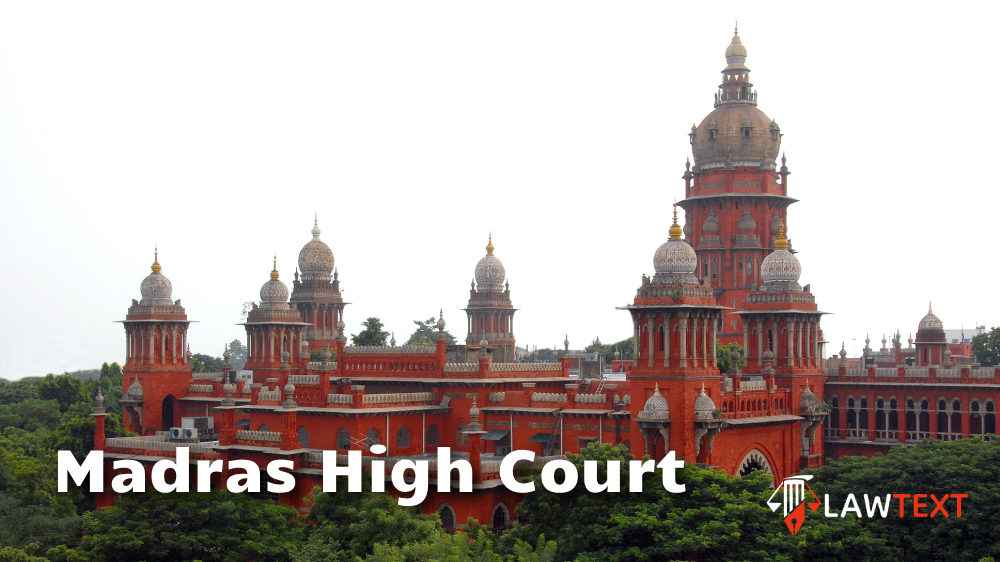
Case Note & Summary
This writ petition under Article 226 of the Constitution sought to challenge the dismissal of a Head Clerk from the Judicial Magistrate Court No.II, Tiruvannamalai. The petitioner had rendered over 40 years of unblemished service, starting as a Night Watchman and rising to Head Clerk. He was due to retire on 28.02.2023. However, on 19.12.2022, he was suspended on the ground of a shortfall of Rs.12,900/- in the fine amounts remitted to the bank from collections made on two dates. A charge memo under Section 17(b) of the Tamil Nadu Civil Services (Discipline and Appeal) Rules was issued on 20.01.2023, alleging negligence and failure to deposit the government money. The petitioner explained that the shortfall occurred due to the large number of cases disposed of in a Lok Adalat, where police constables collected fines and handed them over in lump sum to a ministerial clerk, who then gave the money to the petitioner. He remitted the amounts promptly but a minor discrepancy arose, which he made good immediately upon being notified. Despite this, a full enquiry was conducted; four departmental witnesses were examined and nine exhibits marked, while the petitioner examined himself and one document. The enquiry officer found both charges proved. A second show cause notice was issued, and the disciplinary authority imposed the punishment of dismissal on 30.10.2023. The petitioner had already attained superannuation on 28.02.2023, but was not permitted to retire pending enquiry under Fundamental Rule 56(1)(c). The main legal issue was whether the punishment of dismissal was disproportionally harsh. The petitioner argued that the punishment was shockingly disproportionate to the minor error, given his long service and the absence of any dishonest intent. The respondents contended that the disciplinary authority’s decision on penalty is final and the writ petition was not maintainable due to non-exhaustion of the appellate remedy. The court, relying on precedents such as Union of India v. P. Gunasekaran and B.C. Chaturvedi v. Union of India, reiterated that judicial review in disciplinary matters is limited to examining the decision-making process for procedural flaws, perversity, or violation of natural justice, and that punishment cannot be re-evaluated unless it shocks the judicial conscience. The court found that the petitioner’s lapse was a minor accounting error in a situation of heavy workload, not a case of misappropriation, and that the shortfall had been immediately rectified. Considering the petitioner’s 40 years of unblemished service and the lack of any malafide intent, the court concluded that dismissal was grossly disproportionate. Accordingly, the writ petition was allowed. The dismissal order was quashed, and the petitioner was deemed to have retired on 28.02.2023 with all consequential benefits. The period of suspension was directed to be treated as duty for pension and terminal benefits, and the disciplinary authority was ordered to settle all retiral dues within eight weeks.
Headnote
A) Service Law - Disciplinary Proceedings - Scope of Judicial Review - Constitution of India, Article 226 - The High Court under Article 226 does not sit as an appellate authority over disciplinary orders; it only examines whether the decision-making process was vitiated by procedural irregularity, perversity, or violation of natural justice. Re-appreciation of evidence is not permissible, but interference is warranted when the punishment is so disproportionate as to shock the judicial conscience. (Paras 19-22) B) Service Law - Disciplinary Proceedings - Proportionality of Punishment - Tamil Nadu Civil Services (Discipline and Appeal) Rules, Section 17(b) - Where a head clerk with 40 years of unblemished service was dismissed for a shortfall of Rs.12,900/- in fine remittance which was subsequently made good, the court held that the punishment of dismissal was shockingly disproportionate to the proved misconduct of minor negligence, not involving misappropriation. The court set aside the dismissal, directed that the petitioner be deemed to have retired on superannuation with all consequential benefits, and that the period of suspension be treated as duty for pension. (Paras 23-25)
Issue of Consideration
Whether the punishment of dismissal from service was shockingly disproportionate to the proved misconduct of minor negligence in fine remittance, warranting interference under Article 226 of the Constitution of India.
Final Decision
The writ petition was allowed. The impugned order of dismissal dated 30.10.2023 was quashed. The petitioner was deemed to have retired from service on 28.02.2023 with all consequential and monetary benefits. The period from suspension (19.12.2022) till the date of superannuation (28.02.2023) was directed to be treated as duty for the purpose of pension and other terminal benefits. The disciplinary authority was directed to settle all retiral dues and pay the benefits within a period of eight weeks.
Law Points
- Legal points not extracted
- Judicial review in disciplinary matters is limited
- punishment should be proportionate to misconduct
- shockingly disproportionate punishment warrants interference under Article 226
- long unblemished service and absence of dishonest intent are relevant factors in assessing proportionality







