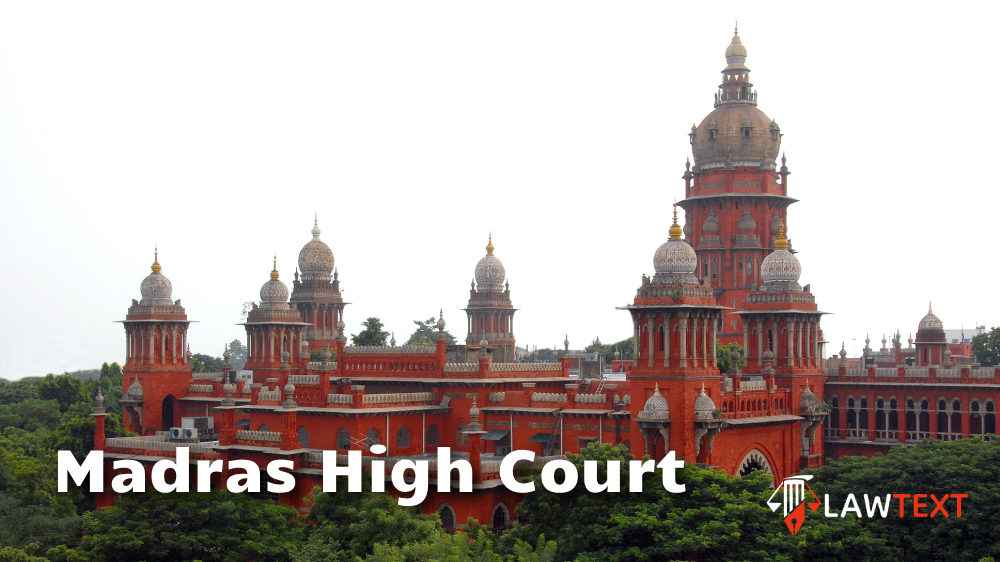
Case Note & Summary
The petitioner, an orthopaedically handicapped individual with a Diploma in Pharmacy, was appointed on a leave vacancy basis as a Pharmacist at the Postal Dispensary, Tiruchirappalli, in 2001. She worked continuously until 2019 but was never regularised. In 2018, the Government of India ordered the merger of 33 postal dispensaries with the Central Government Health Scheme (CGHS), effective 01.01.2019. The merger order stipulated that all permanent employees would be taken over by CGHS. The petitioner, not being a permanent employee, was prevented from working and treated as an outsider. She submitted a representation on 01.04.2019 seeking regularisation and absorption, which was not acted upon. She filed a writ petition under Article 226 of the Constitution seeking a mandamus directing the authorities to permit her to work and regularise her service based on her earlier appointment and continuous service. The key legal issues were whether a leave vacancy appointee is entitled to regularisation, whether the merger order covered her, and whether mandamus could be issued. The petitioner contended that her long service and the merger order's provision for taking over all employees entitled her to absorption. The respondents argued that the appointment was purely temporary, in a leave vacancy, and the appointment order explicitly barred any claim to regularisation or absorption. The Court referred to the appointment order which clearly stated that the selection was provisional, purely for leave arrangement, and conferred no right to regular appointment or absorption in the Department of Posts. Relying on the Constitution Bench decision in State of Karnataka v. Umadevi (2006) 4 SCC 1 and the subsequent judgment in State of Rajasthan v. Dayalal (2011) 2 SCC 429, the Court reiterated the settled principles: irregular, illegal, and backdoor appointments cannot be regularised; regularisation can only be granted if the employee was appointed through a regular recruitment process in accordance with rules against a sanctioned vacant post; mere long continuance does not create a right; and sympathy cannot override constitutional mandates. The Court held that the petitioner, though qualified and having worked for many years, was not appointed against a sanctioned post and her appointment was purely a stop-gap arrangement. The merger order could not vest any right in her as it pertained only to permanent employees. The Court concluded that there was no merit in the petition and dismissed it without costs. The connected miscellaneous petition was also closed.
Headnote
A) Service Law - Regularisation of Temporary Employees - Leave vacancy appointment does not confer right to regularisation or absorption - Constitution of India, 1950, Articles 14, 16 - The petitioner was provisionally selected for a leave vacancy and the appointment order expressly stated that the selection conferred no right to regular appointment. Despite continuous work for several years, the Court held that such irregular/backdoor appointments cannot be regularised; only appointments through a regular recruitment process against sanctioned posts are protected. Held, the petitioner is not entitled to regularisation (Paras 6-9). B) Service Law - Merger of Government Dispensaries - Absorption of staff post-merger limited to permanent employees - Order dated 21.12.2018 of Ministry of Health and Family Welfare - The petitioner argued that the merger order taking over all employees should cover her. The Court held that the order could not override the settled legal principle that temporary/leave vacancy appointees have no right to regularisation. The merger order applied only to permanent employees. Held, the petitioner cannot claim absorption under the merger order (Paras 2-3, 8-9). C) Constitutional Law - Equality in Public Employment - Backdoor appointments violate Articles 14 and 16 - Constitution of India, 1950 - The Supreme Court in Umadevi and Dayalal emphasized that courts cannot direct regularisation unless the appointment was through a regular process. The petitioner's appointment lacked such process, and allowing regularisation would violate the constitutional guarantee of equal opportunity in public employment. Held, regularisation would be unconstitutional (Paras 8-9). D) Writ Jurisdiction - Mandamus - No mandamus for regularisation in absence of legal right - Constitution of India, 1950, Article 226 - Since the petitioner had no legal right to regularisation, the representation did not require consideration. The Court dismissed the writ petition, holding that mandamus cannot be issued to compel an act contrary to law. Held, petition dismissed (Paras 9-10).
Issue of Consideration
Whether a person appointed in a leave vacancy on a temporary basis and who worked for many years is entitled to regularisation or absorption in the post, especially after merger of the Postal Dispensary with CGHS; whether the merger order dated 21.12.2018 entitles the petitioner to be taken over as an employee; and whether a writ of mandamus can be issued for regularisation absent a legal right.
Final Decision
The writ petition was dismissed. The Court held that the petitioner's appointment was purely for a leave vacancy and the appointment order expressly denied any right to regularisation or absorption. Relying on Umadevi and Dayalal, the Court ruled that irregular/backdoor appointments do not confer any right to permanent absorption, and regularisation can only be granted if the appointment was through a regular recruitment process against a sanctioned vacant post. The merger order of 2018 did not extend to temporary or casual employees. The petitioner's long continuance did not create a legal right, and mandamus could not be issued. No costs were awarded, and the connected miscellaneous petition was closed.
Law Points
- Legal points not extracted
- Irregular
- illegal and backdoor appointments do not provide right to permanent absorption or regularisation per Umadevi
- Regularisation requires appointment through regular recruitment process in accordance with rules against sanctioned vacant posts consistent with Articles 14 and 16
- Temporary/leave vacancy appointments are stop-gap and confer no right to regularisation
- Mere long continuance in service does not create a right to regularisation
- Sympathy cannot be ground for regularisation
- Part-time employees not entitled to regularisation
- Outsiders must participate in recruitment process for permanent employment
.png)