
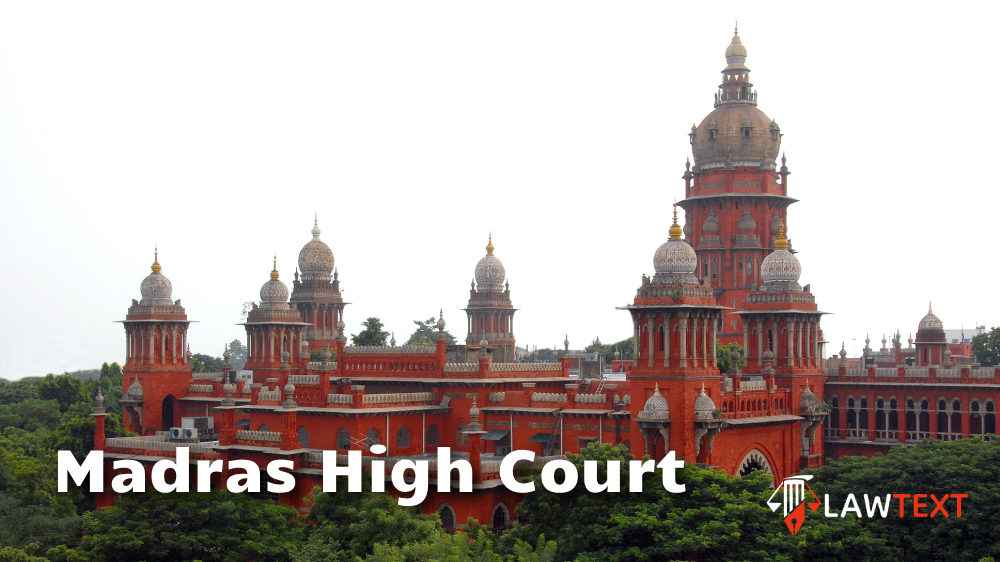
High Court Sets Aside Writ Court Order Directing Regularisation of Sweepers Engaged on Daily Wage Basis Without Following Statutory Procedure. Equal Opportunity in Public Employment Mandated by Articles 14 and 16 of the Constitution Cannot Be Overridden by Regularising Backdoor Appointments.

High Court: Madras High Court Bench: Principal In Favour of Prosecution
  • 5
Judgement Image
Font size:
Print

Case Note & Summary

The State of Tamil Nadu filed these intra-court appeals under Clause 15 of the Letters Patent challenging the common order dated 22.09.2017 passed by a single judge in writ petitions W.P.Nos.4989 and 4990 of 2014. The respondents in the appeals had originally filed the writ petitions seeking regularisation of their services as sweepers, claiming they were engaged on daily wage basis. The single judge allowed the writ petitions, directing their regularisation. Aggrieved, the State filed the present appeals contending that the respondents had not completed 10 years of continuous service and were engaged without following any statutory recruitment procedure, thus disentitling them to regularisation. When the appeals came up for hearing, the respondents’ counsel fairly conceded that the issue was covered by an earlier Division Bench judgment dated 15.07.2024 in W.A.160 of 2021. That earlier judgment had extensively dealt with the constitutional scheme of public employment under Articles 14 and 16 of the Constitution, holding that backdoor appointments cannot be regularised and that equal opportunity must be ensured by open advertisement and due process. The court extracted the relevant passages from that judgment which reiterated the principles laid down by the Supreme Court in State of Karnataka v. Umadevi (3) and Renu v. District and Sessions Judge, Tis Hazari Courts, Delhi. The crux of the issue was that any appointment made in violation of statutory rules and Articles 14 and 16 is a nullity, and regularisation cannot be a mode of appointment. The court observed that such appointments, if regularised, would infringe the fundamental rights of lakhs of eligible youth. Accordingly, the Division Bench, without any further independent reasoning, allowed the writ appeals and set aside the common order of the single judge. The court held that the respondents, having been engaged through backdoor methods and not completing the requisite years of service, were not entitled to regularisation, but they could participate in future recruitment drives if otherwise eligible.

Headnote

A) Service Law - Regularisation - Backdoor Appointments - Constitution of India, 1950, Articles 14 and 16 - The Division Bench, in intra-court appeals filed by the State, set aside the order of the writ court that directed regularisation of daily wage sweepers who had not completed 10 years of service and were engaged without following any recruitment process. Following the earlier Division Bench judgment in W.A.160 of 2021, the court held that equal opportunity in public employment is a constitutional mandate and any appointment made in violation of Articles 14 and 16 is void. Backdoor appointments cannot be regularised as it infringes fundamental rights of other eligible candidates. Held that regularisation is not a mode of appointment and such employees may only participate in proper recruitment processes. (Paras 1-2)

Subscribe to unlock Headnote Subscribe Now

Issue of Consideration

Whether the writ court's order directing regularisation of daily wage sweepers engaged without following statutory recruitment procedure is sustainable in view of the constitutional mandate under Articles 14 and 16 of the Constitution of India.

Subscribe to unlock Issue of Consideration Subscribe Now

Final Decision

The appeals were allowed and the common order of the writ court dated 22.09.2017 was set aside. The Division Bench, following its earlier judgment in W.A.160 of 2021, held that the respondents were not entitled to regularisation as their appointments were backdoor and violative of Articles 14 and 16 of the Constitution. The court reiterated that regularisation cannot be a mode of appointment and that all public employment must be through open advertisement and due process.

Law Points

  • Legal points not extracted
  • Regularisation is not a mode of appointment
  • all appointments must comply with Articles 14 and 16
  • requiring open advertisement and equal opportunity
  • backdoor appointments cannot be regularised
  • daily wage workers not completing 10 years service cannot claim regularisation
  • constitutional scheme of public employment overrides executive decisions to regularise illegal appointments.

Subscribe to unlock Law Points Subscribe Now

Case Details

2026 LawText (MAD) (07) 82

W.A.Nos.8 & 9 of 2023 and C.M.P.Nos.109 to 101 of 2023

2026-07-06

S. M. Subramaniam, N. Senthilkumar

Citation not available, 2026:MHC:2626

R. Sankar (Government Counsel for Appellants), R. Prem Narayan (for Respondent in W.A.No.9/2023), No Appearance in W.A.No.8/2023

The Chief Secretary to Government, Personnel and Administrative Reforms (F) Department; The Principal Secretary to Government, Rural Development and Panchayat Raj Department; The Director of Rural Development and Panchayat Raj

N.Nagaiah (W.A.No.8/2023); K.Arulpragasam (W.A.No.9/2023)

Subscribe to unlock Case Details (Citation, Judge, Date & more) Subscribe Now

Nature of Litigation

Intra-court appeals filed by the State of Tamil Nadu challenging a writ court order that directed regularisation of daily wage sweepers.

Remedy Sought

State sought to set aside the common order dated 22.09.2017 in W.P.Nos.4989 and 4990 of 2014 which had allowed the writ petitions of the respondents seeking regularisation.

Filing Reason

The respondents were engaged as sweepers on daily wage basis without following recruitment rules and had not completed 10 years of service, which the State contended disqualified them from any claim for regularisation.

Previous Decisions

The writ court (single judge) by order dated 22.09.2017 directed regularisation of the respondents. The State then filed the present appeals.

Issues

Whether daily wage employees engaged without any statutory recruitment process and who have not completed 10 years of service are entitled to regularisation under the Constitution.

Submissions/Arguments

State argued that respondents did not complete 10 years of continuous service and were appointed without due process, hence cannot be regularised. Respondents’ counsel conceded that the issue was covered by an earlier Division Bench judgment in W.A.160 of 2021, which had held against regularisation of backdoor appointments.

Ratio Decidendi

Equal opportunity in public employment is a constitutional mandate under Articles 14 and 16. Appointments made without following statutory rules and without open advertisement are void and cannot be regularised. Regularisation is not a mode of appointment and cannot override fundamental rights of other eligible candidates. Daily wage workers who were not appointed through proper procedure and who have not completed the required years of service cannot claim regularisation. The only remedy for such workers is to participate in future recruitment processes if eligible.

Judgment Excerpts

When these matters are taken up for hearing, learned counsel for the respondents fairly conceded that the issue on hand is covered by the earlier Division Bench judgment of this Court dated 15.07.2024 passed in W.A.160 of 2021. Equal opportunity in public employment is the constitutional mandate. Back door appointments cannot be regularized infringing the fundamental rights of the candidates aspiring to secure public employment through open competitive process.

Procedural History

The respondents (sweepers) filed writ petitions seeking regularisation. The writ court by common order dated 22.09.2017 allowed the petitions and directed regularisation. The State of Tamil Nadu filed intra-court appeals under Clause 15 of Letters Patent challenging that order. The Division Bench heard the appeals on 06.07.2026 and, following an earlier Division Bench judgment in W.A.160 of 2021, allowed the appeals and set aside the writ court’s order.

Acts & Sections

  • Constitution of India: 14, 15, 16, 19, 21, 162
  • Letters Patent: Clause 15
Subscribe to unlock full Legal Analysis Subscribe Now
Related Judgement
High Court High Court Sets Aside Writ Court Order Directing Regularisation of Sweepers Engaged on Daily Wage Basis Without Following Statutory Procedure. Equal Opportunity in Public Employment Mandated by Articles 14 and 16 of the Constitution Cannot Be Overrid...
Related Judgement
High Court High Court of Bombay at Nagpur Allows Appeal in Part by Insurance Company in Motor Accident Claim — Reduces Compensation Due to Incorrect Deduction and Multiplier. Deduction of 50% for personal expenses of bachelor deceased and multiplier based on ...





