Case Note & Summary
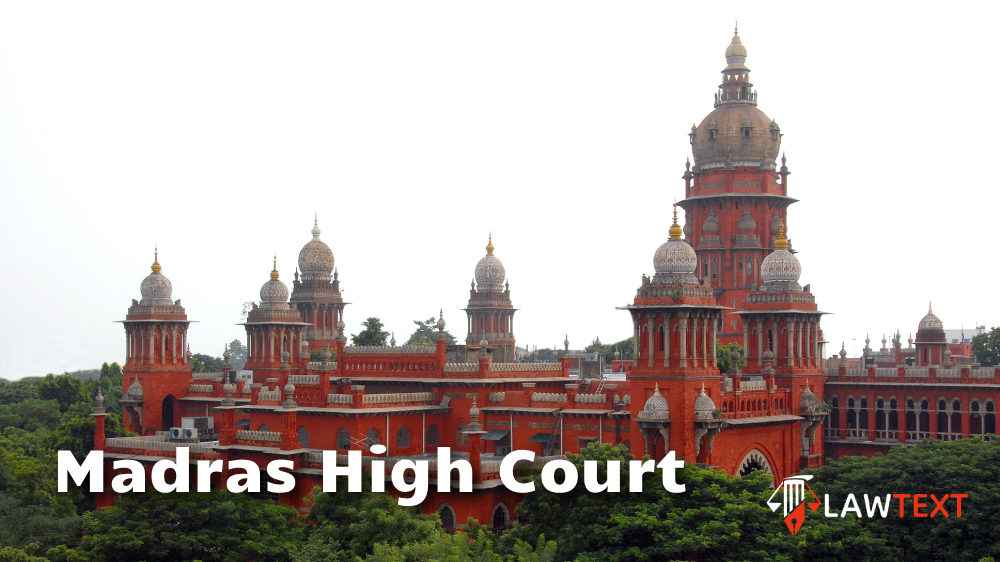
The case arose from a writ petition filed under Article 226 of the Constitution of India before the Madurai Bench of the Madras High Court. The petitioner, K. Selvi, sought a writ of mandamus directing the respondents—the Commissioner of Land Reforms, the District Collector, the District Revenue Officer, and the Tahsildar—to release her land in Survey No. 140/3 of Thirupparankundram Village, Madurai, from the list of lands enlisted under the Tamil Nadu Bhoodhaan Yagna Act. The dispute concerned an alleged donation of the land by one Chinna Karuppa Thevar to the Bhoodhaan Board in 1961. The petitioner specifically contended that the said Chinna Karuppa Thevar did not own the land in question; he had only signed as a witness to a sale deed conveying lands to the Board. Consequently, the petitioner claimed that the inclusion of the land in the Bhoodhaan Yagna list was improper and sought its release. The petitioner made a representation in March 2022 and sent a reminder on 27 June 2024. Additionally, the Tahsildar of Thirupparankundram Taluk addressed a communication (Na.Ka.No.3176/2022/C, dated 08 November 2023) to the District Collector, recommending the release of the land as sought by the petitioner. However, the first respondent, the Commissioner of Land Reforms, did not pass any orders on the representation, leading the petitioner to approach the High Court. The principal legal issue before the court was whether a writ of mandamus should be issued to direct the respondents to consider the petitioner’s representation and take action. The petitioner argued that the land was wrongly enlisted based on a donation by a person who had no title, and that the administrative machinery had failed to act despite the Tahsildar’s favorable recommendation. The respondents, represented by the Additional Government Pleader, did not present any counter-arguments recorded in the order. The court observed that the petitioner only sought the issuance of a writ of mandamus to direct consideration of the representation, and not a decision on the merits. The court found it sufficient to direct the first respondent to consider the petitioner’s application and the report of the Tahsildar and pass final orders. No legal principles or precedents were discussed. The court disposed of the writ petition with a direction to the Commissioner of Land Reforms to pass final orders within twelve weeks from the date of receipt of a copy of the order, and no costs were awarded.
Headnote
A) Writ Jurisdiction - Mandamus - Consideration of Representation - Constitution of India, 1950, Article 226 - The petitioner sought release of land from the list under the Tamil Nadu Bhoodhaan Yagna Act on the ground that the alleged donor did not own the land. The court directed the first respondent to consider the petitioner's application and the Tahsildar's report and pass final orders within twelve weeks. Held that a writ of mandamus is appropriate to direct consideration of the representation without deciding merits. (Paras 1-4)
Issue of Consideration
Whether a writ of mandamus should be issued directing the respondents to consider the petitioner's representation for release of land under the Tamil Nadu Bhoodhaan Yagna Act.
Final Decision
The writ petition is disposed of with a direction to the first respondent, the Commissioner of Land Reforms, to consider the petitioner's representation and the Tahsildar's report and pass final orders within twelve weeks from the date of receipt of a copy of this order. No order as to costs.