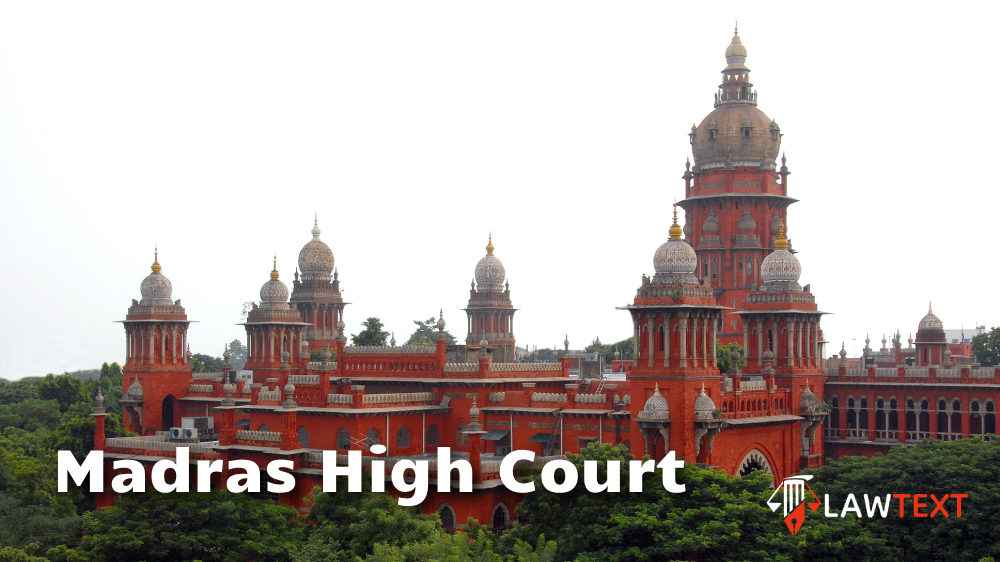
Case Note & Summary
Two writ petitions were filed by hoarding licensees, Kathir Arts Fabrication and ADD 5 Vision, challenging show cause notices issued by the Commissioner of Hosur Municipal Corporation under Rule 330 of the Tamil Nadu Urban Local Bodies Rules, 2023. The petitioners held licenses to erect hoardings at specified locations and sought to quash the notices and protect the hoardings until license expiry. The respondent corporation alleged that the petitioners had violated license conditions, empowering removal of hoardings after due notice. The primary legal issue was the maintainability of a writ under Article 226 of the Constitution against a show cause notice. The court observed that such writs are not entertainable in routine course; they can be entertained only if the notice is issued by an authority lacking jurisdiction or on grounds of mala fides, with the concerned officer impleaded personally in the latter case. In all other situations, the recipient must submit an explanation to the competent authority. Since the petitioners held valid licenses and the dispute revolved around compliance, the court declined to quash the notices. Instead, it disposed of the petitions by granting the petitioners liberty to submit explanations within seven days, with a direction to the respondent to consider the same and pass final orders within ten days thereafter. If the hoardings were found violative, the authorities were ordered to remove them forthwith. No costs were awarded. Thus, the court did not grant the writs but provided an opportunity for the petitioners to present their case before the municipal authority, consistent with the principle that show cause proceedings should ordinarily be completed at the authority level before judicial intervention.
Headnote
A) Constitutional Law - Writ Jurisdiction - Maintainability of Writ Against Show Cause Notice - Constitution of India, Article 226 - The court held that a writ against a show cause notice is not entertainable except where the notice is issued by an authority without jurisdiction or on grounds of mala fides; even in mala fides cases, the authority must be impleaded personally. In all other cases, the party must respond to the notice. The court directed the petitioners to submit explanations within 7 days and the respondent to pass orders within 10 days thereafter (Paras 2, 5).
Issue of Consideration
Whether a writ petition under Article 226 is maintainable against a show cause notice issued by a competent municipal authority.
Final Decision
The writ petitions were disposed of with directions: Petitioners were at liberty to submit explanations within seven days to establish they did not violate rules or license conditions. The respondent was to consider such explanations and pass final orders within ten days thereafter. If hoardings were found to be violative, the authorities were to remove them forthwith. No order as to costs.
Law Points
- Legal points not extracted
- Writ against show cause notice not routinely entertainable
- entertainable only if notice issued without jurisdiction or mala fides alleged
- authority against whom mala fides alleged must be impleaded in personal capacity
- parties must submit explanations to competent authority
Case Details
2025 LawText (MAD) (02) 162
W.P.Nos.27607 & 30609 of 2024
S.M. Subramaniam, K. Rajasekar
Citation not available, 2025:MHC:355
R. Vijayakumar, T. Balaji
Kathir Arts Fabrication; ADD 5 Vision
The Commissioner, Hosur Municipal Corporation, Hosur, Krishnagiri District
Subscribe to unlock Case Details (Citation, Judge, Date & more)
Subscribe Now
Nature of Litigation
Writ petitions under Article 226 of the Constitution challenging show cause notices issued by the municipal corporation for alleged violation of hoarding license conditions.
Remedy Sought
Petitioners sought quashing of show cause notices and direction to forbear from interfering with hoardings until expiry of licenses.
Filing Reason
The municipal authorities issued show cause notices under Rule 330 of the Tamil Nadu Urban Local Bodies Rules, 2023, alleging violation of license conditions for hoardings, and the petitioners claimed the notices were invalid because they had valid licenses.
Previous Decisions
Previous decisions not referenced
Issues
Whether a writ petition under Article 226 is maintainable against a show cause notice issued by a competent municipal authority.
Submissions/Arguments
Petitioners submitted that necessary permission was granted by the municipal authorities, so the show cause notices are invalid.
Respondent submitted that though permission was granted, the petitioners violated the conditions stipulated in the licenses, empowering the authorities to remove the hoardings after issuing show cause notices.
Ratio Decidendi
A writ petition under Article 226 challenging a show cause notice is not maintainable in routine course. It is entertainable only if the notice is issued by an authority without jurisdiction or on allegations of mala fides, and in the latter case, the officer concerned must be impleaded in his personal capacity. In all other circumstances, the recipient must submit an explanation to the competent authority for a decision.
Judgment Excerpts
A writ petition against show cause notice is entertainable only if such notice has been issued by an incompetent authority having no jurisdiction or the allegation of mala fides are raised. Even in case of raising of allegation of mala fides, the authority against whom such allegation is made, must be impleaded as party respondent in his personal capacity in the writ proceedings. In all other circumstances, persons who received notice(s) must defend their case by submitting explanation(s) along with the documents, if any, by allowing the competent authority to take a final decision.
the petitioners are at liberty to submit their explanation to establish that they have not violated any of the rules or conditions stipulated in the licence(s), within a period of seven days from today. On receipt of any such explanation from the petitioners, the respondent shall consider the same with reference to the rules and the licence conditions and pass final orders within a period of ten days from the date of expiry of seven days. If the hoardings are found to be violative of the rules or the licence conditions, then the authorities shall remove the hoardings forthwith.
Procedural History
The writ petitions were filed under Article 226 of the Constitution directly before the High Court. They were heard by a Division Bench and disposed of on 06.02.2025.
Acts & Sections
- Tamil Nadu Urban Local Bodies Rules, 2023: Rule 330
- Constitution of India: Article 226