
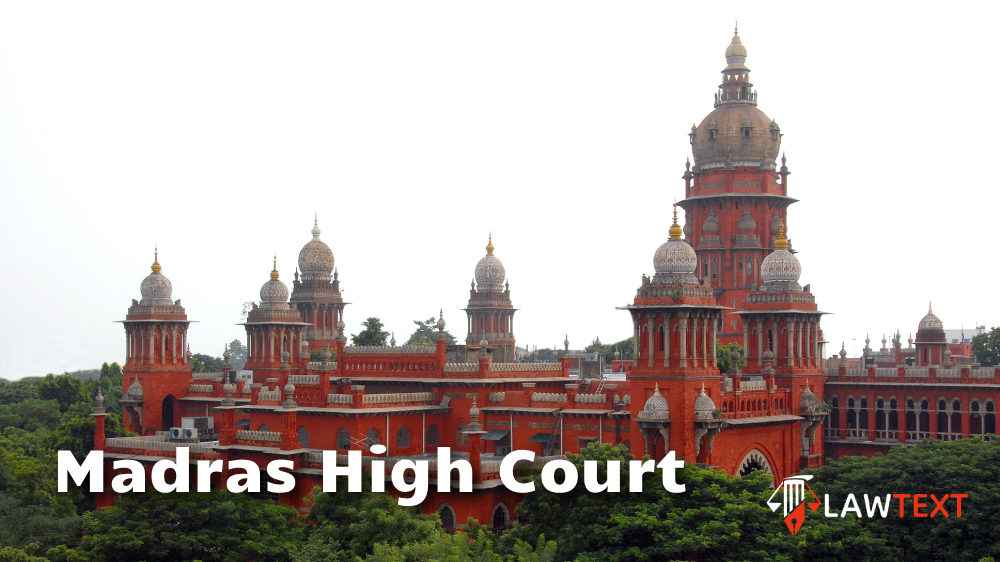
Madras High Court Admits Second Appeal in Partition Suit on Questions of Non-Joinder and Inheritance Under Hindu Succession Act. The First Appellate Court’s Reversal of Trial Court’s Dismissal Is Challenged on Grounds That Impleading Omitted Party in Appeal May Not Cure Non-Joinder and That Inherited Property by Sole Son Becomes Absolute, Disentitling Daughters from Partition.

High Court: Madras High Court Bench: Principal
  • 6
Judgement Image
Font size:
Print

Case Note & Summary

The dispute arose from a suit for partition filed by two daughters against their father and two purchasers, claiming a 2/3 share in the suit property. The plaintiffs asserted that the property originally belonged to their grandfather, Mariayappan Pandaram, and after his death, it was enjoyed as joint family property by the plaintiffs and their father, the 3rd defendant. The plaintiffs alleged that their father sold the suit property to defendants 1 and 2 without their consent, and they issued a legal notice before filing O.S.No.186 of 2006 before the Additional District Munsif Court, Karaikudi. The defendants contested the suit, raising issues of non-joinder of the plaintiffs’ other sister, Seethalakshmi, limitation since the sale occurred in 2000 with the plaintiffs’ knowledge, and failure to challenge the registered sale deed. The trial court framed issues including non-joinder, limitation, and entitlement to partition, and after trial, dismissed the suit on the grounds of non-joinder of a necessary party and limitation, holding that the plaintiffs were not entitled to partition. The plaintiffs appealed in A.S.No.83 of 2011 before the Subordinate Court, Devakkottai. During the appeal, the 3rd defendant died and his legal representatives, including Seethalakshmi, were impleaded. The First Appellate Court allowed the appeal, finding that the defect of non-joinder was cured by the impleadment and that the plaintiffs were entitled to a preliminary decree for partition. Aggrieved by this reversal, the defendants 1 and 2 preferred the Second Appeal under Section 100 of the Code of Civil Procedure, which was admitted on three substantial questions of law: (1) whether the First Appellate Court correctly set aside the trial court’s finding on non-joinder by impleading the omitted party during appeal; (2) whether the rejection of Ex.B.7 was justified when the trial court had accepted it; and (3) whether, given the plaintiffs’ own case that the property was the absolute property of the grandfather, inheritance by the 3rd defendant as sole son under Section 8 of the Hindu Succession Act, 1956 would make it his absolute property, thereby disentitling the daughters from claiming partition. The appellants’ counsel argued that the property was self-acquired of Mariayappan Pandaram and on his death, the 3rd defendant inherited it absolutely, so the daughters had no right. The court reserved judgment on these questions, considering the procedural correctness and the nature of the property under Hindu law. The outcome of the appeal remained pending final adjudication of these substantial questions of law.

Headnote

A) Civil Procedure – Non-joinder of Necessary Parties – Suit for Partition – Code of Civil Procedure, 1908 – The trial court dismissed the suit for partition as bad for non-joinder of the plaintiffs’ sister Seethalakshmi. The First Appellate Court set aside that finding on the ground that Seethalakshmi was impleaded as a legal representative of the deceased third defendant during the appeal. The substantial question of law is whether the lower appellate court was correct in law in setting aside the finding of the trial Court on that ground. (Paras 9, 10, 11, 12)

B) Evidence – Appreciation of Documentary Evidence – Rejection of Ex.B.7 – That the trial court accepted Ex.B.7 after giving cogent reasons, but the First Appellate Court rejected it. The correctness of this rejection forms a substantial question of law. (Paras 12)

C) Hindu Law – Inheritance and Succession – Section 8, Hindu Succession Act, 1956 – Whether property inherited by the 3rd defendant from his father as absolute property disentitles the plaintiffs (daughters) from claiming partition during their father’s lifetime. (Paras 12, 13)

Subscribe to unlock Headnote Subscribe Now

Issue of Consideration

Whether the First Appellate Court correctly set aside the trial court’s finding on non-joinder by impleading the omitted party during appeal; whether rejection of Ex.B.7 by the First Appellate Court was justified when the trial court had accepted it with cogent reasons; and whether property inherited by the sole son under Section 8 of the Hindu Succession Act, 1956 becomes his absolute property, disentitling his daughters from claiming partition during his lifetime.

Subscribe to unlock Issue of Consideration Subscribe Now

Final Decision

Decision not clearly stated

Law Points

  • Legal points not extracted
  • Non-joinder of necessary party
  • Bar of limitation
  • Inheritance under Section 8 of Hindu Succession Act
  • 1956
  • Self-acquired property versus ancestral property
  • Requirement to challenge registered sale deed
  • Payment of proper court-fee
  • Curing defect by impleading parties in appeal
  • Appreciation of documentary evidence
  • Adverse inference from non-examination of relevant witnesses

Subscribe to unlock Law Points Subscribe Now

Case Details

2026 LawText (MAD) (07) 51

S.A(MD)No.313 of 2012

2026-07-01

P.Vadamalai

Citation not available, 2026:MHC:2494

R.Sundar Srinivasan (for Appellants), S.Madhavan (for Respondents 1 & 2)

Amsavalli, Solaiammal

Selvi, Latha, Seetha, Saraswathi Ammal

Subscribe to unlock Case Details (Citation, Judge, Date & more) Subscribe Now

Nature of Litigation

Civil suit for partition of suit property, originally filed by daughters against their father and subsequent purchasers, alleging ancestral property sold without consent; contested on non-joinder, limitation, and inheritance rights.

Remedy Sought

Plaintiffs sought a preliminary decree for 2/3 share in the suit property; defendants sought dismissal of suit and on appeal, setting aside the first appellate decree.

Filing Reason

Plaintiffs claimed that their father, the 3rd defendant, sold the suit property inherited from grandfather to defendants 1 and 2 without the plaintiffs' consent, entitling them to partition.

Previous Decisions

Trial Court dismissed the suit on grounds of non-joinder of necessary party and limitation. First Appellate Court allowed the appeal, holding that non-joinder was cured by impleading the omitted party in appeal and that plaintiffs were entitled to partition.

Issues

Whether the First Appellate Court correctly set aside the trial court's finding on non-joinder by impleading the omitted party in the appeal. Whether the rejection of Ex.B.7 by the First Appellate Court was correct when the trial court had accepted it with cogent reasons. Whether property inherited by the 3rd defendant under Section 8 of Hindu Succession Act becomes his absolute property, disentitling his daughters from claiming partition.

Submissions/Arguments

Plaintiffs contended that the suit property was joint family property after grandfather's death and their father sold without their consent, entitling them to partition. Defendants contended suit bad for non-joinder of another daughter, barred by limitation as sale was known since 2000, and no challenge to sale deed. Appellants' counsel submitted that the property being grandfather's absolute property devolved solely on the 3rd defendant under Section 8 of Hindu Succession Act, making it his absolute property, thus daughters have no right to partition.

Ratio Decidendi

Ratio not explicitly mentioned

Judgment Excerpts

The suit is bad for non joinder of necessary party & barred by limitation, hence, the plaintiffs are not entitled for partition the first Appellate Court came to conclusion that the defect of non joinder has been cured as the LRs of 3rd defendant have been added as parties 1.Whether the lower appellate Court is correct in law in setting aside the finding of the trial Court that the suit is bad for non-joinder on the ground that the parties were impleaded in the appeal? When it is the specific case of the plaintiffs that the property belongs to the grandfather Mariappa Pandaram as his absolute property, whether inheritance of the said property by the 3rd defendant the only son of the Mariappa Pandaram under Section 8 of the Hindu Succession Act would not make the property inherited by the 3rd defendant as his absolute property dis-entitling the plaintiffs who are the daughters of 3rd defendant to make any claim for partition in the said property?

Procedural History

The suit O.S.No.186 of 2006 was filed before the Additional District Munsif Court, Karaikudi. After trial, the suit was dismissed by judgment and decree dated 27.09.2010 on grounds of non-joinder of necessary party and limitation. The plaintiffs filed first appeal A.S.No.83 of 2011 before the Subordinate Judge, Devakkottai. During the appellate proceedings, the 3rd defendant died and his legal representatives, including the previously omitted daughter Seethalakshmi, were impleaded. The First Appellate Court, by judgment dated 17.10.2011, set aside the trial court decree, holding that the non-joinder was cured and the plaintiffs were entitled to partition. The defendants 1 and 2 then filed the Second Appeal S.A(MD)No.313 of 2012 under Section 100 of the Code of Civil Procedure, which was admitted on 06.06.2012 on the substantial questions of law. The appeal was reserved for judgment on 01.04.2026 and pronounced on 01.07.2026.

Acts & Sections

  • Hindu Succession Act, 1956: 8
  • Code of Civil Procedure, 1908: 100
Subscribe to unlock full Legal Analysis Subscribe Now
Related Judgement
High Court Madras High Court Admits Second Appeal in Partition Suit on Questions of Non-Joinder and Inheritance Under Hindu Succession Act. The First Appellate Court’s Reversal of Trial Court’s Dismissal Is Challenged on Grounds That Impleading Omitted Part...
Related Judgement
High Court High Court of Karnataka Considers Challenge to Penalty Under Excise Rules for Short-Lifting of Liquor. The court heard arguments on additional grounds after noting that the issue was covered by a previous order in Lakshmi Bar and Restaurant Case.





