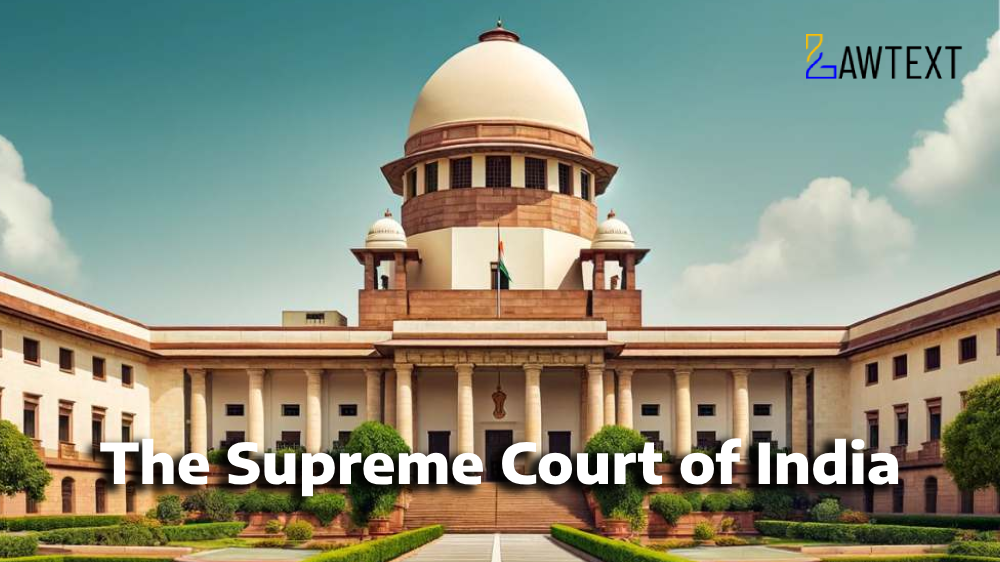
Case Note & Summary
The present writ petition under Article 32 of the Constitution was filed as a public interest litigation by the petitioner, Manoj Narula, challenging the appointment of certain individuals as Ministers in the Union Council of Ministers despite their alleged involvement in serious criminal offences. The petitioner contended that such appointments undermined the constitutional ethos and the purity of democracy. The matter was initially heard by a Bench of the Supreme Court, which by order dated 24.03.2006 directed that the case be placed before a Constitution Bench, recognizing the profound public importance of the question whether persons with criminal backgrounds or facing charges involving moral turpitude could lawfully be appointed as ministers in the Central or State Governments. Notices were issued to the Union of India and the Advocates General of all States, and certain respondent ministers were deleted from the array of parties. The primary legal issue framed was the interpretation of Articles 75 and 164 of the Constitution in the context of the criminal antecedents of prospective ministers. The Court, in its analysis, emphasized the foundational principles of democracy as a basic structure of the Constitution, drawing from precedents such as Indira Nehru Gandhi v. Raj Narain and Kuldip Nayar v. Union of India. It highlighted the necessity of free and fair elections and the right of the electorate to have candidates of high moral and ethical values, referencing Mohinder Singh Gill v. Chief Election Commissioner and People’s Union for Civil Liberties v. Union of India. The Court further underscored the voter’s right to know the criminal background of candidates as a facet of the right to information, which is essential for the survival of democracy, as held in Union of India v. Association for Democratic Reforms. The judgment expressed deep concern over the criminalisation of politics, terming it an anathema to the sacredness of democracy. The excerpt provided, however, ends abruptly at paragraph 7, before the Court could deliver its final interpretation and operative directions on the legality of appointing ministers with criminal antecedents and any consequent directions. The full reasoning and decision on the scope of Articles 75 and 164 are not contained in the available text.
Headnote
A) Constitutional Law - Democracy as Basic Structure - Democracy is a basic and fundamental feature of the Constitution - Constitution of India, 1950, Articles 32, 75, 164, 324 - The Court reiterated that democracy is an essential feature and part of the basic structure, unassailable and vital for good governance. (Paras 1-2) B) Election Law - Free and Fair Elections and Right to Information - Voters' right to know candidate's criminal antecedents is fundamental - Constitution of India, 1950, Article 324 - The Court emphasized purity of elections and directed disclosure of criminal background of candidates to enable informed voting. (Paras 3-6) C) Constitutional Law - Appointment of Ministers - Legality of persons with criminal background as Ministers - Constitution of India, 1950, Articles 75, 164 - The reference framed the question whether persons with criminal antecedents can be appointed as ministers, requiring interpretation of these articles. (Para 2) D) Constitutional Law - Criminalisation of Politics - Impact on Democracy - Criminalisation of politics is anathema to democracy - Constitution of India, 1950 - The Court expressed grave concern over criminalisation and its corrosive effect on democratic values. (Para 7)
Issue of Consideration
Legality of appointing persons with criminal background and/or charged with offences involving moral turpitude as Ministers in Central and State Governments, and the scope of Articles 75 and 164 of the Constitution.
Final Decision
Decision not clearly stated
Law Points
- Legal points not extracted
- Democracy is a basic structure
- Free and fair elections essential
- Right to know candidate antecedents
- Criminalisation of politics corrupts democracy
- Interpretation of Articles 75 and 164 of the Constitution