
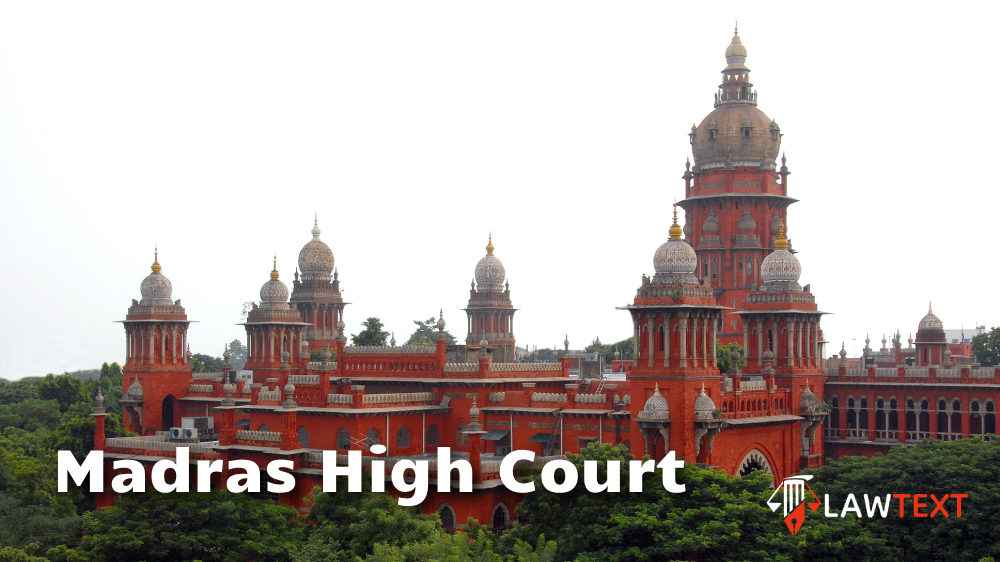
Case Note & Summary
The petitioner, a private limited company, filed a commercial suit before the Principal Commercial Court, Egmore, Chennai, seeking declarations that certain agreements with the respondent were void and unenforceable, that the commercial arrangement stood terminated, and reliefs including permanent injunction against raising invoices, mandatory injunction for removal of 127 printers from its premises, and damages for unauthorized occupation. Along with the plaint, two interim applications were filed: one for interim injunction restraining the respondent from raising invoices from June 2025, and another for interim mandatory injunction directing the respondent to immediately remove the printers. The suit was presented under the Commercial Courts Act, 2015. The trial court, by order dated 03.02.2026, returned the plaint without numbering, holding that the suit did not contemplate any urgent interim relief and therefore mandatorily required the plaintiff to first exhaust pre-institution mediation under Section 12A of the Act. Aggrieved, the petitioner approached the High Court under Article 227 of the Constitution challenging the return of the plaint. The core legal question was whether the suit fell within the exception under Section 12A(1), which exempts suits that contemplate urgent interim relief from the pre-institution mediation mandate. The petitioner argued that the agreements were invalid for lack of board authority, that the contract stood terminated, but the respondent continued to occupy commercial space with printers and raise invoices, causing loss and inconvenience; thus, urgent interim relief was genuinely needed. The respondent was not heard at the trial stage as the plaint was returned without notice. The High Court examined Section 12A, noting it creates two categories of suits. Relying on its own earlier decision in M/s.Ganga Complex and the Supreme Court's ruling in Yamini Manohar v. T.K.D.Keerthi, the court held that the role of the court in determining whether a suit contemplates urgent interim relief is very limited. The need for urgency is left primarily to the plaintiff's wisdom; if the plaint and supporting affidavits prima facie disclose a need for urgent relief, the suit must be treated as one contemplating such relief, unless the prayer is clearly illusory or a mere camouflage to bypass mediation. The court found that the averments in the present plaint and the nature of reliefs sought—injunctive and mandatory—did indicate urgency, as the continued occupation of commercial space and the ongoing issuance of invoices would cause immediate harm. Consequently, the trial court's order was erroneous. The High Court allowed the revision, set aside the impugned order, and directed the Commercial Court to number the suit and take up the interim applications on an urgent basis on their own merits.
Headnote
A) Commercial Courts - Pre-Institution Mediation - Urgent Interim Relief - Section 12A, Commercial Courts Act, 2015 - The suit sought declarations that agreements were void, permanent injunction restraining invoices, mandatory injunction to remove printers, and damages. The trial court returned the plaint for non-compliance with pre-institution mediation. The High Court held that on the averments in the plaint and affidavits, the suit contemplated urgent interim relief as the defendant's equipment occupied commercial space and invoices continued to be raised. The interim reliefs were not illusory or a camouflage. Pre-institution mediation was not required. The order returning the plaint was set aside with a direction to number the suit and take up interim applications on an urgent basis. (Paras 9-15)
Issue of Consideration
Whether the trial court was justified in returning the plaint for non-compliance with the pre-institution mediation procedure under Section 12A of the Commercial Courts Act, 2015, when the suit, along with applications for interim injunction and mandatory injunction, allegedly contemplated urgent interim relief.
Final Decision
The Civil Revision Petition was allowed. The order of the Principal Commercial Court, Egmore, Chennai dated 03.02.2026 returning the plaint was set aside. The Commercial Court was directed to number the suit and take up the interim applications for interim injunction and interim mandatory injunction on an urgent basis for hearing on their merits.
Law Points
- Section 12A of the Commercial Courts Act
- 2015 creates two classes of suits: those that contemplate urgent interim relief and those that do not
- pre-institution mediation is mandatory only for suits that do not contemplate any urgent interim relief
- the role of the court in deciding whether a suit contemplates urgent interim relief is very limited
- if the plaintiff makes necessary averments in the plaint and affidavit showing a need for urgent interim relief
- the suit shall be treated as one contemplating such relief unless the relief sought is illusory or a camouflage
- the burden on the plaintiff is light
- the trial court must not go into the merits of the interim relief while deciding applicability of Section 12A.





