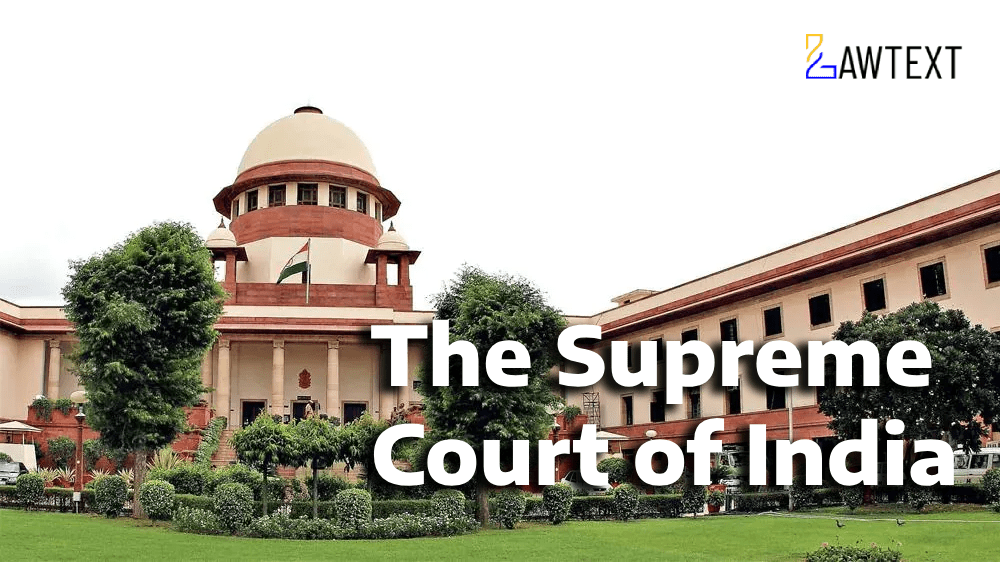
Supreme Court Directs Appointment of Regular CBI Director as Per Section 4A of DSPE Act, Quashes Interim Appointment. The Court held that the interim appointment of Mr. Nageshwar Rao without recommendation of the High Powered Selection Committee was illegal and the Government must follow the statutory procedure for appointing a regular Director.

  • 3
Judgement Image
Font size:
Print

Case Note & Summary

The writ petition was filed under Article 32 of the Constitution by Common Cause, a registered society, and an RTI activist seeking a writ of mandamus to direct the Union of India to appoint a regular Director of the Central Bureau of Investigation (CBI) in accordance with Section 4A of the Delhi Special Police Establishment Act, 1946 (DSPE Act). The petitioners also sought to quash the order dated 10.1.2019 appointing Mr. Nageshwar Rao as interim Director of CBI and to ensure transparency in the selection process. The background of the case involves the statutory framework for appointing the CBI Director, which requires a High Powered Selection Committee comprising the Prime Minister, the Leader of Opposition (or the leader of the single largest opposition party), and the Chief Justice of India or a nominated Supreme Court judge. This framework was established following the Supreme Court's directions in Vineet Narain v. Union of India (1998) to insulate the CBI from executive influence. The petitioners contended that on 23.10.2018, the Government divested the then Director Alok Verma of his powers and appointed Mr. Nageshwar Rao as interim Director without any recommendation from the Selection Committee, which was quashed by the Supreme Court on 8.1.2019 in W.P. (C) No.1315/2018. Despite this, on 10.1.2019, the Government again appointed Mr. Nageshwar Rao as interim Director citing the earlier arrangement, which the petitioners argued was illegal and in violation of the DSPE Act. The petitioners also highlighted lack of transparency, as RTI applications seeking details of the selection process were not adequately answered. The legal issues centered on whether the interim appointment without committee recommendation was valid and whether the Government was obligated to follow the statutory procedure for appointing a regular Director. The Court analyzed the provisions of Section 4A of the DSPE Act and its earlier judgment in the Vineet Narain case, emphasizing that the appointment must be made on the recommendation of the High Powered Selection Committee. The Court held that the interim appointment of Mr. Nageshwar Rao was illegal as it bypassed the committee and contravened the Act. The Court directed the Union of India to initiate the process for appointing a regular Director of CBI in accordance with Section 4A of the DSPE Act and to ensure transparency in the selection process. The petition was disposed of with these directions.

Headnote

A) Constitutional Law - Appointment of Director CBI - Section 4A of Delhi Special Police Establishment Act, 1946 - Mandamus - The writ petition sought direction to appoint a regular Director of CBI as per Section 4A and quash the interim appointment of Mr. Nageshwar Rao made without committee recommendation - Held that the interim appointment bypassing the High Powered Selection Committee is illegal and the Government must appoint a regular Director following the statutory procedure (Paras 1-13).

B) Administrative Law - Interim Appointment - Validity - Section 4A of DSPE Act, 1946 - The Government appointed Mr. Nageshwar Rao as interim Director without recommendation of the Selection Committee, relying on earlier arrangement quashed by the Court - Held that such appointment is in contravention of the DSPE Act and cannot be sustained (Paras 9-10).

C) Transparency - RTI Act - Disclosure of Selection Process - The petitioners sought information about shortlisting and selection of CBI Director under RTI Act - Held that transparency must be maintained in the appointment process as per earlier judgments (Paras 11-12).

Subscribe to unlock Headnote Subscribe Now

Issue of Consideration

Whether the appointment of Mr. Nageshwar Rao as interim Director of CBI without the recommendation of the High Powered Selection Committee under Section 4A of the Delhi Special Police Establishment Act, 1946 is valid and whether the Union of India is obligated to appoint a regular Director of CBI following the prescribed procedure.

Subscribe to unlock Issue of Consideration Subscribe Now

Final Decision

The Supreme Court directed the Union of India to initiate the process for appointment of a regular Director of CBI in accordance with Section 4A of the Delhi Special Police Establishment Act, 1946, and to ensure transparency in the selection process. The interim appointment of Mr. Nageshwar Rao was held to be illegal and in contravention of the Act. The petition was disposed of with these directions.

Law Points

  • Appointment of Director CBI must be made on recommendation of High Powered Selection Committee under Section 4A of DSPE Act
  • 1946
  • Interim appointment without committee recommendation is illegal
  • General Clauses Act provisions cannot override specific provisions of DSPE Act
  • Transparency in selection process is required under RTI Act
Subscribe to unlock Law Points Subscribe Now

Case Details

2019 LawText (SC) (2) 11

Writ Petition (C) No. 54 of 2019

2019-02-01

Arun Mishra, J.

Common Cause & Anr.

Union of India & Anr.

Subscribe to unlock Case Details (Citation, Judge, Date & more) Subscribe Now

Nature of Litigation

Public interest litigation seeking mandamus to appoint regular CBI Director and quash interim appointment.

Remedy Sought

Petitioners sought writ of mandamus to direct Union of India to appoint regular Director of CBI as per Section 4A of DSPE Act, quash order dated 10.1.2019 appointing Mr. Nageshwar Rao as interim Director, and ensure transparency in selection process.

Filing Reason

Government appointed Mr. Nageshwar Rao as interim Director of CBI without recommendation of High Powered Selection Committee, in violation of DSPE Act and earlier Supreme Court judgment.

Previous Decisions

Supreme Court in W.P. (C) No.1315/2018 quashed orders dated 23.10.2018 divesting Alok Verma and appointing M. Nageshwar Rao as interim Director, holding that General Clauses Act provisions do not apply to DSPE Act.

Issues

Whether the interim appointment of Mr. Nageshwar Rao as Director of CBI without recommendation of the High Powered Selection Committee under Section 4A of DSPE Act is valid? Whether the Union of India is obligated to appoint a regular Director of CBI following the procedure under Section 4A of DSPE Act? Whether transparency in the selection process for CBI Director is required under the RTI Act?

Submissions/Arguments

Petitioners argued that the appointment of Mr. Nageshwar Rao as interim Director was illegal as it bypassed the High Powered Selection Committee and contravened Section 4A of DSPE Act, and that the Government must appoint a regular Director following the statutory procedure. Respondent (Union of India) argued through Attorney General that the interim appointment was made as per earlier arrangement and was valid.

Ratio Decidendi

The appointment of Director CBI must be made strictly in accordance with Section 4A of the DSPE Act, which requires recommendation of the High Powered Selection Committee. Any interim appointment made without such recommendation is illegal and cannot be sustained. The General Clauses Act provisions cannot override the specific provisions of the DSPE Act.

Judgment Excerpts

The writ petition has been filed under Article 32 of the Constitution of India seeking issuance of a writ of mandamus to direct Union of India to appoint a regular Director of CBI forthwith by following the procedure laid down in section 4A of the Delhi Special Police Establishment Act, 1946. This Court in C.A. No.4303/2002 has clarified that as regards seniority mentioned in section 4A of the Delhi Special Police Establishment Act, 1946, ordinarily all the IPS officers of the seniormost four batches in the service on the date of retirement of CBI Director, irrespective of their empanelment, shall be eligible for consideration for appointment to the post of Director, CBI. The order dated 10.1.2019 states that the appointments committee of the Cabinet has approved the appointment of Mr. Nageshwar Rao 'as per the earlier arrangement'. As the said arrangement had been quashed by this Court as it was made in violation of procedure for CBI Director as defined in the DSPE Act, Government still invoked its earlier order which stood quashed to once again make appointment of CBI Director, even though it is not the competent authority and does not have any authority to make appointment, without following the due procedure laid down in the DSPE Act.

Procedural History

The writ petition was filed on 1.2.2019. Earlier, on 23.10.2018, the Government divested Alok Verma of his powers and appointed M. Nageshwar Rao as interim Director. This was challenged in W.P. (C) No.1315/2018, and on 8.1.2019, the Supreme Court quashed those orders. Despite this, on 10.1.2019, the Government again appointed M. Nageshwar Rao as interim Director. The present petition was then filed seeking mandamus for regular appointment and quashing of the 10.1.2019 order.

Acts & Sections

  • Delhi Special Police Establishment Act, 1946: Section 4A, Section 4B
  • Constitution of India: Article 32
  • Right to Information Act, 2005:
  • General Clauses Act, 1897: Section 14, Section 15, Section 16
  • Lokpal and Lokayuktas Act, 2013:
Subscribe to unlock full Legal Analysis Subscribe Now
Related Judgement
Supreme Court Supreme Court Directs Appointment of Regular CBI Director as Per Section 4A of DSPE Act, Quashes Interim Appointment. The Court held that the interim appointment of Mr. Nageshwar Rao without recommendation of the High Powered Selection Committee was ...
Related Judgement
Supreme Court Supreme Court Allows Appeal of Employee Retired Prematurely Based on Deemed Age — Resolution Cannot Override Service Rules. The Court held that the Board's resolution deeming age as 18 on appointment date could not reduce the actual retirement age ...