
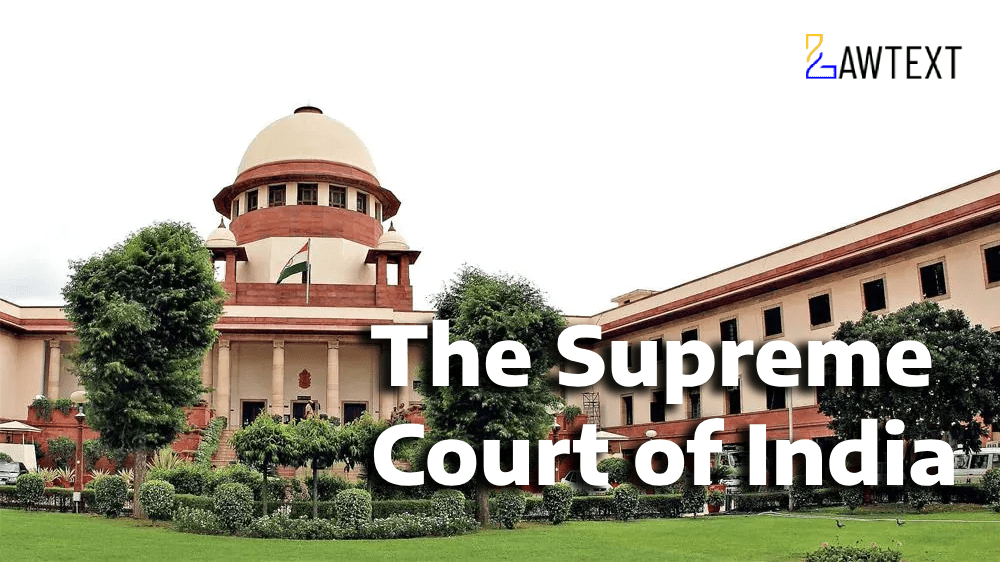
Supreme Court Dismisses Appeals in Partition Suit, Upholding High Court's Decree on Property Shares and Invalidating Compromise. Legal Heirs' Dispute Over Ancestral and Self-Acquired Properties Resolved with Shares Determined Under Hindu Law, and Compromise Set Aside Under Code of Civil Procedure, 1908.

  • 5
Judgement Image
Font size:
Print

Case Note & Summary

The litigation originated from a partition suit filed by Charulata Sahoo (plaintiff) against her brother Prafulla Sahoo (defendant No. 1) and sister Santilata (defendant No. 2) regarding properties inherited from their father Kumar Sahoo. The plaintiff sought a 1/3rd share in scheduled properties A to F. The Trial Court decreed the suit, classifying properties as ancestral and self-acquired, awarding the plaintiff and defendant No. 2 each a 1/6th share in ancestral properties and a 1/3rd share in self-acquired properties, with defendant No. 1 receiving the remainder. Defendant No. 1 appealed to the High Court, arguing all properties should be considered ancestral. During the appeal, defendant No. 2 compromised with defendant No. 1, relinquishing her share for consideration. The High Court dismissed the appeal but allowed cross-objections from defendant No. 2, setting aside the compromise as invalid. The legal representatives of defendant No. 1 then appealed to the Supreme Court. The core legal issues involved the correctness of the property classification and share determination, and the validity of the compromise. The appellants contended the High Court erred in upholding the partition decree and in setting aside the compromise. The respondents supported the High Court's decision. The Supreme Court analyzed the factual matrix and legal principles, noting the Trial Court's detailed classification was based on evidence. It upheld the High Court's affirmation of the decree, finding no error in the share allocation. Regarding the compromise, the Court affirmed its invalidity, as it was set aside in cross-objections. The Supreme Court dismissed the appeals, upholding the High Court's judgment and decree, thereby maintaining the partition as originally decreed with the compromise declared invalid.

Headnote

A) Property Law - Partition of Ancestral and Self-Acquired Properties - Determination of Shares - Hindu Succession Act, 1956 - Dispute involved partition of properties inherited from father Kumar Sahoo among his children - Trial Court classified properties as ancestral and self-acquired, awarding shares accordingly - High Court and Supreme Court upheld this classification and share determination - Held that plaintiff and defendant No. 2 were entitled to 1/6th share in ancestral properties and 1/3rd share in self-acquired properties, while defendant No. 1 received larger share (Paras 8-10).

B) Civil Procedure - Compromise in Partition Suits - Validity and Setting Aside - Code of Civil Procedure, 1908, Order XXIII Rule 3 - Defendant No. 2 entered into a compromise with defendant No. 1, relinquishing her share for consideration - High Court set aside this compromise as invalid in cross-objections - Supreme Court affirmed this decision, upholding the invalidity of the compromise (Paras 12-13).

C) Appellate Jurisdiction - Letters Patent Appeal - Dismissal and Affirmation - High Court of Orissa Letters Patent - Appellants filed Letters Patent Appeal against High Court's judgment - Division Bench dismissed the appeal, affirming the Trial Court's decree - Supreme Court upheld this dismissal, concluding no error in the High Court's decision (Paras 1-2).

Subscribe to unlock Headnote Subscribe Now

Issue of Consideration

Whether the High Court erred in dismissing the Letters Patent Appeal and affirming the partition decree, and whether the compromise between the defendants was invalid

Subscribe to unlock Issue of Consideration Subscribe Now

Final Decision

Supreme Court dismissed the appeals, upholding the High Court's judgment and decree dated 5.05.2011, thereby affirming the partition of properties as ancestral and self-acquired with specified shares and declaring the compromise invalid

Law Points

  • Partition of ancestral and self-acquired properties under Hindu law
  • determination of shares among legal heirs
  • validity of compromise in partition suits
  • principles of res judicata and estoppel
  • interpretation of preliminary and final decrees in partition proceedings

Subscribe to unlock Law Points Subscribe Now

Case Details

2023 LawText (SC) (3) 115

CIVIL APPEAL NO. 2913 - 2915 OF 20 18

2023-03-29

J. B. Pardiwala

Legal representatives and heirs of the original defendant No. 1 (Late Shri Prafulla Sahoo S/o Kumar Sahoo)

Respondent No. 1 (Original plaintiff Mrs. Charulata Sahoo daughter of Kumar Sahoo), Respondent No. 2 (Legal representatives and heirs of the original defendant No. 2 Mrs. Santilata D/o Kumar Sahoo)

Subscribe to unlock Case Details (Citation, Judge, Date & more) Subscribe Now

Nature of Litigation

Partition suit regarding ancestral properties of Kumar Sahoo among his legal heirs

Remedy Sought

Plaintiff sought a preliminary decree for partition of 1/3rd share in scheduled properties, mesne profits, and restraining defendant No. 1 from interference

Filing Reason

Dispute over shares in inherited properties after father's death

Previous Decisions

Trial Court decreed suit on 30.12.1986, awarding shares; High Court dismissed appeal and set aside compromise on 5.05.2011

Issues

Whether the suit properties are liable for partition among the parties What are the respective shares of the parties in the suit property Whether the compromise between defendant No. 1 and defendant No. 2 is valid

Submissions/Arguments

Appellants contended all properties should be considered ancestral Respondents supported the High Court's decision upholding the partition decree and invalidating the compromise

Ratio Decidendi

The classification of properties as ancestral and self-acquired for partition purposes must be based on evidence, and compromises in partition suits can be set aside if invalid; appellate courts should not interfere with factual findings unless perverse

Judgment Excerpts

Since the issues involved in both the captioned appeals are interrelated; the parties are also same and the challenge is also to the self-same judgment and decree passed by the High Court of Orissa The Trial Court decreed the suit and observed that the plaintiff had one-sixth share in the ancestral property and one-third share in the separate property High Court dismissed the Letters Patent Appeal filed by the appellants herein thereby affirming the judgment and decree of partition passed by the Trial Court allowed the cross-objections filed by the Original Defendant No. 2, thereby setting aside and declaring the compromise recorded by the First Appellate Court entered into between the Late Prafulla Sahoo and his sister i.e., the Defendant No. 2 in the suit to be invalid

Procedural History

Title Suit No. 348 of 1980 filed on 3.12.1980; Trial Court decreed on 30.12.1986; First Appeal No. 359 of 1986 filed by defendant No. 1; Compromise entered in 1991; High Court dismissed appeal and set aside compromise on 5.05.2011; Letters Patent Appeal dismissed; Supreme Court appeals filed and dismissed

Acts & Sections

  • Hindu Succession Act, 1956:
  • Code of Civil Procedure, 1908: Order XXIII Rule 3
  • Urban Land Ceiling & Regulation Act, 1976:
Subscribe to unlock full Legal Analysis Subscribe Now
Related Judgement
Supreme Court Supreme Court Dismisses Appeals in Partition Suit, Upholding High Court's Decree on Property Shares and Invalidating Compromise. Legal Heirs' Dispute Over Ancestral and Self-Acquired Properties Resolved with Shares Determined Under Hindu Law, and Com...
Related Judgement
Supreme Court Supreme Court Dismisses State Appeal in Habeas Corpus Case Involving Remission and Concurrent Sentences. The Court upheld the High Court's writ of habeas corpus, finding that a convict's continued detention after remission of a life sentence was ille...





