
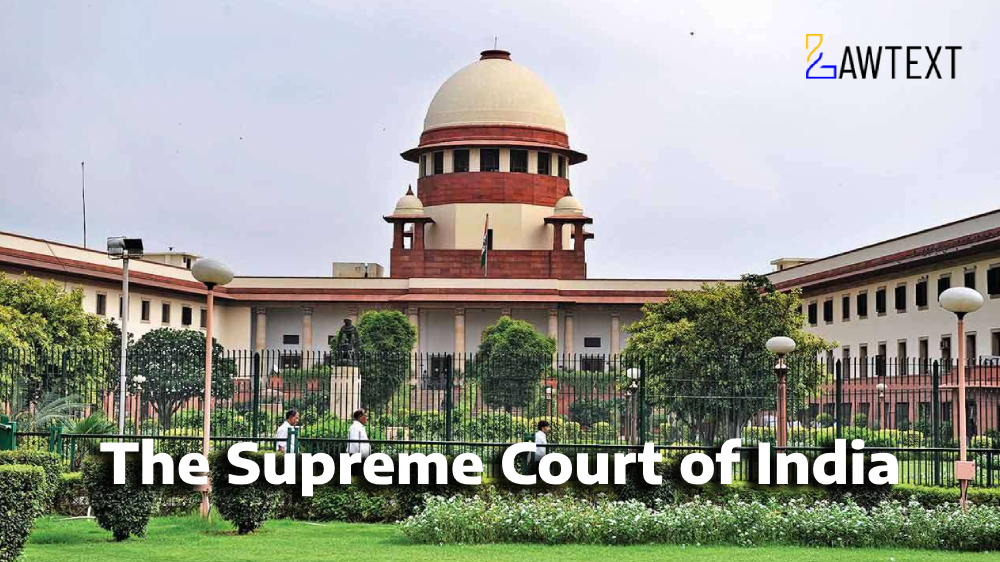
Supreme Court Upholds High Court's Rejection of Application Under Order VII Rule 11 CPC in Suit for Damages. Court fees are not payable on a tentative claim at the initial stage when the exact valuation is to be adjudicated later, as per Section 7(i) of the Court Fees Act, 1870 and Order VII Rule 11 CPC.

  • 6
Judgement Image
Font size:
Print

Case Note & Summary

The dispute arose from a suit filed by the respondent, a retired government officer and advocate, against the State of Punjab and its officers for recovery of Rs.20 Lakhs as damages due to denial of his status as a freedom fighter and non-issuance of a certificate, causing mental tension, litigation expenses, and loss of reputation. The suit was registered in the Court of Civil Judge (Senior Division), Jalandhar. The respondent affixed a court fee of Rs.50, relying on a High Court judgment, and undertook to pay court fees on the amount adjudicated later. The appellants filed an application under Order VII Rule 11 CPC seeking rejection of the plaint for insufficient court fees, which the Trial Court allowed, directing payment of ad valorem fees on Rs.20 Lakhs. The High Court, in revision, set aside this order and rejected the application, holding that ad valorem fees were not payable initially as the damages were yet to be adjudicated. The Supreme Court granted leave and heard the appeal. The appellants argued that the High Court erred in relying on inapplicable judgments and that ad valorem fees under Section 7(i) of the Court Fees Act, 1870 were payable, citing precedents like State of Punjab v. Jagdip Singh Chowhan. The respondent contended that valuation could not be ascertained initially, and his undertaking sufficed, supported by judgments such as M/s Commercial Aviation & Travel Company v. Vimla Pannalal. The Court analyzed the provisions and precedents, emphasizing that where damages are uncertain, ad valorem fees need not be paid at the outset, and an undertaking to pay later is acceptable. It upheld the High Court's decision, rejecting the application under Order VII Rule 11 CPC, and directed the Trial Court to proceed with the suit, noting that the suit had been dismissed during pendency and an appeal was pending.

Headnote

A) Civil Procedure - Rejection of Plaint - Order VII Rule 11 CPC - The Supreme Court upheld the High Court's rejection of the application under Order VII Rule 11 CPC, finding that the plaint disclosed a cause of action for damages and the issue of court fees could be addressed later, as the exact valuation was not ascertainable at the initial stage. Held that the application was rightly rejected, allowing the suit to proceed. (Paras 1-14)

B) Court Fees - Valuation and Payment - Section 7(i) Court Fees Act, 1870 - The Court held that ad valorem court fees are not payable on a tentative claim of damages at the institution stage when the exact amount is to be adjudicated later. The plaintiff's undertaking to pay court fees on the adjudicated amount was deemed sufficient, following precedents where valuation could not be initially ascertained. (Paras 10-13)

Subscribe to unlock Headnote Subscribe Now

Issue of Consideration

Whether the High Court was correct in rejecting the application under Order VII Rule 11 CPC filed by the appellants seeking rejection of the plaint on the ground of non-payment of requisite court fees on the amount of Rs.20 Lakhs claimed as damages, and whether ad valorem court fees are payable at the initial stage of the suit

Subscribe to unlock Issue of Consideration Subscribe Now

Final Decision

Supreme Court upheld the High Court's judgment and order dated 11.08.2017, rejecting the application under Order VII Rule 11 CPC, and directed the Trial Court to proceed with the suit

Law Points

  • Court fees under Section 7(i) of the Court Fees Act
  • 1870 are payable on the amount claimed in a suit for damages
  • but where the exact valuation cannot be ascertained at the institution stage
  • ad valorem court fees may not be required initially
  • and an undertaking to pay court fees on the adjudicated amount suffices
  • Order VII Rule 11 CPC application for rejection of plaint on grounds of insufficient court fees should be rejected if the plaint discloses a cause of action and the deficiency can be cured later

Subscribe to unlock Law Points Subscribe Now

Case Details

2022 Lawtext (SC) (3) 42

CIVIL APPEAL NO(s). 2064 OF 2022 (arising out of SLP (Civil) No(s). 12468 of 2018)  

2022-03-16

Vikram Nath, J.

Ms. Uttara Babbar, Advocate for appellant; Shri Abhimanyu Tiwari, Advocate for respondent

State of Punjab and its officers

Dev Brat Sharma

Subscribe to unlock Case Details (Citation, Judge, Date & more) Subscribe Now

Nature of Litigation

Suit for recovery of Rs.20 Lakhs as damages for denial of freedom fighter status and non-issuance of certificate, causing mental tension, litigation expenses, and loss of reputation

Remedy Sought

Respondent (plaintiff) sought decree for Rs.20,00,000/- as damages with interest at 9% per annum from date of institution till realization

Filing Reason

Respondent filed suit after legal notice under Section 80 CPC was not complied with, claiming damages due to illegal acts of state officers

Previous Decisions

Trial Court directed respondent to pay court fees on Rs.20 Lakhs; High Court set aside this order and rejected application under Order VII Rule 11 CPC; during pendency of SLP, suit was dismissed by Trial Court on 28.02.2020, and appeal under Section 96 CPC is pending

Issues

Whether the High Court was correct in rejecting the application under Order VII Rule 11 CPC on grounds of insufficient court fees Whether ad valorem court fees are payable at the initial stage on the tentative claim of Rs.20 Lakhs as damages

Submissions/Arguments

Appellants argued High Court erred in relying on inapplicable judgments, ad valorem fees under Section 7(i) are payable, and suit was frivolous Respondent argued valuation could not be ascertained initially, undertaking to pay court fees later suffices, and High Court order was valid

Ratio Decidendi

In a suit for damages where the exact valuation cannot be ascertained at the institution stage, ad valorem court fees are not payable initially, and an undertaking to pay court fees on the adjudicated amount is sufficient; an application under Order VII Rule 11 CPC for rejection of plaint on grounds of insufficient court fees should be rejected if the plaint discloses a cause of action

Judgment Excerpts

Leave granted The State of Punjab and its officers have assailed the correctness of the judgment and order dated 11.08.2017 passed by the High Court of Punjab and Haryana the respondent instituted a suit for recovery of Rs.20 Lakhs as damages the respondent undertakes to pay the court fee on the sum to be adjudicated as damages by this Hon’ble court in due course of time the High Court set aside the order of the Trial Court dated 10.11.2016 and rejected the application of the appellant under Order VII Rule 11 CPC

Procedural History

Respondent filed suit in Trial Court; appellants filed application under Order VII Rule 11 CPC; Trial Court directed payment of court fees on Rs.20 Lakhs; respondent filed revision under Section 115 CPC to High Court; High Court set aside Trial Court order and rejected application; appellants filed Special Leave Petition to Supreme Court; during pendency, suit dismissed by Trial Court on 28.02.2020; respondent filed appeal under Section 96 CPC pending

Acts & Sections

  • Code of Civil Procedure, 1908: Order VII Rule 11, Section 151, Section 80, Section 96, Section 115
  • Court Fees Act, 1870: Section 7(i), Section 7(iv)
Subscribe to unlock full Legal Analysis Subscribe Now
Related Judgement
Supreme Court Supreme Court Upholds High Court's Rejection of Application Under Order VII Rule 11 CPC in Suit for Damages. Court fees are not payable on a tentative claim at the initial stage when the exact valuation is to be adjudicated later, as per Section 7(i)...
Related Judgement
Supreme Court SC Appoints Retired Judge to Oversee Elections at Oachira Parabrahma Temple. Safeguarding Ancient Temple Governance: A Step Toward Transparency and Accountability.





