
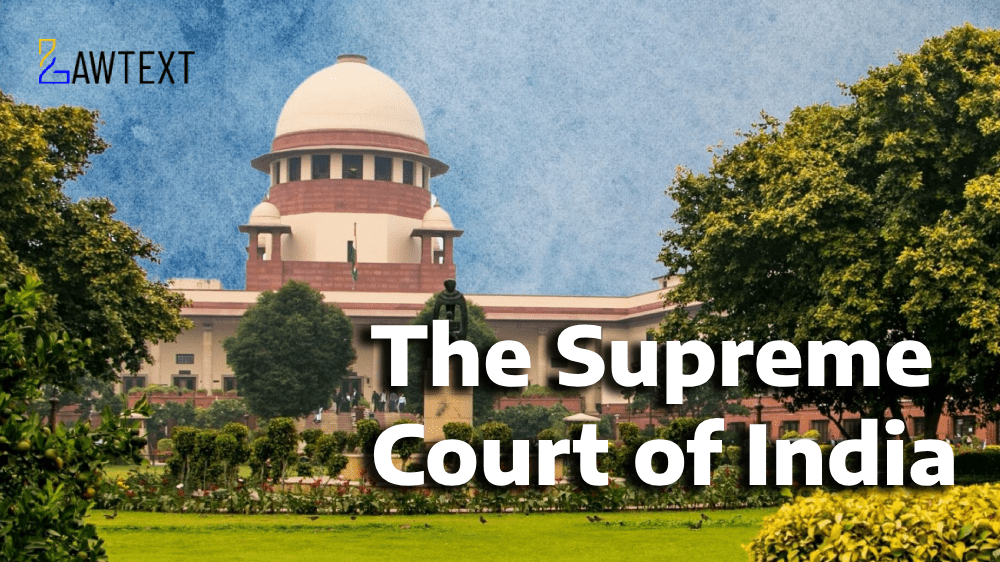
Case Note & Summary
The Supreme Court of India, in a judgment delivered by Dr Dhananjaya Y Chandrachud, CJI, dismissed a petition filed under Article 32 of the Constitution by Lok Prahari, a society registered under the Societies Registration Act, 1860. The petitioner challenged the constitutional validity of Rule 39-AA of the Conduct of Election Rules, 1961 and the proviso to Section 33 of the Representation of the People Act, 1951. The dispute arose from amendments introduced by Act 40 of 2003, which replaced the secret ballot with an open ballot system for elections to the Rajya Sabha (Council of States), as per Article 80(4) of the Constitution. Rule 39-AA requires electors who are members of political parties to show their marked ballot papers to authorized agents of their party before insertion into the ballot box; refusal results in cancellation of the ballot. The petitioner argued that this rule was ultra vires Article 80(4), violative of Article 14, and contrary to Section 123(2) of the 1951 Act, and sought to have it read down to avoid loss of voting rights. The Court heard arguments from Mr S N Shukla (petitioner in person), Mr K M Nataraj (Additional Solicitor General for the Union of India), and Mr Amit Sharma (counsel for the Election Commission of India). The legal issues centered on whether the open ballot system and Rule 39-AA were constitutionally permissible, particularly in light of the right to vote and principles of electoral purity. The petitioner contended that the rule infringed on the right to vote under Article 80(4) and should be reinterpreted to allow the Presiding Officer to disclose the ballot if the elector refuses. The Court analyzed the provisions and referred to the Constitution Bench decision in Kuldip Nayar v Union of India, which upheld the open ballot system as a regulatory measure to prevent cross-voting and uphold party discipline in proportional representation elections. The Court reasoned that the amendment did not take away the right to vote but regulated it to eliminate evils like cross-voting, and that secrecy of voting is distinct in general elections versus proportional representation. It rejected the petitioner's reading-down proposal, noting it was outside the petition's scope and without merit, as the rule's cancellation mechanism is a consequence of refusing party discipline. The Court also addressed the challenge to the proviso to Section 33, but the judgment text cut off before detailing this aspect. Ultimately, the Court dismissed the petition, upholding the validity of Rule 39-AA and implicitly the proviso, favoring the respondents' position that the rules are constitutionally sound.
Headnote
A) Constitutional Law - Election Law - Open Ballot System - Constitution of India, 1950, Article 80(4) - The petitioner challenged Rule 39-AA of the Conduct of Election Rules, 1961 as ultra vires Article 80(4) of the Constitution, violative of Article 14, and contrary to Section 123(2) of the Representation of the People Act, 1951. The Court held that the challenge must fail in view of the Constitution Bench judgment in Kuldip Nayar v Union of India, which upheld the open ballot system for Rajya Sabha elections as a legitimate regulatory method to prevent cross-voting and maintain party discipline, not taking away but regulating the right to vote. (Paras 5, 11-13, 16) B) Constitutional Law - Election Law - Proportional Representation - Constitution of India, 1950, Article 80(4) - The Court distinguished between constituency-based representation in general elections and proportional representation in Rajya Sabha elections, noting that voters in proportional representation are subject to party discipline. The Constitution Bench held that Parliament can prescribe an open ballot methodology for Council of States elections to eliminate cross-voting by electors elected on party nomination, ensuring purity of elections. (Paras 12-13) C) Constitutional Law - Election Law - Rule 39-AA Interpretation - Conduct of Election Rules, 1961, Rule 39-AA - The petitioner sought to read down Rule 39-AA by proposing that if an elector refuses to show the ballot to the party agent, the Presiding Officer should disclose it instead, to avoid loss of voting right. The Court rejected this submission, stating it was not part of the petition and lacked merit, as the rule regulates voting by requiring disclosure to prevent cross-voting, and cancellation for refusal is a consequence of evading party discipline. (Paras 14-16)
Issue of Consideration
Whether Rule 39-AA of the Conduct of Election Rules, 1961 and the proviso to Section 33 of the Representation of the People Act, 1951 are constitutionally valid.
Final Decision
The Court dismissed the petition, upholding the constitutional validity of Rule 39-AA and the proviso to Section 33, based on the precedent in Kuldip Nayar v Union of India.
Law Points
- Constitutional validity of election rules
- Proportional representation
- Open ballot system
- Party discipline
- Right to vote regulation
- Ultra vires challenge
- Article 14 equality
- Article 80(4) compliance
- Secrecy of voting
- Cross-voting prevention






