
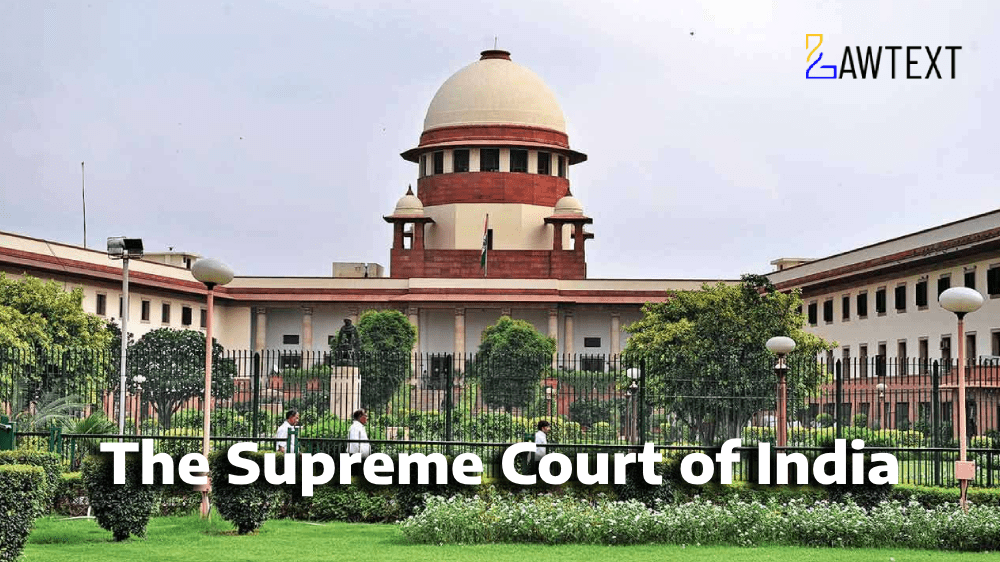
Case Note & Summary
The appeal arose from a murder conviction where the appellant was found guilty under Sections 302 and 201 of the Indian Penal Code, 1860, for allegedly killing his wife and disposing of her body in a well. The trial court sentenced him to life imprisonment and rigorous imprisonment, affirmed by the High Court despite non-examination of the investigating officer. The prosecution's case relied on circumstantial evidence and testimonies of witnesses, but key witnesses provided hearsay and uncorroborated statements. The appellant challenged the conviction, arguing insufficient evidence and procedural flaws. The Supreme Court analyzed the principles of circumstantial evidence, citing Sharad Birdhichand Sarda v. State of Maharashtra, which requires full establishment of circumstances, consistency only with guilt, conclusiveness, exclusion of other hypotheses, and a complete chain. The court found that the prosecution failed to meet this standard, as testimonies were vague and lacked corroboration, and the non-examination of the investigating officer rendered the case doubtful. The court emphasized that suspicion cannot substitute proof and benefit of doubt must favor the accused. Interfering with concurrent findings due to travesty of justice, the court acquitted the appellant, holding the conviction unsustainable.
Headnote
A) Criminal Law - Circumstantial Evidence - Standard of Proof - Indian Penal Code, 1860, Sections 302, 201 - Prosecution failed to establish guilt beyond reasonable doubt as circumstances were not fully proven, consistent only with guilt, conclusive, or forming a complete chain - Held that conviction cannot be based on suspicion or incomplete evidence, and benefit of doubt must be given to accused (Paras 7-9, 15-16). B) Criminal Law - Evidence - Hearsay and Uncorroborated Testimony - Indian Penal Code, 1860, Sections 302, 201 - Testimonies of key witnesses (PW-9 and PW-10) were hearsay, vague, and uncorroborated, lacking specifics on time, place, or manner - Held that such evidence is inadmissible and insufficient to prove guilt, rendering prosecution case unproven (Paras 10-11). C) Criminal Law - Investigation - Non-Examination of Investigating Officer - Indian Penal Code, 1860, Section 201 - Investigating officer was not examined, rendering prosecution case doubtful and offence under Section 201 unproven - Held that non-examination in attending circumstances undermined evidence linking accused to crime, especially for disappearance of evidence (Paras 2, 8, 14). D) Criminal Law - Appellate Jurisdiction - Interference with Concurrent Findings - Supreme Court can interfere only when findings are absurd or cause travesty of justice - Held that courts below erred in conviction based on incorrect appreciation of evidence, leading to miscarriage of justice warranting Supreme Court intervention (Paras 18-19).
Issue of Consideration
Whether the conviction of the appellant under Sections 302 and 201 of the Indian Penal Code, 1860, based on circumstantial evidence, is sustainable given the lack of proof beyond reasonable doubt and non-examination of the investigating officer
Final Decision
Supreme Court allowed the appeal, set aside the conviction and sentence under Sections 302 and 201 IPC, and acquitted the appellant
Law Points
- Circumstantial evidence must be fully established
- consistent only with guilt
- conclusive
- exclude every other hypothesis
- and form a complete chain
- suspicion cannot substitute proof
- benefit of doubt must be given to accused
- non-examination of investigating officer can render prosecution case doubtful
- hearsay evidence is inadmissible and uncorroborated statements lack evidentiary value






