
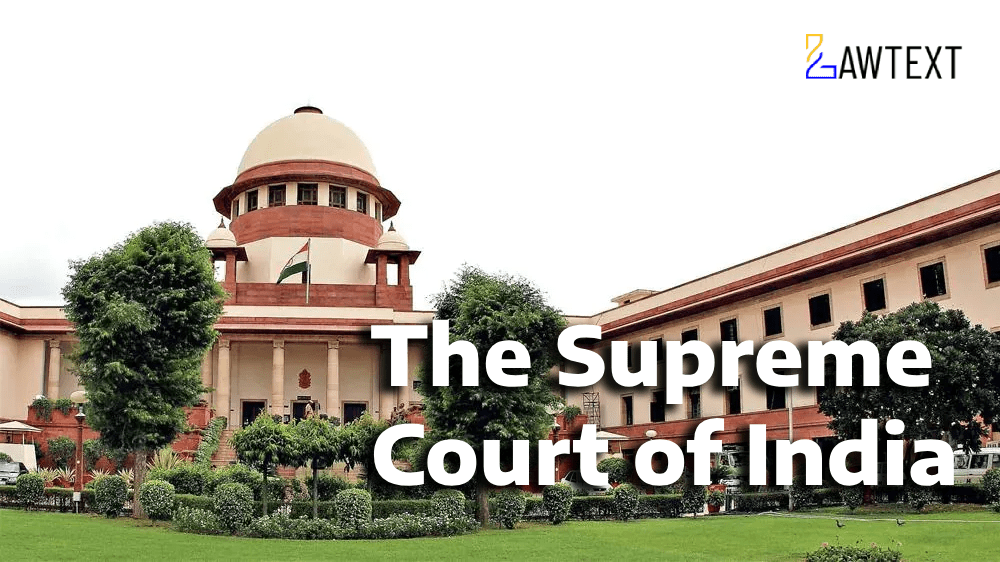
Case Note & Summary
The dispute originated from land acquisition proceedings initiated by the State of Haryana for public purposes, specifically for developing residential and commercial areas in Sector-2, Bahadurgarh. Notification under Section 6 of the Land Acquisition Act, 1894 was issued on 24th May 1996, followed by Award No.3 dated 24th May 1998 determining compensation ranging from Rs.2 lakh to Rs.4.75 lakh per acre. Landowners, including the appellant, sought higher compensation through reference proceedings, resulting in an award dated 31st January 2005 by the Reference Court that enhanced compensation rates and granted statutory benefits. The appellant failed to timely appeal this award, leading to applications for condonation of delay before the High Court, which were rejected through judgment dated 30th October 2019. The core legal issue before the Supreme Court was whether the High Court justifiedly refused to condone the delay in filing appeals regarding land acquisition compensation. The appellant argued that documents were given to a concerned person for filing the appeal but it was not filed, while the State likely contended against condonation due to excessive delay. The Court analyzed the principles governing condonation of delay, extensively referencing Collector, Land Acquisition, Anand Nag & Anr. v. Mst. Katiji & Ors., which advocates a liberal, justice-oriented approach rather than pedantic technicalities. The Court noted that refusal to condone delay could defeat substantial justice, especially in land acquisition cases where compensation rights are fundamental under Article 300A of the Constitution. Examining precedents like Dhiraj Singh v. State of Haryana & Ors. and Huchanagouda v. Assistant Commissioner and Land Acquisition Officer & Anr., the Court observed that substantial delays have been condoned in similar acquisition matters, particularly considering the circumstances of landowners. However, to balance equities, the Court emphasized that appellants should not receive interest for the delayed period, as established in Executive Engineer, Nimna Dudhna Project Selu v. State of Maharashtra & Ors. The Court concluded that the delay should have been condoned since the appellant's position that he requested the appeal filing but it was not done through no fault of his own remained uncontroverted. Consequently, the appeals were allowed, the impugned judgments set aside, and matters remanded to the High Court for fresh consideration on all aspects except delay, with directions for expeditious disposal and denial of interest for the condoned delay period.
Headnote
A) Civil Procedure - Condonation of Delay - Liberal Approach - Code of Civil Procedure, 1908 - The Supreme Court emphasized a liberal approach in condoning delay, noting that refusal can defeat justice while condonation allows merits-based decisions. The Court cited Collector, Land Acquisition, Anand Nag & Anr. v. Mst. Katiji & Ors. principles, rejecting pedantic approaches and preferring substantial justice over technical considerations. Held that delay should not deny land losers just compensation. (Paras 8-11) B) Constitutional Law - Land Acquisition - Right to Compensation - Article 300A, Constitution of India - The Court recognized that landowners can only be divested of property through lawful procedure with appropriate compensation, referencing Article 300A and 31A. This constitutional protection underpins the need to ensure fair compensation despite procedural delays. (Para 12) C) Land Acquisition - Compensation Appeals - Delay Consequences - Land Acquisition Act, 1894 - While condoning substantial delay, the Court balanced equities by denying interest for the delayed period to prevent prejudice to acquiring authorities and undue advantage to landowners. This approach ensures market value determination relates back to the preliminary notification date. (Paras 9-10, 13)
Issue of Consideration
Whether the High Court is justified in refusing to condone the delay in filing appeals concerning compensation for land acquired by the State for public purposes
Final Decision
Appeals allowed. Impugned judgment and orders set aside. Matters remanded to High Court for fresh consideration on all aspects except delay. Appellant not entitled to interest for the delayed period. High Court directed to decide matters expeditiously.
Law Points
- Liberal approach in condonation of delay
- Substantial justice over technicalities
- No presumption of deliberate delay
- Land acquisition compensation rights under Article 300A
- Interest denial for delayed period






