
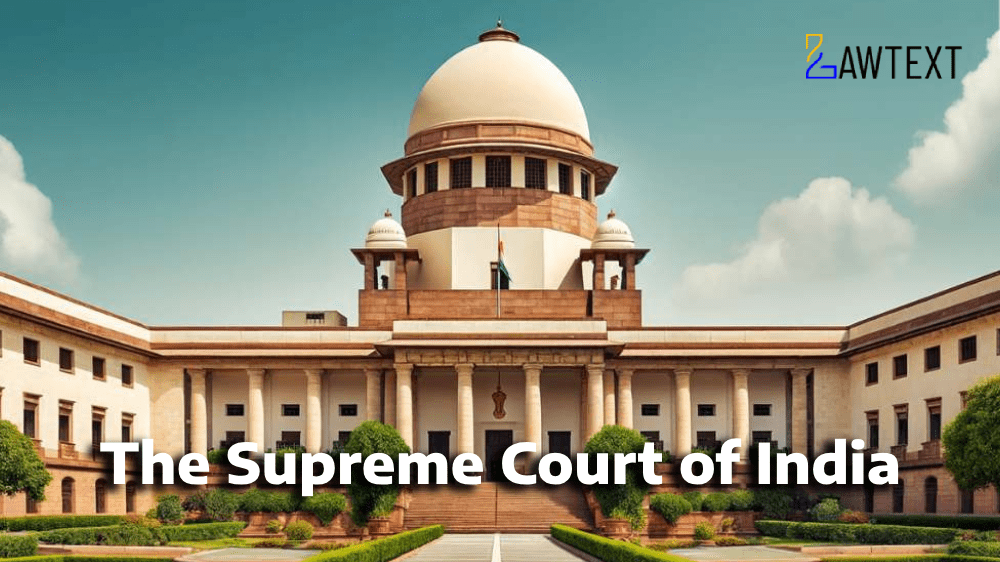
Supreme Court Dismisses Petition Seeking Renaming of Historical Places Under Article 32 for Lack of Justiciability and Secular Concerns. The court held that directions to rename places based on historical grievances involve policy matters and could undermine secularism as a basic feature of the Constitution, thus not enforceable under fundamental rights.

  • 3
Judgement Image
Font size:
Print

Case Note & Summary

The petitioner, appearing in-person, filed a writ petition under Article 32 of the Constitution of India, seeking reliefs including direction to the Home Ministry to constitute a 'Renaming Commission' to find original names of ancient historical cultural religious places allegedly renamed by barbaric foreign invaders, or alternatively, direct the Archaeological Survey of India to research and publish such names, and update government records. The petitioner invoked fundamental rights under Articles 21 (right to dignity), 25 (right to religion), 29 (right to culture), and 19(1)(a) (right to know), arguing that the current names compromise sovereignty and national integrity. The court heard the petitioner's submissions and considered the questions of law raised, which pertained to whether continuing such names is against sovereignty, obligates restoration to secure rights, relates to national unity, and connects to religious and cultural rights. In its analysis, the court emphasized that India is a secular country, with secularism being a basic feature of the Constitution as established in precedents like Kesavananda Bharati and S.R. Bommai. It highlighted that the Constitution prohibits mixing religion with secular state activities and promotes equal treatment of all religions. The court reasoned that the reliefs sought could encroach into secular domains and potentially undermine the secular fabric by introducing religious considerations into state functions. It noted that such matters involve policy decisions and historical interpretations that are not justiciable under fundamental rights enforcement. The court dismissed the petition, holding that the claims did not warrant judicial intervention as they could foster divisiveness and contravene constitutional principles of secularism and national unity.

Headnote

A) Constitutional Law - Secularism - Basic Structure Doctrine - Constitution of India, 1950, Articles 14, 15, 16, 19, 21, 25, 29, 32, 44, 51-A - Petition sought directions to rename historical places to restore original names, invoking fundamental rights to dignity, religion, culture, and knowledge - Court held that secularism is a basic feature of the Constitution, requiring equal treatment of all religions and separation of religion from state secular activities - The reliefs sought were found to potentially undermine secularism and national unity by mixing religion with state functions (Paras 5-6).

B) Constitutional Law - Fundamental Rights - Enforcement under Article 32 - Constitution of India, 1950, Article 32 - Petitioner filed under Article 32 seeking enforcement of fundamental rights related to renaming historical places - Court emphasized its role in enforcing fundamental rights but found the petition's claims not justiciable as they involved policy matters and could contravene secular principles - Held that the court cannot direct the executive in matters of historical nomenclature that may affect secular fabric (Paras 5-6).

C) Constitutional Law - Sovereignty and National Integrity - Preamble and Basic Structure - Constitution of India, 1950, Preamble - Petitioner argued that continuing names of places after foreign invaders compromises sovereignty and national integrity - Court referenced the Preamble's commitment to unity and integrity, and secularism as part of the basic structure - Held that the petition's approach could foster divisiveness rather than promote national unity, aligning with constitutional goals of fraternity and composite culture (Paras 5-6).

Subscribe to unlock Headnote Subscribe Now

Issue of Consideration

Whether the petition seeking direction to constitute a Renaming Commission and restore original names of ancient historical cultural religious places, allegedly renamed by foreign invaders, raises justiciable issues under fundamental rights and constitutional principles.

Subscribe to unlock Issue of Consideration Subscribe Now

Final Decision

The court dismissed the petition, holding that the reliefs sought are not justiciable as they involve policy matters and could undermine secularism, a basic feature of the Constitution.

Law Points

  • Secularism is a basic feature of the Constitution
  • Fundamental rights enforcement under Article 32
  • Right to dignity under Article 21
  • Right to religion under Article 25
  • Right to culture under Article 29
  • Right to know under Article 19(1)(a)
  • Sovereignty and unity of the nation

Subscribe to unlock Law Points Subscribe Now

Case Details

2023 LawText (SC) (2) 22

WRIT PETITION (CIVIL) NO.190 OF 2023

2023-02-27

K.M. Joseph

Shri Ashwini Kumar Upadhyay (in-person)

Shri Ashwini Kumar Upadhyay

UNION OF INDIA & ORS.

Subscribe to unlock Case Details (Citation, Judge, Date & more) Subscribe Now

Nature of Litigation

Writ petition under Article 32 of the Constitution of India seeking directions for renaming historical places

Remedy Sought

Petitioner seeks direction to constitute a Renaming Commission, research original names, and update government records

Filing Reason

Alleged that ancient historical cultural religious places are named after barbaric foreign invaders, compromising fundamental rights and sovereignty

Issues

Whether continuing the names of ancient historical cultural religious places, in the names of barbaric invaders is against the Sovereignty? Whether Centre and States are obligated to restore the names of ancient historical cultural religious places in their original names to secure Right to Dignity guaranteed under Article 21 of the Constitution? Whether the relief claimed for restoration of names of ancient historical cultural religious places, which were changed during foreign rule, relates to Unity and Integrity of the Nation, the laudable objective sought to be achieved in the Preamble of the Constitution of India? Whether Right to profess, practice and propagate religion, is intimately connected with the names of religious places and therefore the changes made during foreign rule must be restored to enable the citizens to freely Profess, Practice and Propagate Religion guaranteed Article 25? Whether the names of places prevalent during Ramayana and Mahabharata Period were arbitrarily and illegally changed during foreign rule, ought to be restored so as to protect the Right to Conserve the Ancient Culture, guaranteed under Article 29 of the Constitution of India? Whether restoration of the names of the ancient historical cultural religious places, is connected with Right to Identity guaranteed under Article 21? Whether Right to Know guaranteed under Article 19 includes the right to know Original Names of the ancient historical cultural religious places?

Submissions/Arguments

Petitioner argued that continuing names after foreign invaders violates sovereignty and fundamental rights under Articles 21, 25, 29, and 19 Petitioner invoked right to dignity, religion, culture, and knowledge, and claimed that restoration of original names is necessary for national unity and integrity

Ratio Decidendi

Secularism is a basic feature of the Constitution requiring equal treatment of all religions and separation of religion from state secular activities; petitions seeking to rename historical places based on religious or historical grievances are not justiciable under Article 32 as they may contravene secular principles and involve executive policy decisions.

Judgment Excerpts

India, that is ‘Bharat’ in terms of the preamble, is a secular country. Secularism has been accepted by a Bench of nine learned Judges in the decision reported in S.R. Bommai and Others v. Union of India and Others, as a facet of the basic structure of the Constitution. The freedom and tolerance of religion is only to the extent of permitting pursuit of spiritual life which is different from the secular life. Secularism is thus more than a passive attitude of religious tolerance. It is a positive concept of equal treatment of all religions.

Procedural History

Petitioner filed writ petition under Article 32; court heard petitioner in-person; considered questions of law; dismissed petition based on constitutional principles.

Acts & Sections

  • Constitution of India, 1950: Articles 14, 15, 16, 19, 21, 25, 29, 32, 44, 51-A
  • Representation of the People Act, 1951: Section 123(3), Section 123(3-A)
Subscribe to unlock full Legal Analysis Subscribe Now
Related Judgement
Supreme Court Supreme Court Dismisses Petition Seeking Renaming of Historical Places Under Article 32 for Lack of Justiciability and Secular Concerns. The court held that directions to rename places based on historical grievances involve policy matters and could u...
Related Judgement
Supreme Court Supreme Court Dismisses Petition by Judicial Officer Seeking Reinstatement After Resignation. Transfer Found Not Illegal Under Madhya Pradesh Higher Judicial Services Transfer Policy, and Resignation Did Not Amount to Constructive Dismissal Under Con...




