
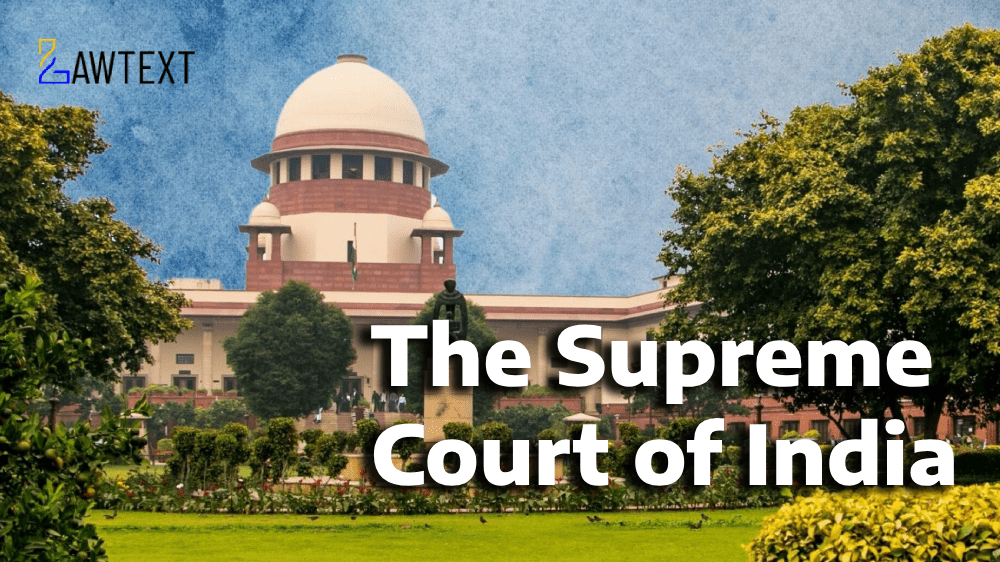
Case Note & Summary
The dispute arose from a petition filed by Kerala Ayurvedic Co-operative Society Limited before the Lucknow Bench of the High Court of Judicature at Allahabad under Article 226 of the Constitution, challenging an order by the State of Uttar Pradesh for purchasing Ayurvedic medicines from Indian Medicines Pharmaceutical Corporation Limited without inviting tenders. The State of Uttar Pradesh and IMPCL appealed to the Supreme Court under Article 136 against the High Court's judgment dated 18 October 2019, which allowed the petition and directed the state to adopt a transparent process after inviting tenders. The core legal issue was whether paragraph 4(vi)(b) of the Operational Guidelines of the National AYUSH Mission permitted the state to procure drugs solely from IMPCL without a tendering process. The facts involved the launch of the National AYUSH Mission in September 2014 to promote AYUSH medical systems, with paragraph 4(vi)(b) specifying that at least 50% of grant-in-aid must be used for procuring medicines from IMPCL, Public Sector Undertakings, state government pharmacies, and cooperatives. The Uttar Pradesh State AYUSH Society had been purchasing from IMPCL on a nomination basis, prompting the first respondent, a licensed and GMP-certified cooperative society, to seek either direct orders or a tender process. The High Court held the practice illegal, requiring tenders for competitive rates and quality, and allowed existing payments to IMPCL for 2019-20. In submissions, IMPCL argued its unique government setup ensured quality and affordable prices, with procurement not requiring tenders as there was no disposal of state property, and interpreted paragraph 4(vi)(b) as allowing discretion. The first respondent contended that all establishments in paragraph 4(vi)(b) are equally eligible, necessitating a fair process like tenders to prevent arbitrary preference. The court's analysis focused on judicial review of government contracts, the interpretation of the guidelines, and the constitutional principles of transparency and fairness in state largesse. The decision upheld the High Court's direction for a tender process, emphasizing the need for competition and quality assurance in procurement under the National AYUSH Mission.
Headnote
A) Administrative Law - Government Contracts - Judicial Review - Constitution of India, 1950, Article 226 - The High Court allowed a writ petition challenging the purchase order for Ayurvedic medicines issued to IMPCL without tenders, directing a transparent process after inviting tenders. Held that the practice of purchasing only from IMPCL was illegal and that paragraph 4 of the Operational Guidelines requires tenders from prescribed establishments to ensure competition and quality. (Paras 1, 7) B) Constitutional Law - State Largesse - Transparency and Fairness - Constitution of India, 1950 - The court considered the conflation of power and duty in state largesse, emphasizing that government procurement must adhere to principles of transparency and fairness. The issue involved whether the state could arbitrarily prefer one eligible entity over others without a fair process. (Paras 1, 3.1) C) Statutory Interpretation - Operational Guidelines - Procurement Requirements - National AYUSH Mission Operational Guidelines, Paragraph 4(vi)(b) - The court analyzed paragraph 4(vi)(b), which states that at least 50% of grant-in-aid must be used for procuring medicines from IMPCL or other specified establishments. The interpretation centered on whether this allows sole procurement from IMPCL without tenders or requires a competitive process among all eligible entities. (Paras 1, 3.3, 7)
Issue of Consideration
Whether, under paragraph 4(vi)(b) of the Operational Guidelines of the National AYUSH Mission, the State of Uttar Pradesh could procure Ayurvedic drugs solely from Indian Medicines Pharmaceutical Corporation Limited without inviting tenders
Final Decision
The Supreme Court upheld the High Court's judgment, directing the State of Uttar Pradesh to adopt a transparent process after inviting tenders for the procurement of Ayurvedic medicines under the National AYUSH Mission
Law Points
- Judicial review of government contracts
- interpretation of operational guidelines
- constitutional requirement of transparency and fairness in state largesse
- distinction between power and duty in procurement





