
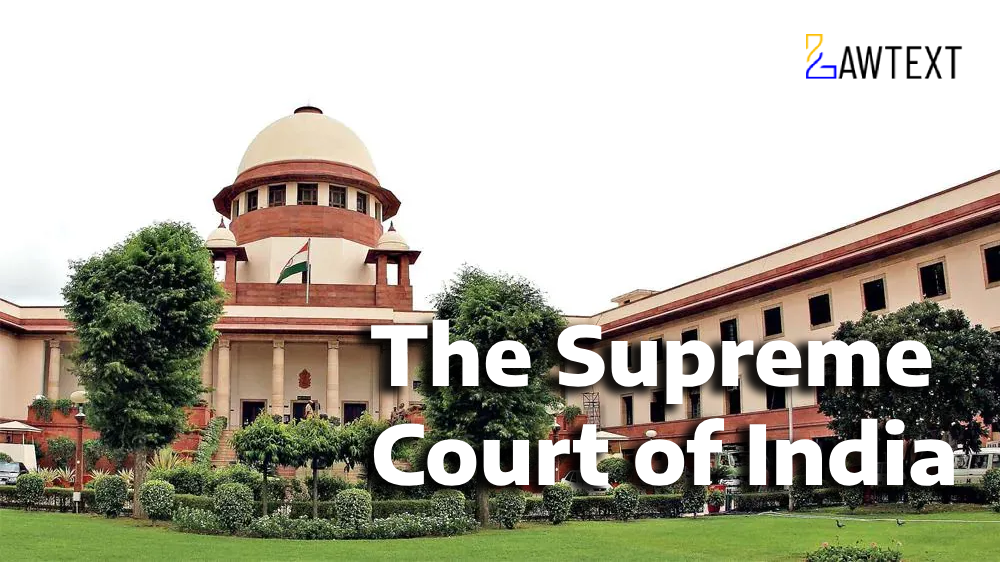
Case Note & Summary
The dispute originated from a partition suit filed by the plaintiff, who claimed a one-fourth share in joint family properties based on a will executed by his grandfather, Periyaiya Servai, dated 26th January 1994. The plaintiff argued that Periyaiya Servai had bequeathed his share to him, entitling him to partition and separate possession. The first defendant contested the suit, asserting that a valid partition had occurred in 1964 among Periyaiya Servai's three sons, including the first and second defendants and Marimuthu, with no share retained by Periyaiya Servai. The first defendant further claimed that prior litigation, specifically O.S. No. 347 of 1991 and A.S. No. 37 of 1993, had conclusively established the validity of this partition and Periyaiya Servai's lack of ownership, rendering the will invalid. The Trial Court dismissed the suit, finding that the 1964 partition was valid and that the suit was barred by res judicata due to the final judgment in A.S. No. 37 of 1993. The first appellate court affirmed this decision, noting evidence of partition and payment of kist by the sons. The Supreme Court, in this appeal, considered whether the plaintiff's claim was barred by res judicata and whether Periyaiya Servai had the right to execute the will. The court analyzed the procedural history, including prior suits and appeals, and held that the issues of partition and Periyaiya Servai's share had been conclusively decided in earlier proceedings, making the suit res judicata under Section 11 of the Code of Civil Procedure, 1908. Additionally, the court found that Periyaiya Servai had no ownership rights after the 1964 partition, thus he could not validly bequeath the properties. The appeal was dismissed, upholding the lower courts' judgments that the plaintiff was not entitled to any share in the suit properties.
Headnote
A) Civil Procedure - Res Judicata - Section 11 Code of Civil Procedure, 1908 - The plaintiff's suit for partition was barred by res judicata as the validity of the 1964 partition and Periyaiya Servai's lack of share had been conclusively decided in prior litigation, specifically in A.S. No. 37 of 1993, which attained finality. Held that the suit could not be re-agitated. (Paras 5, 9) B) Family Law - Partition - Hindu Law - The 1964 partition among Periyaiya Servai's sons was valid and resulted in Periyaiya Servai retaining no share in the suit properties, as confirmed by the first appellate court in A.S. No. 37 of 1993. This partition extinguished his ownership rights, preventing any subsequent bequest. Held that Periyaiya Servai had no right to execute a will over the properties. (Paras 4, 5, 9) C) Property Law - Will and Testament - Testamentary Capacity - The will dated 26th January 1994 executed by Periyaiya Servai in favour of the plaintiff was invalid as Periyaiya Servai lacked ownership rights after the 1964 partition, rendering him incapable of bequeathing the properties. The court did not address testamentary capacity due to the prior finding on lack of right. Held that the will conferred no entitlement to the plaintiff. (Paras 3, 5, 10)
Issue of Consideration
Whether the plaintiff's suit for partition and separate possession based on a will is barred by res judicata due to prior judgments on partition, and whether Periyaiya Servai had the right to execute the will after a valid partition in 1964
Final Decision
The Supreme Court dismissed the plaintiff's appeal, upholding the judgments of the lower courts that the suit is barred by res judicata and Periyaiya Servai had no right to execute the will
Law Points
- Res judicata under Section 11 of the Code of Civil Procedure
- 1908
- validity of partition deeds
- testamentary capacity and right to bequeath property
- principles of adverse possession
- and finality of judgments in prior litigation





