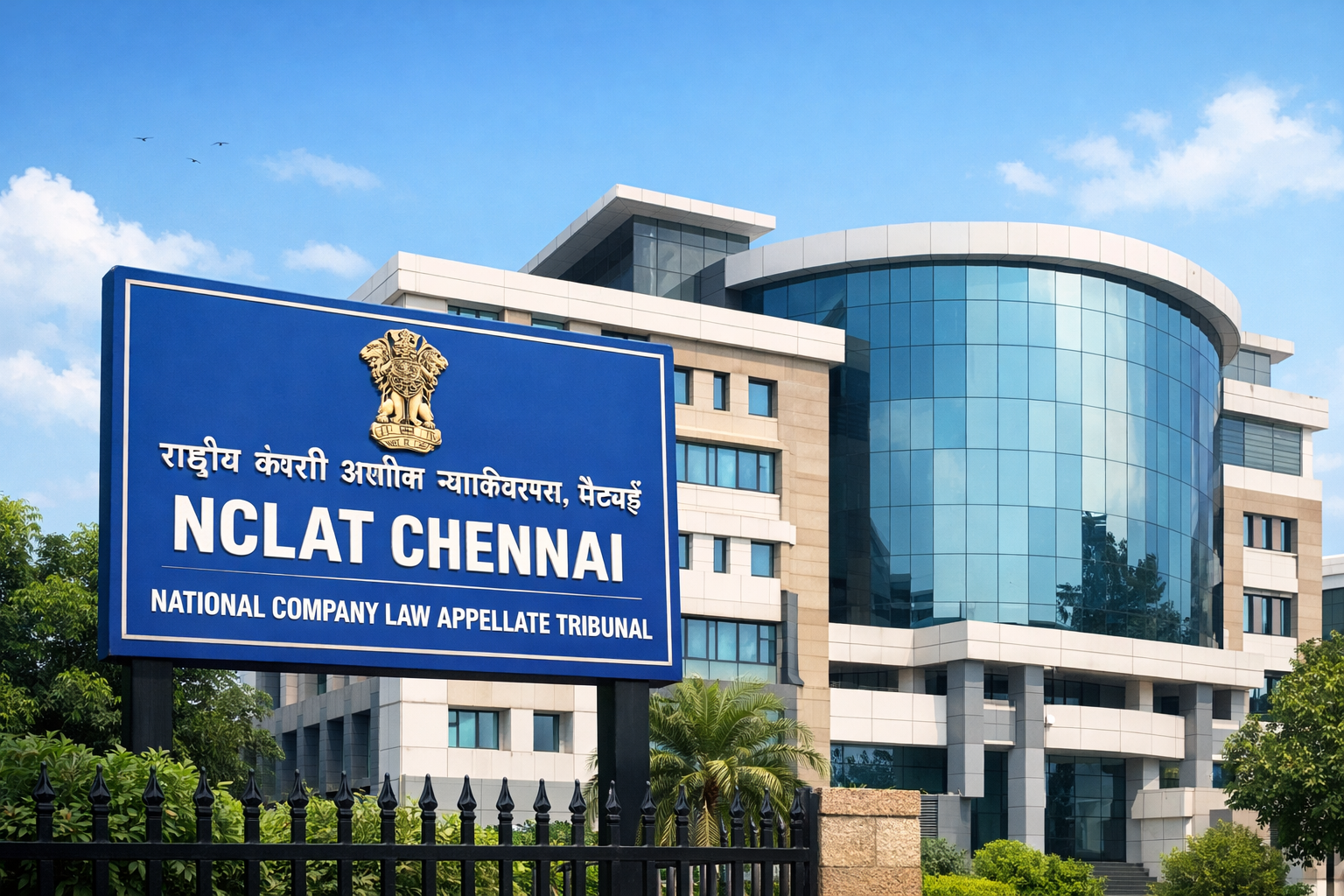
NATIONAL COMPANY LAW APPELLATE TRIBUNAL Upholds Appeal of Suspended Director in Insolvency Proceedings — Admission of Section 7 Application Challenged.

Tribunals: National Company Law Appellate Tribunal Bench: NEW DELHI
  • 0
Judgement Image
Font size:
Print

Case Note & Summary

The appeal arose from an order dated 09.12.2025 by the National Company Law Tribunal (NCLT) admitting a Section 7 application filed by Canara Bank against the corporate debtor, Equinox India Developments Ltd. (formerly Indiabulls Real Estate Ltd.). The appellant, Rajesh Kaimal, a suspended director of the corporate debtor, challenged the admission of the application, arguing that the corporate debtor was not liable to discharge the debts of the principal borrower, M/s. Sinnar Thermal Power Limited, under the corporate guarantee dated 30.06.2010. The facts revealed that a term loan of Rs. 100 crore was sanctioned to the principal borrower, with subsequent loans leading to a total of Rs. 144.4 crore. The corporate debtor had provided a corporate guarantee, which was later substituted by a new guarantee deed on 11.01.2012, discharging the corporate debtor from its obligations. The NCLT had admitted the Section 7 application despite the corporate debtor's claims of suppression of material facts and the argument that the application was barred by Section 10A of the Insolvency and Bankruptcy Code, 2016. The court analyzed the obligations under the corporate guarantee and determined that the corporate debtor's role was limited to infusing equity, not repaying debts. The court also found that the application was filed after the default period specified in Section 10A, thus ruling that the NCLT erred in admitting the application. The appeal was ultimately allowed, and the order of the NCLT was stayed pending further proceedings.

Headnote

A) Insolvency Law - Corporate Guarantee - Obligation of Corporate Debtor - Insolvency and Bankruptcy Code, 2016, Section 7 - The court examined whether the corporate debtor was obliged to discharge the debts of the principal borrower under the corporate guarantee dated 30.06.2010. It was held that the corporate debtor's obligation was limited to infusing equity and did not extend to discharging the principal borrower's debts, thus invalidating the Section 7 application. (Paras 8-19).

B) Insolvency Law - Limitation Period - Section 10A of IBC - The court considered whether the Section 7 application was barred by Section 10A due to the timing of the default. It was determined that the application was indeed barred as the default occurred during the 10A period, leading to the conclusion that the application should not have been admitted. (Paras 8-19).

Subscribe to unlock Headnote Subscribe Now

Issue of Consideration

Whether the admission of the Section 7 application against the corporate debtor was valid under the provisions of the Insolvency and Bankruptcy Code, 2016.

Subscribe to unlock Issue of Consideration Subscribe Now

Final Decision

The appeal was allowed, and the order admitting the Section 7 application was stayed. The court found that the corporate debtor was not liable to discharge the debts of the principal borrower and that the application was barred by Section 10A.

Law Points

  • Corporate Guarantee
  • Financial Debt
  • Insolvency Proceedings
  • Section 7 Application
  • Section 10A of IBC
Subscribe to unlock Law Points Subscribe Now

Case Details

2026 LawText (NCLAT) (05) 154

Company Appeal (AT) (Insolvency) No. 1964 of 2025

2025-12-11

ASHOK BHUSHAN

Mr. Rakesh Diwevdi, Mr. Arun Kathpalia, Mr. Abhijeet Sinha

Rajesh Kaimal

Prabhat Ranjan Singh

Subscribe to unlock Case Details (Citation, Judge, Date & more) Subscribe Now

Nature of Litigation

Appeal against the admission of a Section 7 application in insolvency proceedings.

Remedy Sought

The appellant sought to challenge the admission of the Section 7 application.

Filing Reason

The financial creditor filed the application claiming default in repayment of loans.

Previous Decisions

The NCLT had admitted the Section 7 application despite objections raised by the corporate debtor.

Issues

Whether the corporate debtor was obliged to discharge the debts of the principal borrower under the corporate guarantee. Whether the Section 7 application was barred by Section 10A of the IBC.

Submissions/Arguments

The appellant argued that the corporate debtor's obligation was limited to infusing equity and did not extend to discharging debts. The respondent contended that the corporate debtor was still liable under the guarantee and that the application was not barred by Section 10A.

Ratio Decidendi

The corporate debtor's obligation under the corporate guarantee was limited to infusing equity, and the admission of the Section 7 application was barred by Section 10A due to the timing of the default.

Judgment Excerpts

The corporate debtor's obligation was limited to infusing equity and did not extend to discharging the principal borrower's debts. The application was indeed barred as the default occurred during the 10A period.

Procedural History

The appeal was filed against the order of the NCLT admitting a Section 7 application. The NCLT had previously dismissed a similar application against another corporate guarantor on the same day.

Acts & Sections

  • Insolvency and Bankruptcy Code, 2016: Section 7, Section 10A
  • Indian Contract Act, 1872: Section 126, Section 128
Subscribe to unlock full Legal Analysis Subscribe Now
Related Judgement
Tribunals NCLAT Dismisses Appeal in Insolvency Matter Due to Approval of Resolution Plan. Appeal rendered infructuous as the Successful Resolution Applicant showed no interest in pursuing the matter post-approval.
Related Judgement
High Court High Court of Judicature at Bombay Hears Letters Patent Appeal Against Single Judge’s Order Upholding State Minister’s Decision in Evacuee Property Mutation Dispute. Minister's Order Had Set Aside Lower Authorities' Orders Restoring Evacuee Prope...