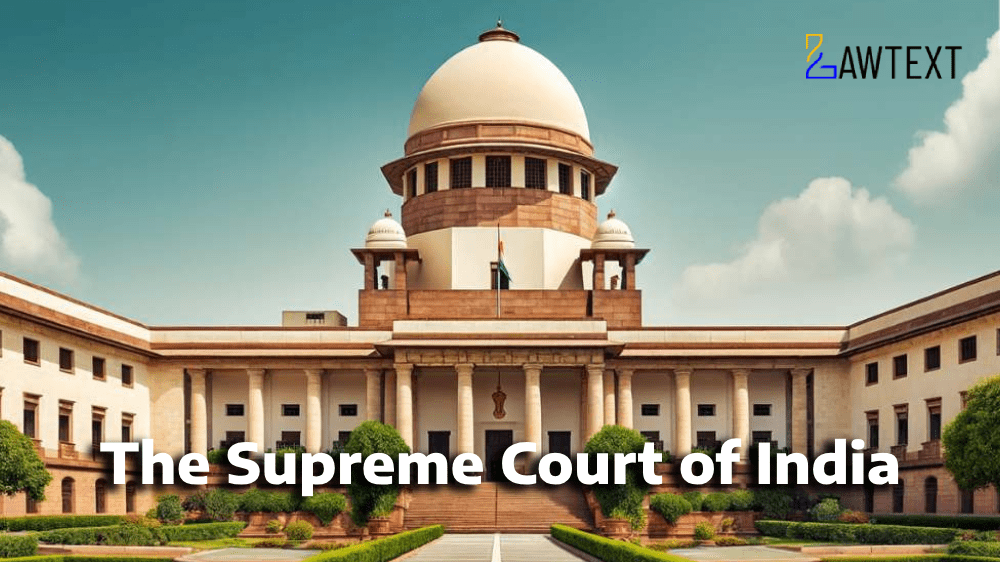
Supreme Court Upholds Regulatory Authority of Council of Architecture Over AICTE in Architectural Education Matters. The court clarified that the provisions of the Architects Act, 1972 are not impliedly repealed by the AICTE Act, 1987, affirming the CoA's authority over architectural education.

  • 2
Judgement Image
Font size:
Print

Case Note & Summary

The Supreme Court addressed a series of appeals concerning the regulatory powers of the Council of Architecture (CoA) and the All India Council for Technical Education (AICTE) regarding architectural education. The disputes arose from conflicting directives about the approval and intake capacity of various architectural institutions. The main appeal, Civil Appeal No. 364 of 2005, challenged a decision by the Bombay High Court that upheld the CoA's authority over architectural education standards. The court noted that both the CoA and AICTE are statutory bodies established by separate acts of Parliament, with the CoA specifically tasked with regulating architectural qualifications and education under the Architects Act, 1972. The AICTE, while having a broader mandate over technical education, does not supersede the CoA's authority in matters specifically related to architecture. The court found that the AICTE's attempt to reduce the intake capacity of an institution was not valid, as the CoA had restored the capacity based on its inspection and compliance report. The court emphasized that the legislative intent did not support the idea that the AICTE could undermine the CoA's established authority. The judgment reinforced the importance of maintaining distinct regulatory roles for both bodies in the context of architectural education, ultimately quashing the AICTE's order and affirming the CoA's regulatory framework.

Headnote

A) Administrative Law - Regulatory Authority - Precedence of Council of Architecture over AICTE - Architects Act, 1972, Section 10; All India Council for Technical Education Act, 1987, Section 10 - The court held that the provisions of the Architects Act, 1972 are not impliedly repealed by the AICTE Act, 1987, affirming that the Council of Architecture retains final authority over norms and standards for architectural education. The court quashed the AICTE's order reducing the intake capacity of an architectural institution, emphasizing the distinct roles of both regulatory bodies (Paras 10-10).

Subscribe to unlock Headnote Subscribe Now

Issue of Consideration

Whether the mandate of the Council of Architecture or that of the All India Council for Technical Education prevails in granting approval for architectural education courses.

Subscribe to unlock Issue of Consideration Subscribe Now

Final Decision

The Supreme Court quashed the AICTE's order reducing the intake capacity of the architectural institution, affirming the CoA's authority to set norms and standards for architectural education.

Law Points

  • Regulatory authority
  • architectural education
  • approval norms
  • recognition of qualifications
  • statutory interpretation
Subscribe to unlock Law Points Subscribe Now

Case Details

2019 LawText (SC) (11) 162

Civil Appeal No. 364 of 2005

2023-10-10

Aniruddha Bose

All India Council for Technical Education

Shri Prince Shivaji Maratha Boarding House’s College of Architecture & Ors.

Subscribe to unlock Case Details (Citation, Judge, Date & more) Subscribe Now

Nature of Litigation

Dispute regarding the regulatory authority over architectural education and approval processes.

Remedy Sought

AICTE sought to challenge the Bombay High Court's ruling that upheld CoA's authority.

Filing Reason

The institution contested the AICTE's order reducing its intake capacity.

Previous Decisions

The Bombay High Court ruled that the provisions of the Architects Act were not impliedly repealed by the AICTE Act.

Issues

Which regulatory body has precedence in granting approval for architectural education courses? Are the provisions of the Architects Act, 1972 impliedly repealed by the AICTE Act, 1987?

Submissions/Arguments

AICTE argued that its regulations should govern the approval process for architectural institutions. CoA maintained that it has the final authority over architectural education standards and qualifications.

Ratio Decidendi

The court held that the provisions of the Architects Act, 1972 are not impliedly repealed by the AICTE Act, 1987, affirming the CoA's authority over architectural education.

Judgment Excerpts

The provisions of the Architects Act are not impliedly repealed by the enactment of AICTE Act. The role of the AICTE vis-à-vis the Council of Architects is advisory and recommendatory. The ultimate authority for granting or withdrawing recognition to degree or diploma courses in architectural education is the Central Government.

Procedural History

The appeals arose from various High Court judgments concerning the regulatory powers of the CoA and AICTE regarding architectural education, culminating in the Supreme Court's review.

Acts & Sections

  • Architects Act, 1972: Section 2, Section 3, Section 10, Section 14, Section 16, Section 18, Section 19, Section 20, Section 21, Section 25
  • All India Council for Technical Education Act, 1987: Section 2, Section 10, Section 22, Section 23
Subscribe to unlock full Legal Analysis Subscribe Now
Related Judgement
Supreme Court Supreme Court Dismisses Appeal Against Requisition Order of Flat — Requisition Cannot Last Indefinitely. The court held that requisitioning must be for a public purpose of transitory character and cannot endure indefinitely.
Related Judgement
Supreme Court Supreme Court Allows Appeals Against De-Freezing of Bank Accounts in Seizure Case Under Section 102(3) CrPC — Delayed Reporting to Magistrate Does Not Vitiate Seizure Order; Requirement is Directory, Not Mandatory.