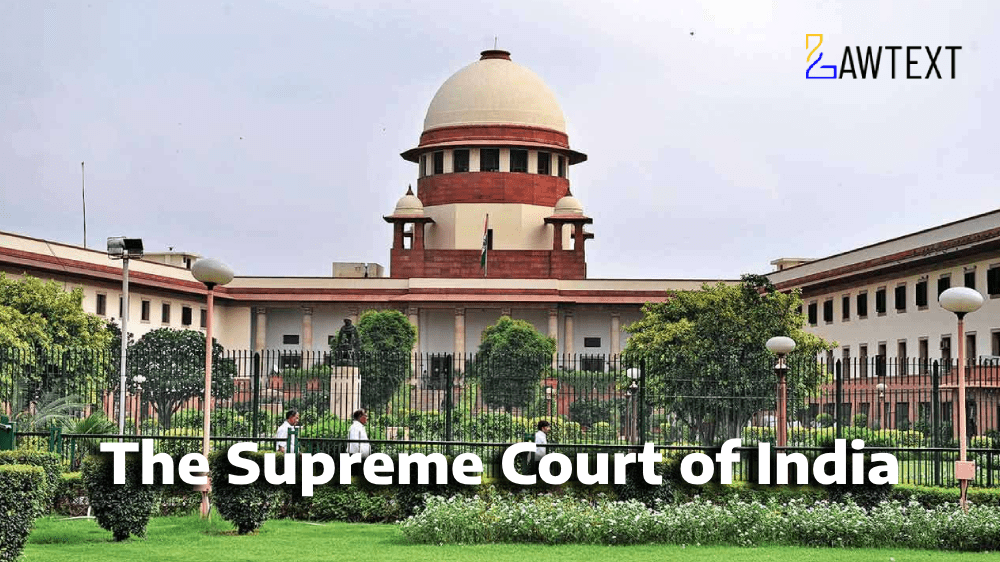
Supreme Court Dismisses Appeal Against Requisition Order of Flat — Requisition Cannot Last Indefinitely. The court held that requisitioning must be for a public purpose of transitory character and cannot endure indefinitely.

  • 1
Judgement Image
Font size:
Print

Case Note & Summary

The dispute arose from the requisition of a flat by the State Government under the Bombay Land Requisition Act, 1948. The appellant applied for allotment of a flat, which was requisitioned by the State Government on 9th April 1951 without specifying the public purpose. The appellant occupied the flat and paid rent irregularly to the landlady. After the building was purchased by the third respondent in 1973, a writ petition was filed challenging the requisition order, arguing it could not last for over thirty years. The High Court ruled in favor of the third respondent, leading to the appeal. The Supreme Court analyzed the nature of requisition versus acquisition, emphasizing that requisition must be temporary and for a public purpose. The court concluded that the requisition order ceased to be valid after a reasonable time, which was not met in this case. The court upheld the High Court's decision to de-requisition the flat and ordered the eviction of the appellant, allowing a grace period until 28th February 1985 for vacating the premises, contingent on the appellant's undertaking. The appeal was dismissed with no order as to costs.

Headnote

A) Constitutional Law - Requisition of Property - Validity of Requisition Order - Constitution of India, 1950, Article 31(2) - The order of requisition, even if valid when made, ceased to be effective after a reasonable period, which cannot be an unreasonably long period such as thirty years. The court held that requisitioning must be for a public purpose of transitory character and cannot endure indefinitely (Paras 700-701).

Subscribe to unlock Headnote Subscribe Now

Issue of Consideration

Whether an order of requisition of premises can be continued for an indefinite period of time or must necessarily be of temporary duration.

Subscribe to unlock Issue of Consideration Subscribe Now

Final Decision

The Supreme Court dismissed the appeal, confirming the High Court's order to de-requisition the flat and evict the appellant, allowing a grace period until 28th February 1985 for vacating the premises.

Law Points

  • Requisition of property
  • Public purpose
  • Temporary duration
  • Distinction between requisition and acquisition
  • Validity of requisition order
Subscribe to unlock Law Points Subscribe Now

Case Details

1984 LawText (SC) (02) 21

Civil Appeal No. 1212 of 1984

1984-02-22

Bhagwati, P.N., Mukharji, Sabyasachi

1984 AIR 866, 1984 SCR (2) 693, 1984 SCC (2) 337, 1984 SCALE (1) 353

P.R. Mridul, G. Vishwanath, Parijat Sinha, Ram Jethmalani, Soli J. Sorabjee, M.N. Shroff, Talegankar, B.V. Desai

H. D. Vora

State of Maharashtra & Ors.

Subscribe to unlock Case Details (Citation, Judge, Date & more) Subscribe Now

Nature of Litigation

Challenge to the validity of a requisition order for a flat.

Remedy Sought

The third respondent sought to de-requisition the flat and evict the appellant.

Filing Reason

The third respondent contended that the requisition order could not survive for such a long period.

Previous Decisions

The High Court allowed the writ petition and directed de-requisition of the flat.

Issues

Whether the requisition order was valid given the long duration. Whether the appellant's payment of rent affected the requisition order.

Submissions/Arguments

The appellant argued that the requisition was invalid as it was for a purpose other than public purpose. The third respondent contended that the requisition could not last for over thirty years.

Ratio Decidendi

The court held that requisition orders must be temporary and for a public purpose, and cannot last indefinitely, distinguishing between requisition and acquisition.

Judgment Excerpts

The order of requisition even if it was valid when made, ceased to be valid and effective after expiration of a reasonable period of time. The power of requisition is exercisable by the Government only for a public purpose which is of a transitory character.

Procedural History

The appellant filed an appeal against the High Court's decision which allowed the writ petition challenging the requisition order.

Acts & Sections

  • Constitution of India: Article 31(2), Seventh Schedule, List III Entry 42
  • Bombay Land Requisition Act: Section 6(4)(a)
Subscribe to unlock full Legal Analysis Subscribe Now
Related Judgement
Supreme Court Supreme Court Dismisses Petitions Seeking Return to Paper Ballots or 100% VVPAT Counting in Elections. Court Upholds EVMs with VVPAT as Sufficiently Transparent and Reliable, Rejects Allegations of Manipulation Without Evidence.
Related Judgement
High Court High Court Quashes Teacher Approval Cancellations Due to Procedural Defects and Vague Notices. Show-cause notices lacking specific allegations violate natural justice, and mass hearings for 150 employees raise fairness concerns under administrative l...