
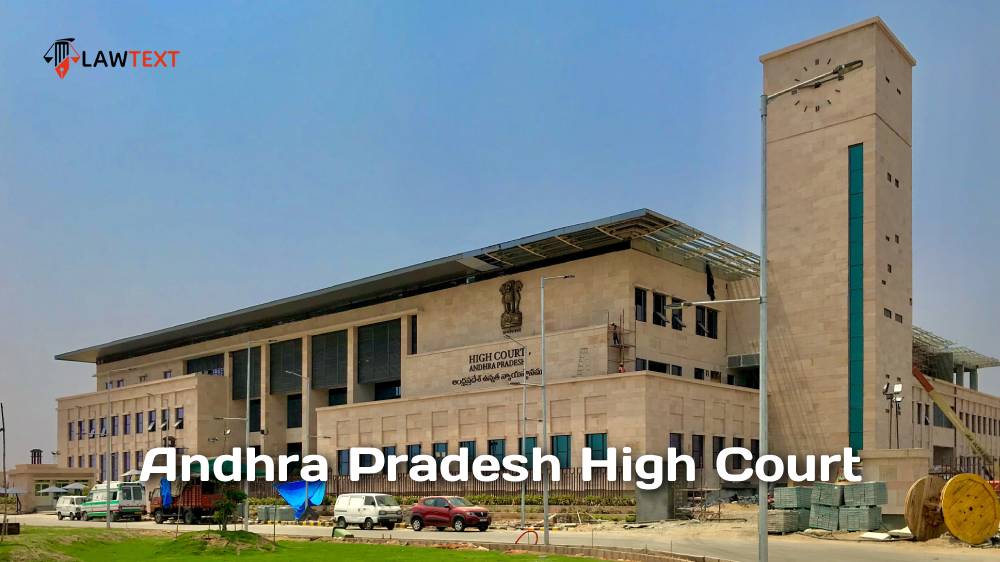
High Court of Andhra Pradesh Considers Legality of Ad-Interim Mandatory Injunction in Arbitration Act Case. Court Holds That Direction to Maintain Status Quo Ante Under Section 9 of Arbitration and Conciliation Act, 1996, Requires Reasons and Prima Facie Justification.

High Court: Andhra Pradesh High Court
  • 20
Judgement Image
Font size:
Print

Case Note & Summary

The High Court of Andhra Pradesh considered two commercial court appeals filed by Visakhapatnam Port Authority and its Chief Engineer challenging an ad-interim order dated 19.12.2025 passed by the Special Judge for Trial and Disposal of Commercial Disputes at Visakhapatnam in petitions under Section 9 of the Arbitration and Conciliation Act, 1996. The respondents, two companies represented by the same Managing Director, had obtained leases from the port authority for an auditorium and related premises. Disputes arose over alleged lease violations, show cause notices, invocation of bank guarantee, and termination notice. The respondents had earlier filed writ petitions challenging bank guarantee invocation and termination; the writ court granted interim protection on 01.08.2025 and later writ appeals were disposed on 08.09.2025, leaving parties to pursue remedies. The respondents then filed Section 9 applications before the Special Judge, which passed a series of interim orders, including on 19.12.2025 directing both parties to maintain status quo ante as on the date of filing the petition. The appellants contended that such an order could not be passed at the ad-interim stage without reasons and that they were already in possession; the respondents argued the earlier order of 10.12.2025 had directed parties to act in accordance with the lease and that the appellants violated it, and that after the status quo ante order, the respondents regained possession. The High Court first overruled a Registry objection to maintainability, holding the appeal maintainable. It framed the limited question whether an ad-interim mandatory injunction directing status quo ante could be legally passed and sustained. The court explained the distinction between status quo and status quo ante, relying on Satyabrata Biswas and Bharat Coking Coal. It noted that status quo means existing state at a given point, while status quo ante means the state before, requiring restoration of previous state. It emphasized that such orders are not to be passed lightly and certainly not without reasons. Relying on Kishore Kumar Khaitan v. Praveen Kumar Singh, the court reiterated that an interim mandatory injunction is not easily granted; it is passed only in clear circumstances where prima facie materials justify a finding that status quo was altered by one party and interests of justice demand restoration. The court made clear it would not go into merits of the pending Section 9 petitions and would leave those for the Special Judge. The extracted judgment did not include the final operative paragraph, but the analysis indicated that the impugned unreasoned ad-interim status quo ante order could not be sustained.

Headnote

A) Arbitration - Interim Measures - Maintainability of Appeal Against Ad-Interim Order - Arbitration and Conciliation Act, 1996, Section 9 - Registry raised objection to maintainability of appeal against an ad-interim order passed in pending Section 9 petition; High Court overruled the objection and held appeal maintainable, but limited consideration to legality of impugned ad-interim order without entering merits of pending petitions. Held that an appeal against an ad-interim order in a pending Section 9 petition can be considered (Paras 23-26).

B) Civil Procedure - Interim Mandatory Injunction - Principles Governing Grant - Not mentioned - An interim mandatory injunction is not a remedy easily granted; it is passed only in clear circumstances where prima facie materials justify a finding that status quo was altered by one party and interests of justice demand restoration. Held that such orders require justifiable reasons and are not to be passed lightly (Paras 30-31).

C) Interpretation - Status Quo and Status Quo Ante - Meaning and Distinction - Not mentioned - Status quo means existing state of things at a given point; status quo ante means state before the existing state and requires restoration of previous state. Held that status quo ante order disturbs existing state and must be supported by reasons (Paras 27-29).

D) Arbitration - Section 9 - Ad-Interim Status Quo Ante Order - Arbitration and Conciliation Act, 1996, Section 9 - Impugned order dated 19.12.2025 directed parties to maintain status quo ante as on date of filing petition without assigning reasons; court observed that such order cannot be sustained absent reasons and prima facie justification. Held that ad-interim mandatory injunction requires clear reasons (Paras 25-30).

Subscribe to unlock Headnote Subscribe Now

Issue of Consideration

Whether an ad-interim order directing parties to maintain status quo ante as on the date of filing a petition under Section 9 of the Arbitration and Conciliation Act, 1996 could be legally passed without assigning reasons, and whether the appeal against such an order was maintainable.

Subscribe to unlock Issue of Consideration Subscribe Now

Law Points

  • Status quo means existing state of things at a given point
  • status quo ante means state before existing state and requires restoration
  • interim mandatory injunction not granted lightly
  • ad-interim order directing status quo ante without reasons unsustainable
  • appeal against ad-interim order in pending Section 9 petition maintainable
  • Section 9 Arbitration and Conciliation Act 1996

Subscribe to unlock Law Points Subscribe Now

Case Details

2026 LawText (AP) (01) 1

COMCA Nos.29 & 30 of 2025

2026-01-22

Ravi Nath Tilhari, Maheswara Rao Kuncheam

2026:APHC:1065

Sri Ravi Teja Padiri, Sri Dammalapati Srinivas, Sri S.V.S.S. Siva Ram

1. The Visakhapatnam Port Authority, represented by its Chairman; 2. The Chief Engineer, Visakhapatnam Port Authority

M/s. Vishwanadh Avenues (India) Private Limited, represented by its Managing Director, Boddeti Narendra Kumar; M/s. Vishwanadh Sports and Convention Private Limited, represented by its Managing Director, Boddeti Narendra Kumar

Subscribe to unlock Case Details (Citation, Judge, Date & more) Subscribe Now

Nature of Litigation

Commercial appeals challenging an ad-interim order passed by the Special Judge in pending applications under Section 9 of the Arbitration and Conciliation Act, 1996.

Remedy Sought

Appellants sought to set aside the order dated 19.12.2025 directing parties to maintain status quo ante as on the date of filing the Section 9 petition.

Filing Reason

The impugned order was passed without assigning reasons and at the ad-interim stage, allegedly in violation of principles governing interim mandatory injunctions.

Previous Decisions

Special Judge passed orders dated 10.12.2025, 17.12.2025, 19.12.2025, 22.12.2025 and 24.12.2025; earlier writ petitions and writ appeals were disposed with interim protections and liberty to pursue remedies.

Issues

Whether an appeal against an ad-interim order passed in a pending Section 9 petition under Arbitration and Conciliation Act, 1996 is maintainable. Whether an ad-interim order directing parties to maintain status quo ante as on the date of filing the petition under Section 9 can be passed without assigning reasons. The meaning and distinction between status quo and status quo ante and the principles governing interim mandatory injunctions.

Submissions/Arguments

Appellants submitted that the impugned order dated 19.12.2025 to maintain status quo ante could not be passed at the ad-interim stage and no reasons were assigned; possession had already been taken by appellants; relied on CRSC Research and Design Institute Group Co. Ltd v. Dedicated Freight Corridor Corporation of India Limited. Respondent submitted that the Special Judge had earlier ordered on 10.12.2025 that parties shall act in accordance with the lease; appellants acted contrary and resorted to possession; after order dated 19.12.2025 respondent obtained possession and is in possession; relied on Jindal Steel and Power Limited v. Bansal Infra Projects Private Limited.

Ratio Decidendi

An ad-interim order directing 'status quo ante' under Section 9 of the Arbitration and Conciliation Act, 1996 is in the nature of a mandatory injunction and cannot be passed without justifiable reasons and prima facie material showing that one party altered the status quo; the court must consider whether interests of justice demand restoration. The expression 'status quo' means existing state of things at a given point, while 'status quo ante' means state before the existing state and requires restoration of previous state.

Judgment Excerpts

Parties shall maintain status quo ante as on the date of filing of this petition till 22.12.2025. Such orders of 'status quo ante' are not to be passed lightly and certainly not for no reasons assigned in the order. An interim mandatory injunction is not a remedy that is easily granted.

Procedural History

Respondent filed C.A.O.P.Nos.37 and 38 of 2025 under Section 9 of the Arbitration and Conciliation Act, 1996 before the Special Judge for Trial and Disposal of Commercial Disputes at Visakhapatnam. Special Judge passed orders dated 10.12.2025, 17.12.2025, 19.12.2025, 22.12.2025 and 24.12.2025; on 19.12.2025 directed parties to maintain status quo ante as on the date of filing petition till 22.12.2025, later extended. Appellants challenged the order dated 19.12.2025 in COMCA Nos.29 and 30 of 2025; Registry objection to maintainability was overruled on 23.12.2025. Judgment reserved on 06.01.2026 and pronounced on 22.01.2026.

Acts & Sections

  • Arbitration and Conciliation Act, 1996: Section 9
Subscribe to unlock full Legal Analysis Subscribe Now
Related Judgement
High Court High Court of Andhra Pradesh Considers Legality of Ad-Interim Mandatory Injunction in Arbitration Act Case. Court Holds That Direction to Maintain Status Quo Ante Under Section 9 of Arbitration and Conciliation Act, 1996, Requires Reasons and Prima F...
Related Judgement
Supreme Court Supreme Court Upholds Power to Transfer Corruption Case Under Section 527 CrPC Despite Special Judge Territorial Limits. Transfer Petition Dismissed on Merits as Apprehension of Bias Not Reasonable; Section 7(2) Criminal Law Amendment Act, 1952 Held ...




