
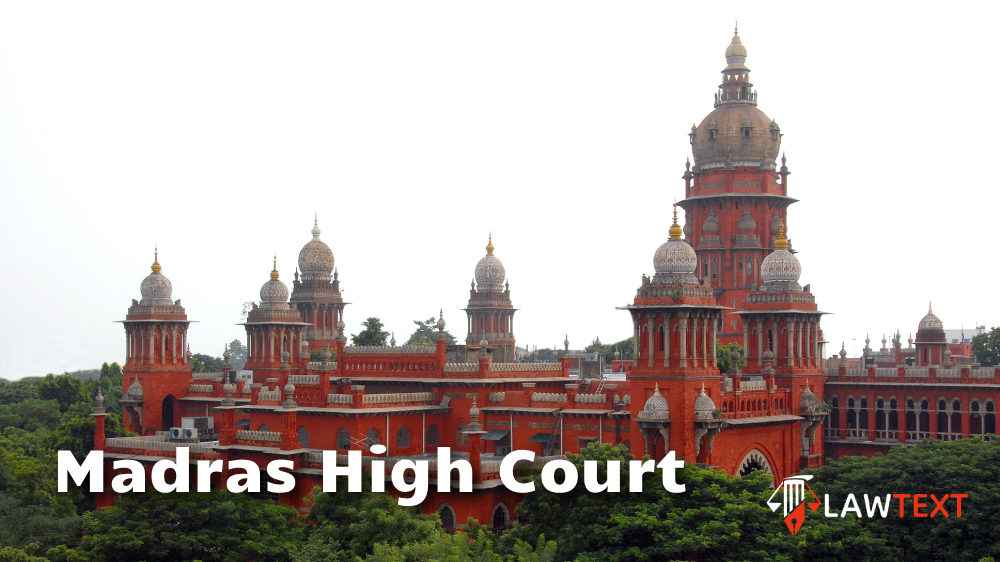
Case Note & Summary
The appeal arose from an order of the Special Court under the National Investigation Agency Act, 2008, which dismissed the appellant's petition under Section 317 of the Criminal Procedure Code, 1973, seeking exemption from personal appearance for a single day on grounds of ill health, and subsequently rejected his petition under Section 70(2) to recall the non-bailable warrant issued against him. The appellant, arrayed as the 11th accused in a trial for offences under the Indian Penal Code and the Unlawful Activities (Prevention) Act, had been examined along with other accused, and the trial had been ongoing since 2021. On the hearing date, his advocate filed a Section 317 petition stating that the appellant was suffering from diarrhoea and could not reach the court by 10:30 AM. The Special Court dismissed the petition, noting that the appellant had filed similar petitions on ten earlier occasions and was delaying the trial, and issued a non-bailable warrant. The appellant reached the court at 11:00 AM the same day, filed an advance hearing petition along with a surrender petition and a petition to recall the warrant, but the Special Court dismissed the recall petition and remanded him to judicial custody, reiterating that he was indulging in dilatory tactics. Before the High Court, the appellant challenged the dismissal of the recall petition and the consequent remand. The High Court examined the legal principles governing the exercise of discretion under Sections 317 and 70(2) CrPC. It observed that the Special Court had been consistently rejecting similar petitions without due application of mind, and that the orders in question were arbitrary and contrary to settled law. The Court relied on a line of Supreme Court decisions, including Inder Mohan Goswami v. State of Uttaranchal, Maneka Sanjay Gandhi v. Rani Jethmalani, Satender Kumar Antil v. Central Bureau of Investigation, and Sherif Ahmed v. State of Uttar Pradesh, which lay down that discretionary powers must be exercised judicially with extreme care, exemption from personal appearance should be granted liberally when circumstances require, and non-bailable warrants should not be issued as a matter of course. The Court emphasised that the mere fact of prior exemptions does not automatically lead to the inference of dilatory tactics, and the Special Court must examine the reasons for absence. It also stressed that personal liberty under Article 21 of the Constitution mandates a proper balance between individual freedom and public interest. The High Court held that the Special Court’s order refusing exemption and issuing a non-bailable warrant, and its subsequent refusal to recall the warrant despite the appellant’s appearance, were arbitrary and violated the settled principles. Consequently, the appeal was allowed. The impugned order in Crl.M.P.No.76 of 2025 dated 30.01.2025 and the non-bailable warrant were set aside. The Court directed that the appellant shall continue on the same bail conditions as before, and the Special Court shall consider the petition under Section 317 CrPC afresh, strictly in accordance with the guidelines laid down by the Supreme Court, within two weeks from the date of the order. The Court also cautioned the Special Court to be mindful of the law and to exercise its discretion judiciously in future.
Headnote
A) Criminal Procedure - Exemption from Personal Appearance - Discretion under Section 317 CrPC to be exercised judicially with extreme care - Criminal Procedure Code, 1973, Section 317 - The appellant, an accused in a pending trial, sought exemption from appearance on a single day due to ill health. The Special Court dismissed the petition solely because the appellant had filed similar petitions on ten earlier occasions, holding it was a dilatory tactic. The High Court held that discretionary powers must be exercised judiciously, not mechanically, and the mere fact of prior exemptions does not justify denial without examining the reasons given. Held that the Special Court's order was arbitrary and set aside, with directions to re-consider the petition afresh. (Paras 5, 12-15) B) Criminal Procedure - Non-bailable Warrant - Issuance of NBW must follow established guidelines and not be routine - Criminal Procedure Code, 1973, Section 70(2) read with Section 317 - After dismissing the exemption petition, the Special Court issued a non-bailable warrant against the appellant. Relying on Inder Mohan Goswami, the High Court reiterated that NBWs should be issued only when summons or bailable warrants are unlikely to secure attendance, and such orders interfere with personal liberty under Article 21. The issuance of NBW without application of mind and against the tenor of the provision was held unjustified. Held that the NBW was quashed. (Paras 7-9, 14) C) Constitution - Right to Liberty - Non-bailable warrants interfere with personal liberty; courts must balance individual liberty with public interest - Constitution of India, 1950, Article 21 - The Supreme Court in Inder Mohan Goswami underscored that issuance of NBW involves deprivation of liberty and must be preceded by a balancing of interests. The High Court applied this principle, noting that personal liberty cannot be curtailed unless necessitated by larger public interest and that valid reasons must be given for not exercising discretion in favour of the accused. Held that the Special Court failed to maintain this balance. (Paras 7-8, 14) D) Criminal Procedure - Recall of Non-bailable Warrant - Discretion under Section 70(2) CrPC to recall warrant to be exercised judiciously - Criminal Procedure Code, 1973, Section 70(2) - The appellant, after appearing before the Court on the same day, filed a petition to recall the NBW, which was dismissed on the same grounds as the exemption petition. The High Court held that the Special Court erred in dismissing the recall petition without considering the changed circumstances—the appellant’s voluntary appearance. The impugned order was set aside, the NBW quashed, and the appellant directed to remain on bail pending fresh consideration. (Paras 13-15, decision)
Issue of Consideration
Whether the Special Court's rejection of the appellant's petition under Section 317 CrPC seeking exemption from personal appearance and subsequent dismissal of the recall petition under Section 70(2) CrPC, resulting in remand, was in accordance with the settled principles governing the exercise of such discretionary powers.
Final Decision
The High Court allowed the appeal, set aside the impugned order in Crl.M.P.No.76 of 2025 dated 30.01.2025, and quashed the non-bailable warrant issued against the appellant. The Court directed that the appellant shall continue on the same bail conditions as before the impugned order. The matter was remitted to the Special Court for fresh consideration of the petition under Section 317 CrPC, strictly in accordance with the guidelines laid down by the Supreme Court, and the Special Court was directed to pass orders within two weeks. The Special Court was also cautioned to exercise its discretion judiciously in future matters.
Law Points
- Legal points not extracted
- discretion under Section 317 CrPC must be exercised judicially with extreme care and caution
- exemption from personal appearance should be granted liberally when circumstances require
- non-bailable warrants cannot be issued as a matter of course
- the liberty of an individual under Article 21 must be balanced against public interest
- the mere filing of multiple exemption petitions does not automatically constitute dilatory tactics
- every procedure which is just and fair is permissible unless expressly or impliedly prohibited by law






