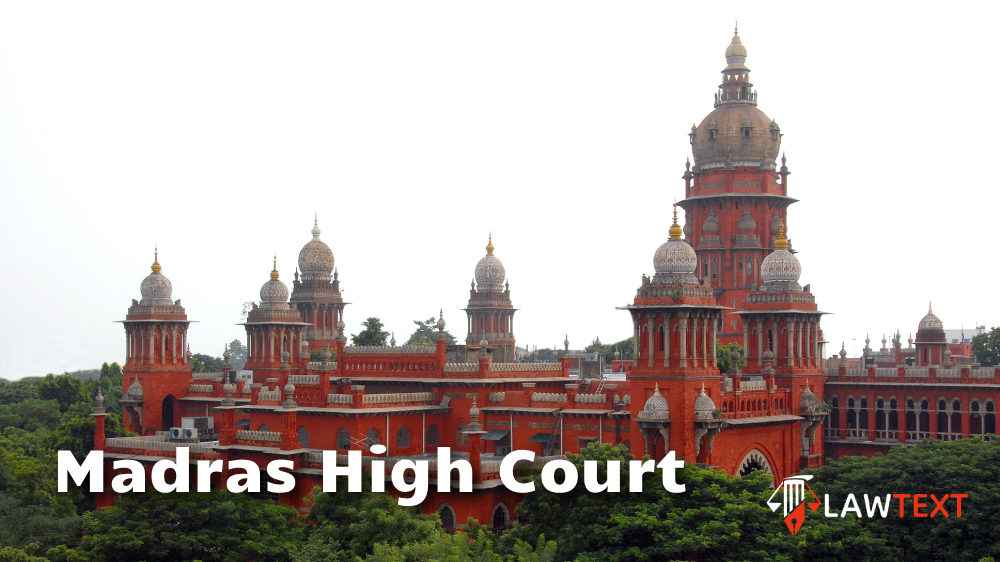
Case Note & Summary
The dispute arose from a writ petition filed under Article 226 of the Constitution of India by the petitioner, a hotel operator in Sivakasi Bus Stand, challenging an eviction notice issued by the Commissioner of Sivakasi City Municipal Corporation. The petitioner was a lessee of a shop in Block II of the bus stand and had erected a sunshade or shed in front of his hotel, contending that it protected the public from sun and rain, and that similar sheds existed in other blocks. The Commissioner, however, issued a notice dated 16.06.2026 under Section 128(1)(b) of the Tamil Nadu Urban and Local Bodies Act, 1998, directing removal of the unauthorized construction within ten days. The petitioner approached the High Court seeking certiorarified mandamus to quash the notice and permit continuation of the shed or, alternatively, direct the Commissioner to erect similar sheds for all shops in the block. The core legal issue was whether the eviction notice was illegal and whether the construction was unauthorized and obstructed the public place. The petitioner argued that he had applied for permission and claimed statutory protection under Section 128(1)(b), which mandates a seven-day show cause notice before removal. He also contended that the shed served a public purpose. The respondents submitted that the construction was unauthorized, blocked the platform, and extended the hotel business onto public space. The Court examined photographs submitted by the petitioner and found that the sunshade completely blocked free usage of the platform, with the petitioner using the area for serving customers and setting up additional stalls, including permanent structures, doors, and iron beams. The Court held that this was a plainly unauthorized and illegal construction that hindered the general public and served only the petitioner’s commercial interest. It noted that the notice gave ten days, exceeding the statutory seven days, thus complying with Section 128(1)(b). The Court emphasized that such unauthorized constructions cannot be encouraged and dismissed the writ petition with no order as to costs, closing the connected miscellaneous petition. The decision reinforces that municipal authorities have the power to remove encroachments on public streets, and private business advantage cannot override public convenience.
Headnote
A) Municipal Law - Unauthorised Construction on Public Property - Removal by Commissioner - Tamil Nadu Urban and Local Bodies Act, 1998 (Section 128(1)(b)) - The petitioner, a lessee of a shop in a bus stand, erected a sunshade/shed in front of his hotel extending onto the platform, thereby blocking pedestrian flow and using the space for business. On challenge to eviction notice, the Court examined photographs and found the construction unauthorised, illegal, and a hindrance to the public. Held, the notice provided ten days’ time, more than the statutory seven days under Section 128(1)(b), and thus complied with the law; the petitioner’s reliance was misplaced. The writ petition was dismissed (Paras 2-8).
Issue of Consideration
Whether the eviction notice issued by the Commissioner for removal of an unauthorised sunshade was illegal and arbitrary, and whether the petitioner was entitled to continue the said construction; Whether the construction fell within the scope of Section 128(1)(b) of the Tamil Nadu Urban and Local Bodies Act, 1998 and whether the notice complied with the statutory requirement.
Final Decision
The writ petition was dismissed. The Court held the construction unauthorized, illegal, and a hindrance to the public. The notice provided ten days, complying with the statutory seven days under Section 128(1)(b). No costs. Connected miscellaneous petition closed.
Law Points
- Legal points not extracted
- Unauthorised construction on public platform cannot be permitted
- Extension of hotel business onto public pathway is illegal
- Section 128(1)(b) of Tamil Nadu Urban and Local Bodies Act
- 1998 requires seven days show cause notice and ten days notice was compliant
- Court will not grant relief when construction is for private business advantage