
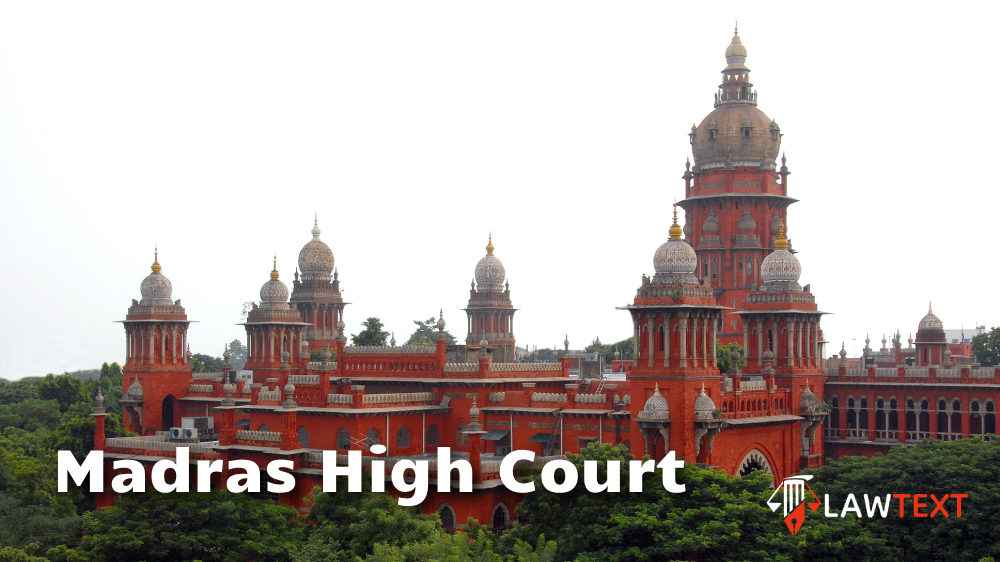
Case Note & Summary
In a motor accident claim, the parents of the deceased Ranjith Kumar filed a petition under Section 166 of the Motor Vehicles Act, 1988, seeking compensation for the death of their son in a road accident on 06.05.2019. The deceased was riding a two-wheeler on East Coast Road when another two-wheeler allegedly driven rashly collided with his vehicle, causing him fatal injuries. The claim was tried before the Motor Accident Claims Tribunal, Chief Court of Small Causes, Chennai. After examining oral evidence, including an eye witness (PW-2), and documentary evidence like the rough sketch, the Tribunal held that the accident occurred due to the negligence of the deceased himself. Despite this finding, the Tribunal suo motu converted the claim petition to one under Section 163A of the Act—a no-fault basis provision—and awarded compensation of Rs.4,14,333/- following the structured formula, along with interest at 7.5% per annum from the date of petition. The compensation breakdown included Rs.6,12,000 for loss of income/dependency, Rs.2,500 for loss of estate, Rs.5,000 for loss of consortium, and Rs.2,000 for funeral expenses, less one-third deducted towards personal expenses. Aggrieved, the insurer, ICICI Lombard General Insurance Company, filed the present appeal under Section 173 of the Act before the High Court. The core legal issues raised were whether the Tribunal could convert a Section 166 claim to Section 163A after recording a finding of negligence against the deceased, and whether in the absence of a cross-objection by the claimants, the appellate court could independently re-appreciate the evidence on negligence. The appellant contended that the conversion was impermissible and the award liable to be set aside. The claimants argued that the evidence actually established negligence of the offending vehicle and requested the Court to independently determine negligence; alternatively, they sought sustenance of the award. The Court relied on the Supreme Court decision in Kasthuri @ A.Kasthuri Bai v. P.T.Prem Satheesh [2023-1-L.W.468], which held that once evidence on negligence has been appreciated and a conclusion reached, the Tribunal cannot midway convert the claim to one under Section 163A. The Court thus found the Tribunal's action untenable. On the second issue, the Court noted that the finding of negligence was adverse to the claimants, and since the insurer had filed the appeal, the claimants ought to have filed a cross-objection to challenge that finding. In the absence of any cross-objection, the Court could not exercise its power under Order XLI Rule 33 of the Code of Civil Procedure, 1908, to interfere with the finding, as per R.Gnana Soundari v. R.Chellappan (died) [2026 (2) CTC 885]. Consequently, the appeal was allowed, the award dated 27.07.2022 in MCOP No.3799 of 2019 was set aside, and the appellant was permitted to withdraw any deposited amount with interest, though the Court acknowledged the tragic loss of the parents.
Headnote
A) Motor Accident Claims - Claim Petition - Conversion from Section 166 to Section 163A - Motor Vehicles Act, 1988, Sections 166, 163A - Once the Tribunal has appreciated evidence and recorded a finding that the deceased was negligent, it cannot suo motu convert the claim filed under Section 166 into one under Section 163A to award compensation under the structured formula - Held that such conversion is impermissible as the claim was consciously filed and prosecuted under Section 166 and the Tribunal had already rendered a categorical finding on negligence (Paras 3, 8-10) B) Civil Procedure - Appellate Jurisdiction - Cross-Objection Requirement - Code of Civil Procedure, 1908, Order XLI Rule 33 - When an insurer appeals against the award and the claimants do not file any cross-objection challenging the Tribunal's finding that the deceased was negligent, the appellate court cannot independently re-appreciate evidence on the issue of negligence or exercise power under Order XLI Rule 33 CPC to disturb that finding - Held that in the absence of cross-objection, the finding stands and the appeal must be decided on that basis (Paras 11-12)
Issue of Consideration
Whether a Motor Accident Claims Tribunal, after recording a finding that the deceased was negligent and thereby dismissing a claim under Section 166 of the Motor Vehicles Act, 1988, can suo motu convert the claim petition into one under Section 163A and award compensation? Whether, in the absence of a cross-objection by the claimants, the High Court in an appeal under Section 173 can independently re-appreciate evidence to determine negligence?
Final Decision
The Civil Miscellaneous Appeal is allowed. The award dated 27.07.2022 in MCOP No.3799 of 2019 is set aside. The appellant insurance company is entitled to withdraw any deposited amount with interest.
Law Points
- Legal points not extracted
- Once a claim petition under Section 166 of the Motor Vehicles Act
- 1988 has been appreciated and a finding on negligence recorded
- the Tribunal cannot suo motu convert the petition to one under Section 163A
- In an appeal by the insurance company against the award
- in the absence of a cross-objection by the claimants
- the appellate court cannot independently re-examine the finding on negligence or exercise power under Order XLI Rule 33 CPC.







