
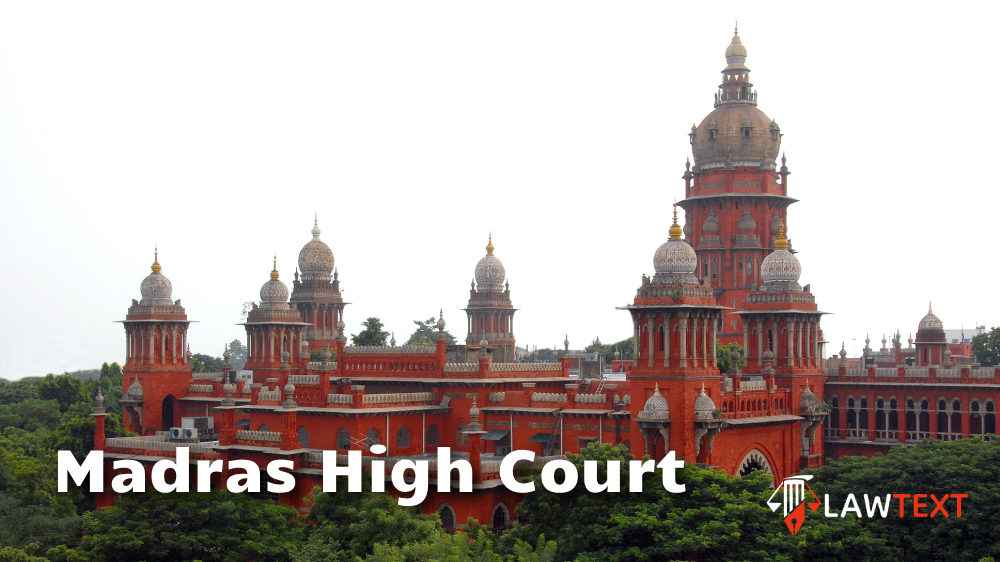
Madras High Court Partly Allows Management’s Writ Petitions Challenging Labour Court’s Closure Compensation Awards Under Section 33C(2) of Industrial Disputes Act, 1947, and Allows Workers’ Writ Petitions Against Dismissal of Claim Petitions. Labour Court Exceeded Its Jurisdiction by Adjudicating Disputed Last Drawn Wage, and Compensation Is Recalculated Based on Undisputed Wages; Dismissal of Legal Heirs’ Claim Petitions Is Set Aside and Remanded for Fresh Consideration on Merits.

High Court: Madras High Court Bench: Principal
  • 1
Judgement Image
Font size:
Print

Case Note & Summary

The case arose from the closure of Saram Co-operative Spinning Mill on 13 January 1999 without following the mandatory procedure under the Industrial Disputes Act, 1947. In March 2002, the Management offered a Voluntary Retirement Scheme, which was accepted by most workers, but the respondents in the Management’s writ petitions refused and subsequently filed claim petitions in 2013 before the Labour Court, Cuddalore, under Section 33C(2) seeking closure compensation. The Labour Court by its common order dated 24 March 2022 directed payment of closure compensation, 7.5% interest, and an ex-gratia amount of Rs. 1,00,000. The Management challenged these awards in eight writ petitions on grounds of delay and excess of jurisdiction, contending that the Labour Court improperly adjudicated the disputed last drawn wage. In a separate set, the legal heirs of certain workers and one workman filed writ petitions in 2025 against the Labour Court’s order dated 18 February 2021 dismissing their claim petitions as unnumbered, seeking remand for fresh consideration. The core legal issues were whether the Labour Court exceeded its scope under Section 33C(2) by deciding a disputed wage, whether the claims were barred by laches, and whether the dismissal of the other claim petitions was valid. The Management argued that Section 33C(2) proceedings are execution only and cannot involve adjudication, and that the 17-year delay vitiated the claims. The workmen countered that the illegal closure gave them a pre-existing right, making the petitions maintainable without a separate industrial dispute. The High Court, relying on Supreme Court decisions in Municipal Corporation of Delhi v. Ganesh Razak and Bombay Chemical Industries v. Deputy Labour Commissioner, held that Section 33C(2) petitions operate as execution proceedings and cannot determine disputed factual issues. The Court found that while the workmen were entitled to closure compensation under Section 25FFF due to admitted non-compliance, the Labour Court erred in fixing the last drawn wage at Rs. 4,500 when the exact wage was disputed. The Court partly set aside the Labour Court’s orders and recalculated the compensation on the basis of the accepted last drawn wages as tabulated. It also rejected the Management’s contention regarding the closure date and affirmed that the closure occurred on 13 January 1999. Regarding the 2025 writ petitions, the Court allowed the application for single court fee and quashed the dismissal order dated 18 February 2021, remanding those matters to the Labour Court for fresh disposal on merits. The Management’s writ petitions were partly allowed, and the workers’ writ petitions were allowed, resulting in a mixed outcome.

Headnote

A) Labour Law – Scope of Section 33C(2) Industrial Disputes Act, 1947 – Adjudication of disputed facts – Sections 33C(2), Industrial Disputes Act, 1947 – The Labour Court fixed the last drawn wage at Rs. 4,500/-, which was disputed by the Management – Held that a petition under Section 33C(2) is akin to an execution proceeding and cannot be used to adjudicate disputed questions of fact; the Labour Court exceeded its jurisdiction by determining a disputed wage; the compensation is recrystallized on the basis of the undisputed last drawn wages (Paras 10, 13, 15).

B) Labour Law – Closure Compensation – Entitlement under Section 25FFF – Sections 25F, 25FF, 25FFF, Industrial Disputes Act, 1947 – The mill was closed without following the statutory procedure, giving the workmen a pre-existing right to closure compensation – Held that the closure date is 13/1/1999 and the workmen are entitled to compensation under Section 25FFF; such right can be computed under Section 33C(2) without a prior industrial dispute (Paras 5, 12, 14).

C) Labour Law – Remand of Claim Petitions – Dismissal of claim petitions of legal heirs – Order dated 18/2/2021 of Labour Court set aside – Held that the Labour Court’s dismissal order is quashed and the matters are remanded for fresh consideration on merits; the application for single court fee is allowed (Paras 2, 3, 15).

Subscribe to unlock Headnote Subscribe Now

Issue of Consideration

Whether the Labour Court exceeded its jurisdiction under Section 33C(2) of the Industrial Disputes Act by adjudicating a dispute regarding the last drawn wage while computing closure compensation. Whether the dismissal of the claim petitions of the legal heirs by the Labour Court was lawful.

Subscribe to unlock Issue of Consideration Subscribe Now

Final Decision

The writ petitions filed by the Management were partly allowed; the Labour Court’s orders dated 24/3/2022 were partly set aside insofar as they determined the last drawn wage, and the closure compensation was recrystallized based on the accepted last drawn wages as per the table provided. The writ petitions filed by the workers/legal heirs were allowed; the Labour Court’s order dated 18/2/2021 was quashed and the matters remanded to the Labour Court for fresh consideration on merits. W.M.P.No.26170 of 2025 was allowed permitting payment of a single court fee.

Law Points

  • Legal points not extracted
  • Section 33C(2) Industrial Disputes Act is in the nature of execution and cannot adjudicate disputed facts
  • closure compensation under Section 25FFF accrues as a pre-existing right when closure is effected without following Sections 25F and 25FF
  • Labour Court cannot determine a disputed last drawn wage in a Section 33C(2) proceeding
  • compensation must be computed on the basis of undisputed wages.

Subscribe to unlock Law Points Subscribe Now

Case Details

2026 LawText (MAD) (07) 21

Writ Petition Nos.541, 546, 549, 1320, 1330, 1332, 1326, 4816 of 2023 and 23299, 23617, 24392 of 2025

2026-07-09

K. Surender

Citation not available

Mr. Haja Naziruddin, Senior Counsel for Mr. U. Baranidharan; Mr. S.T. Varadarajulu

The Management, represented by its Liquidator, Saram Co-operative Spinning Mill (also known as Villupuram Co-operative Spinning Mill)

T. Rajendran, B. Baskaran, K. Krishnamurthy, G. Kanniyappan, Subbarayan, A. Mani, N. Rangabazha, V. Selvaraj (Workmen); Arul Selvi, R. Sudharsana Krishnan, R. Nishanth, P. Anandan, P. Palani (Legal Heirs/Workmen)

Subscribe to unlock Case Details (Citation, Judge, Date & more) Subscribe Now

Nature of Litigation

Writ petitions under Article 226 challenging orders of Labour Court in claim petitions under Section 33C(2) of Industrial Disputes Act, and writ petitions against dismissal of claim petitions.

Remedy Sought

The Management sought quashing of Labour Court's orders awarding closure compensation and ex-gratia, and recalculation; the workers/legal heirs sought quashing of order dismissing their claim petitions and remand for fresh consideration.

Filing Reason

The Management alleged that Labour Court exceeded jurisdiction by adjudicating disputed last drawn wage and that claims were barred by delay; the workers sought reversal of dismissal of their claim petitions.

Previous Decisions

Labour Court order dated 24/3/2022 in C.P. Nos.46,44,38,41,40,36,45,39 of 2013 directing payment of closure compensation with 7.5% interest and Rs.1,00,000 ex-gratia; Labour Court order dated 18/2/2021 dismissing unnumbered C.P. No.--- of 2021 (19 register Nos.39,41,42/2021) as not maintainable.

Issues

Whether the Labour Court exceeded its jurisdiction under Section 33C(2) of the Industrial Disputes Act by adjudicating a dispute regarding last drawn wage while computing closure compensation. Whether the award of closure compensation by the Labour Court was sustainable despite delay and laches. Whether the dismissal of the claim petitions of the legal heirs by the Labour Court was lawful.

Submissions/Arguments

Management: Claim petitions filed with 17 years delay should be rejected on grounds of laches; Section 33C(2) petitions cannot decide disputed facts; a prior industrial dispute is necessary; the last drawn wage was disputed and wrongly fixed. Workmen: Once it is undisputed that the mill was closed without following procedure, no prior industrial dispute is needed; the Labour Court correctly computed outstanding amounts under Section 33C(2); the order needs no interference. Workers/legal heirs in 2025 writs: The Labour Court’s dismissal of claim petitions was erroneous and the matters should be remanded for fresh consideration on merits.

Ratio Decidendi

Proceeding under Section 33C(2) of the Industrial Disputes Act is in the nature of execution and cannot be used to adjudicate disputed questions of fact. A pre-existing right to closure compensation accrues when an undertaking is closed without following the mandatory procedure under Section 25F and 25FFF, and such right can be computed under Section 33C(2) without the need for a prior industrial dispute. The Labour Court cannot determine disputed last drawn wages in a Section 33C(2) proceeding; only the undisputed wage can form the basis for computation.

Judgment Excerpts

the facts which are not in dispute are as under: (i) Mill was closed on 13/1/1999, without following the due procedure as contemplated under Sections 25 F, 25 FF and 25 FFF of the Act. It is not in dispute that petitions under Section 33 C (2) of the Act can only be filed when there is a pre-existing right accrued to the workmen and in the absence of any such right, petition filed under Section 33 C (2) cannot be entertained. There cannot be any adjudication on facts of a case during the consideration of 33 C (2) petitions, however, the labour Court would act as a Court entertaining an Execution Petition. Such finding of the labour Court, in fixing the last drawn wage exceeds the scope of adjudication under Section 33 C (2) of the Act. Hence, the labour Court ought to have considered the undisputed last drawn wage. Following the mandatory provisions, the impugned orders were passed granting closure compensation, however, wrongly considering the last drawn pay. Accordingly, findings of the labour Court in C.P.Nos..46,44, 38, 41, 40, 36, 45 and 39 of 2013 are partly set aside.

Procedural History

The mill was closed on 13/1/1999 without following procedure under the Industrial Disputes Act. In March 2002, the Management offered a Voluntary Retirement Scheme; many workers accepted, but the respondents in the Management’s writ petitions refused. They filed Claim Petitions in 2013 before the Labour Court, Cuddalore, under Section 33C(2). The Labour Court on 24/3/2022 ordered payment of closure compensation with interest and ex-gratia. Certain other claim petitions were dismissed by the Labour Court by order dated 18/2/2021. The Management challenged the awards in writ petitions filed in 2023. The workers/legal heirs challenged the dismissal in writ petitions filed in 2025. The High Court heard all together and passed a common order.

Acts & Sections

  • Industrial Disputes Act, 1947: 25F, 25FF, 25FFF, 33C(2)
  • Constitution of India: Article 226
Subscribe to unlock full Legal Analysis Subscribe Now
Related Judgement
High Court Bombay High Court Allows Petition of Senior Citizen Father Seeking Maintenance from Children Under Senior Citizens Act. Maintenance Order Set Aside Due to Non-Compliance with Section 4(2) Requiring Consideration of Children's Financial Capacity.
Related Judgement
High Court Madras High Court Partly Allows Management’s Writ Petitions Challenging Labour Court’s Closure Compensation Awards Under Section 33C(2) of Industrial Disputes Act, 1947, and Allows Workers’ Writ Petitions Against Dismissal of Claim Petitions. L...





