
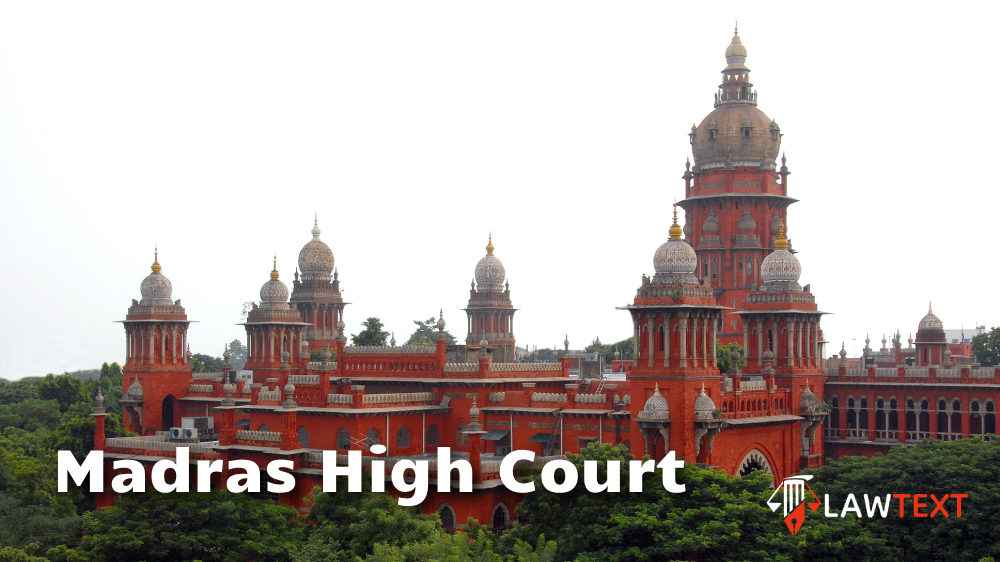
Madras High Court Partly Allows Writ Petition Against Recovery of Excess Pay; Recovery Set Aside as Impermissible Under Rafiq Masih Principles Despite Confirmed Pay Revision. Court Holds That Recovery from a Group C Employee After More Than Five Years, in Absence of Misrepresentation, Constitutes Hardship and Falls Within Impermissible Categories Enumerated in State of Punjab v. Rafiq Masih.

High Court: Madras High Court Bench: Principal
  • 1
Judgement Image
Font size:
Print

Case Note & Summary

The petitioner, V. Thangadurai, was working as a Translator under the second respondent, the Principal District Judge, Kallakurichi, and later promoted from Assistant to Bench Clerk Grade III, joining on 14.12.2013. He was sanctioned a promotional increment at 3% with effect from 01.04.2014, and his pay was fixed at Rs.11730+2800 Grade Pay. After a considerable period, an audit report by the first respondent, the Registrar General of the High Court of Madras, directed that the increment was inadmissible, being on transfer from Assistant to Bench Clerk Grade III, and thus, the excess pay and allowances paid from 01.04.2014 to 30.09.2025, amounting to Rs.2,44,494/-, were to be recovered. Consequently, the second respondent issued office order No.188/2025 dated 16.10.2025 for recovery. The petitioner filed a writ petition under Article 226 of the Constitution seeking a writ of certiorarified mandamus to quash the recovery order and direct refund of any recovered amount. The core legal issue was whether recovery of excess pay, in the absence of misrepresentation by the employee and after a long lapse of time, is permissible. The petitioner contended that there was no misrepresentation on his part; the error was committed by the establishment, and recovery after many years would cause extreme hardship. The respondents argued that unjust gain of public money is impermissible and that authorities are empowered to rectify pay fixation errors. The court, relying on the principles laid down by the Supreme Court in State of Punjab v. Rafiq Masih (2015) 4 SCC 334, held that recovery is impermissible when an employee is not at fault and recovery would be harsh, particularly for Group C employees like the petitioner, and where excess payment has been made for over five years before the recovery order. The court confirmed the pay revision but set aside the recovery order, directing that any excess amount already recovered be re-paid to the petitioner within twelve weeks. The writ petition was partly allowed with no costs.

Headnote

A) Service Law - Recovery of Excess Pay - Principles Governing Recovery - Constitution of India, Article 226; State of Punjab v. Rafiq Masih (2015) 4 SCC 334 - The petitioner, a Bench Clerk Grade III, challenged recovery of Rs.2,44,494/- as excess pay for the period 01.04.2014 to 30.09.2025, arising from an erroneous increment sanctioned on his promotion. The High Court held that while public money unjustly gained may be recovered, recovery is impermissible when there is no misrepresentation by the employee and it causes extreme hardship, especially after over five years. The Supreme Court's principles in Rafiq Masih were applied, including that recovery from Group C employees is impermissible when excess payment exceeds five years before the recovery order. Held that the pay revision is confirmed, but the recovery order is set aside, and any recovered amount must be refunded within 12 weeks. (Paras 3-6)

Subscribe to unlock Headnote Subscribe Now

Issue of Consideration

Whether the recovery of excess pay and allowances from the petitioner, after a long period and in the absence of any misrepresentation on his part, is permissible under law

Subscribe to unlock Issue of Consideration Subscribe Now

Final Decision

Writ Petition partly allowed. The revision of pay effected is confirmed, but the recovery of excess pay alone is set aside. Any excess amount recovered to be re-paid within 12 weeks. No costs.

Law Points

  • Legal points not extracted
  • Unjust gain of public money impermissible under law
  • authorities competent to rectify errors in pay fixation
  • recovery of excess salary impermissible if no misrepresentation by employee and after long period causing hardship
  • recovery from Class III/IV employees impermissible when excess payment made for over five years before recovery order
  • recovery set aside if iniquitous or harsh

Subscribe to unlock Law Points Subscribe Now

Case Details

2026 LawText (MAD) (07) 14

WP No. 42597 of 2025 and W.M.P.Nos.47633 & 47635 of 2025

2026-07-20

S. M. Subramaniam, N. Senthilkumar

Citation not available, 2026:MHC:3025

Mr. M. Ajay Kanna for Mr. S. Tamilselvan (petitioner); Mr. S. Giridharan (respondents)

V. Thangadurai

The Registrar General, High Court of Madras, Chennai-104 and The Principal District Judge, Kallakurichi

Subscribe to unlock Case Details (Citation, Judge, Date & more) Subscribe Now

Nature of Litigation

Writ Petition under Article 226 of the Constitution of India for Certiorarified Mandamus to quash recovery order of excess pay and allowances and direct refund

Remedy Sought

Petitioner sought to quash the office order dated 16.10.2025 for recovery of Rs.2,44,494/- and direct the respondents to remit back the recovered amount.

Filing Reason

The second respondent issued an office order for recovery of excess pay and allowances paid on pay fixation from 01.04.2014 to 30.09.2025, due to an audit report finding an inadmissible sanction of increment on transfer from Assistant to Bench Clerk Grade III.

Previous Decisions

The impugned order was passed by the second respondent on 16.10.2025 based on audit report directions for recovery.

Issues

Whether the recovery of excess pay and allowances from the petitioner is permissible when there is no misrepresentation on his part and the recovery is sought after a long period of time, causing hardship.

Submissions/Arguments

Petitioner contended that the recovery after many years without any misrepresentation on his part would cause extreme hardship, and the error was by the establishment. Respondents contended that unjust gain of public money is impermissible and they are empowered to rectify errors in pay fixation.

Ratio Decidendi

Recovery of excess payments made to an employee is impermissible when there is no misrepresentation by the employee, and the recovery after a long period of time would cause extreme hardship. The principles laid down in State of Punjab v. Rafiq Masih (2015) 4 SCC 334 apply, particularly for Class III and IV employees and when excess payment has been made for over five years before recovery order.

Judgment Excerpts

However, the respondents are unable to establish that there was a misrepresentation on the part of the employee during fixation of pay. It is an error committed by the Establishment, for which, the petitioner cannot be penalised after a lapse of many years. Recovery of excess salary at this length of time would result in extreme hardship to the employee. In view of the facts and circumstances, the revision of pay effected is confirmed, but the recovery of excess pay alone is set aside. The excess amount, if any, recovered on account of the impugned order, is directed to be re-paid to the petitioner within a period of 12 weeks from the date of receipt of a copy of this order.

Procedural History

The petitioner, a Bench Clerk Grade III, was issued an office order dated 16.10.2025 by the second respondent for recovery of excess pay and allowances of Rs.2,44,494/- for the period 01.04.2014 to 30.09.2025. Aggrieved, the petitioner filed the present writ petition under Article 226 seeking certiorarified mandamus. The High Court heard the matter and rendered judgment on 20.07.2026.

Acts & Sections

  • Constitution of India: Article 226
Subscribe to unlock full Legal Analysis Subscribe Now
Related Judgement
High Court Madras High Court Partly Allows Writ Petition Against Recovery of Excess Pay; Recovery Set Aside as Impermissible Under Rafiq Masih Principles Despite Confirmed Pay Revision. Court Holds That Recovery from a Group C Employee After More Than Five Year...
Related Judgement
High Court Bombay High Court Partly Allows Landlords' Revision and Tenant's Challenge in Rent Dispute Under Maharashtra Rent Control Act, 1999 — Standard Rent Fixed at Rs.6,000 Per Month. Revisional Court's Determination of Standard Rent Upheld as Reasonable ...





