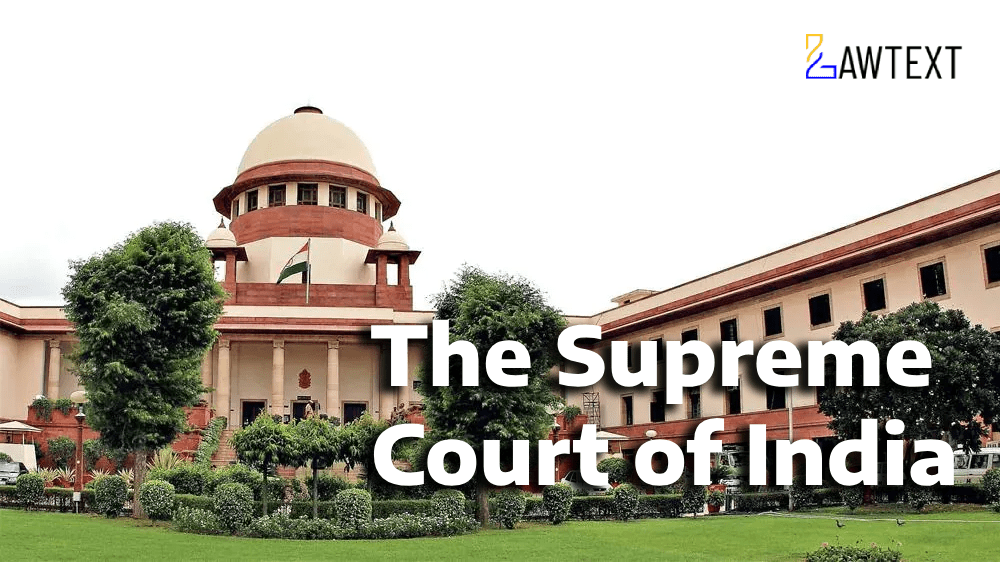
Supreme Court Refers Questions on Eligibility of Judicial Officers for Direct Recruitment as District Judges to Constitution Bench — Interpretation of Article 233(2) of Constitution of India, 1950 Regarding Requirement of Continuous Practice as Advocate.

  • 5
Judgement Image
Font size:
Print

Case Note & Summary

The Supreme Court, in a reference by a three-Judge Bench, examined substantial questions of law concerning the interpretation of Article 233(2) of the Constitution of India. The core dispute was whether serving judicial officers, who had previously practiced as advocates for seven years, could be directly recruited as District Judges against vacancies reserved for advocates. Petitioners, representing in-service judicial officers, argued that Article 233(2) provides two distinct sources of recruitment: persons already in judicial service and advocates with seven years' practice, and that no additional eligibility conditions apply to those already in service. They contended that the decision in Dheeraj Mor v. High Court of Delhi misconstrued the provision by requiring a candidate to be a practicing advocate at the time of application, thereby rendering the first category superfluous. Reliance was placed on earlier decisions including Rameshwar Dayal v. State of Punjab and Chandra Mohan v. State of Uttar Pradesh. Respondents, opposing the inclusion of judicial officers, argued that the consistent interpretation over six decades, as affirmed in cases like Deepak Aggarwal v. Keshav Kaushik, established that direct recruitment was exclusively from practicing advocates. They invoked the doctrine of stare decisis and emphasized that once a person joins judicial service, they cease to be an advocate and thus fall outside the quota reserved for advocates. The Constitution Bench framed four specific questions to resolve the conflict. The judgment, as provided, contains only the submissions and the index to the full analysis; the conclusive findings and directions are not included in the extracted text.

Issue of Consideration

(i) Whether a judicial officer who has already completed seven years in Bar being recruited for subordinate judicial services would be entitled for appointment as Additional District Judge against the Bar vacancy? (ii) Whether the eligibility for appointment as a District Judge is to be seen only at the time of appointment or at the time of application or both? (iii) Whether there is any eligibility prescribed for a person already in the judicial service of the Union or State under Article 233(2) of the Constitution of India for being appointed as District Judge? (iv) Whether a person who has been Civil Judge for a period of seven years or has been an Advocate and Civil Judge for a combined period of seven years or more than seven years would be eligible for appointment as District Judge under Article 233 of the Constitution of India?

Subscribe to unlock Issue of Consideration Subscribe Now

Law Points

  • interpretation of Article 233(2) of the Constitution of India
  • two sources of recruitment for district judges
  • eligibility of serving judicial officers for direct recruitment
  • requirement of continuous practice as advocate
  • doctrine of stare decisis
  • Constitutional guarantee under Articles 14 and 16
Subscribe to unlock Law Points Subscribe Now

Case Details

2025 LawText (SC) (10) 98

Civil Appeal No. 3947 of 2020

B.R. GAVAI, CJI (and others)

2025 INSC 1208

Mr. Jayant Bhushan, Mr. Arvind P. Datar, Mr. P.S. Patwalia, Mr. V. Giri, Ms. Vibha Datta Makhija, Mr. Jaideep Gupta, Dr. Manish Singhvi, Mr. Dama Seshadri Naidu, Mr. George Poonthottam, Mr. Gopal Sankaranarayanan, Dr. Menaka Guruswamy, Mr. Rajive Bhalla, Mr. Anil Kaushik, Mr. Amit Anand Tewari, Mr. B.H. Marlapalle, Mr. Narendra Hooda, Mr. Anand Sanjay M. Nuli (for Petitioners); Mr. C.U. Singh, Mr. Nidhesh Gupta, Mr. Vijay Hansaria, Mr. Ravindra Shrivastava, Mr. Rajiv Shakdher, Mr. Amit Gupta, Mr. Kanhaiya Singhal, Mr. Rashid N. Azam, Mr. Sandeep Sudhakar Deshmukh, Ms. Sindoora VNL, Mr. Yashvardhan, Ms. Kavya Jhawar, Ms. Nandini Rai (for Respondents); Mr. Siddharth Gupta, Mr. Satyam Chand Soriya (for Intervenors)

REJANISH K.V.

K. DEEPA AND OTHERS

Subscribe to unlock Case Details (Citation, Judge, Date & more) Subscribe Now

Nature of Litigation

Constitutional interpretation regarding eligibility of serving judicial officers for direct recruitment as District Judges under Article 233 of the Constitution of India.

Remedy Sought

Petitioners (serving judicial officers) sought a declaration that they are entitled to be considered for direct recruitment as Additional District Judges against vacancies reserved for advocates, relying on their prior seven years of practice and service experience.

Filing Reason

The matter was referred by a three-Judge Bench which doubted the correctness of the decision in Dheeraj Mor v. High Court of Delhi and framed substantial questions of law for consideration by a Constitution Bench.

Previous Decisions

The three-Judge Bench, by order dated 12th August 2025, referred the questions to a Constitution Bench. On 12th September 2025, the Constitution Bench framed additional questions. The case arises from multiple writ petitions and civil appeals challenging the exclusion of judicial officers from direct recruitment.

Issues

(i) Whether a judicial officer who has already completed seven years in Bar being recruited for subordinate judicial services would be entitled for appointment as Additional District Judge against the Bar vacancy? (ii) Whether the eligibility for appointment as a District Judge is to be seen only at the time of appointment or at the time of application or both? (iii) Whether there is any eligibility prescribed for a person already in the judicial service of the Union or State under Article 233(2) of the Constitution of India for being appointed as District Judge? (iv) Whether a person who has been Civil Judge for a period of seven years or has been an Advocate and Civil Judge for a combined period of seven years or more than seven years would be eligible for appointment as District Judge under Article 233 of the Constitution of India?

Submissions/Arguments

Petitioners argued that Dheeraj Mor misreads Article 233(2) by requiring current practice, rendering the words 'a person not already in the service of Union or State' superfluous. Petitioners contended that Article 233(2) provides two distinct eligibility streams: judicial service and seven years' practice as an advocate; once in judicial service, no further eligibility is required. They relied on Rameshwar Dayal v. State of Punjab and submitted that the phrase 'has been' need not imply a continuing state, as supported by the Hindi version of the Constitution. Excluding Civil Judges from direct recruitment is unreasonable and violates Articles 14 and 16; combined experience of seven years as advocate and civil judge should suffice. Respondents argued that over six decades of consistent interpretation, starting from Rameshwar Dayal and Chandra Mohan, has settled that direct recruitment is only from practicing advocates. Stare decisis applies, and the 75:25 quota for promotees and direct recruits from the bar, as directed in All India Judges Association, is in line with settled law. Once a person joins judicial service, they cease to be an advocate and are not eligible for the quota reserved for advocates; the requirement of 'has been an advocate' implies a continuous state of practice.

Judgment Excerpts

Whether a judicial officer who has already completed seven years in Bar being recruited for subordinate judicial services would be entitled for appointment as Additional District Judge against the Bar vacancy? Whether the eligibility for appointment as a District Judge is to be seen only at the time of appointment or at the time of application or both? Whether there is any eligibility prescribed for a person already in the judicial service of the Union or State under Article 233(2) of the Constitution of India for being appointed as District Judge? Whether a person who has been Civil Judge for a period of seven years or has been an Advocate and Civil Judge for a combined period of seven years or more than seven years would be eligible for appointment as District Judge under Article 233 of the Constitution of India?

Procedural History

The batch of matters was referred by a three-Judge Bench of the Supreme Court vide order dated 12th August 2025 to a Constitution Bench on substantial questions of law regarding interpretation of Article 233(2). On 12th September 2025, the Constitution Bench framed additional questions. The Constitution Bench heard extensive arguments and reserved judgment.

Acts & Sections

  • Constitution of India, 1950: Article 233, 233(2), 14, 16, 217(2)
Subscribe to unlock full Legal Analysis Subscribe Now
Related Judgement
Supreme Court Supreme Court Refers Questions on Eligibility of Judicial Officers for Direct Recruitment as District Judges to Constitution Bench — Interpretation of Article 233(2) of Constitution of India, 1950 Regarding Requirement of Continuous Practice as Adv...
Related Judgement
High Court High Court of Karnataka Examines Challenge to Karnataka Hindu Religious Institutions and Charitable Endowments (Amendment) Act, 2011 by Numerous Temple Trusts. Petitioners Sought Declaration that the Amendment Act is Unconstitutional and Discriminato...