
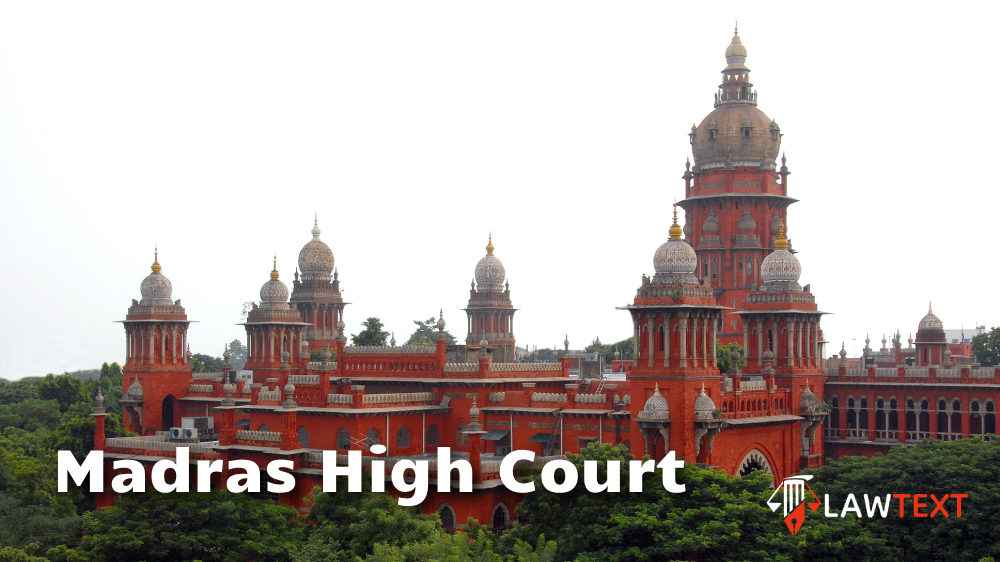
Case Note & Summary
The second appeal arose from a partition suit where the plaintiff claimed 4/5th share in the suit property based on a Will (Ex.A2) executed by Kamalathammal. The defendants (appellants) contested, asserting that Kamalathammal had executed another Will (Ex.B1) bequeathing the property to the second defendant. The trial court dismissed the suit, holding Ex.A2 not proved. The lower appellate court confirmed that Ex.A2 was not proved, but it also disbelieved Ex.B1 citing suspicious circumstances not pleaded by the plaintiff, and instead partitioned the property under the law of inheritance. Aggrieved, the defendants filed the second appeal. Before the High Court, the appellants argued that the lower appellate court had traversed beyond pleadings by raising the ground of suspicious circumstances suo motu, which was neither pleaded nor put to the witnesses. They relied on the principle that pleadings and proof must correspond, as reiterated in recent Supreme Court decisions. The respondents supported the lower appellate court’s findings, contending that the Will was not proved in accordance with Section 68 of the Evidence Act and that the execution was surrounded by suspicious circumstances. The High Court observed that in civil proceedings, the rule of pleadings is paramount: no evidence can be adduced on an issue without a proper factual foundation in the pleadings. The court stressed that a party should not be taken by surprise by findings on unpleaded facts, as this violates principles of natural justice. It noted that the lower appellate court had disbelieved Ex.B1 based on suspicious circumstances without the plaintiff having raised such a plea or making any suggestion during cross-examination. The judgment highlighted that the first appellate court’s approach was unsustainable as it decided the case on grounds outside the pleadings. The court’s analysis focused primarily on the procedural impropriety of the lower appellate court’s findings rather than on the substantive validity of the Wills. The text of the judgment provided was incomplete and did not contain the final operative order of the High Court.
Headnote
A) Civil Procedure - Pleadings - Rule of Pleadings and Proof - Code of Civil Procedure, 1908 - The first appellate court disbelieved the defendant's Will (Ex.B1) based on suspicious circumstances not pleaded by the plaintiff nor suggested during cross-examination, which violated the principle that a party should not be taken by surprise. Held that a decision cannot be founded on grounds outside the pleadings and pleadings and proof must correspond. (Paras 15-16) B) Evidence - Proof of Will - Section 68, Indian Evidence Act, 1872; Section 63, Indian Succession Act, 1925 - The court noted the statutory requirement of proving a Will by examining attesting witnesses, but the first appellate court's rejection of the Will for alleged suspicious circumstances was without proper pleadings; the court emphasized that suspicious circumstances must be pleaded to be considered. (Paras 10-11, 14-15)
Issue of Consideration
1. Whether the approach of the first appellate Court is correct in allowing the appeal without giving any finding regarding the genuineness of Ex.A2 Will, on the basis of which the appellants have claimed partition of the suit property? 2. Whether the first appellate Court is right in disbelieving Ex.B2 Will which has been duly proved by DW2 and DW3 the attestor and the scribe of the Will, which are in compliance with Section 68 of the Indian Evidence Act and Section 63 of Indian Succession Act?
Law Points
- pleadings and proof must correspond
- no evidence on issue without factual foundation
- party cannot be taken by surprise
- rule of pleadings reiterates natural justice principles
- Section 68 Indian Evidence Act
- Section 63 Indian Succession Act






