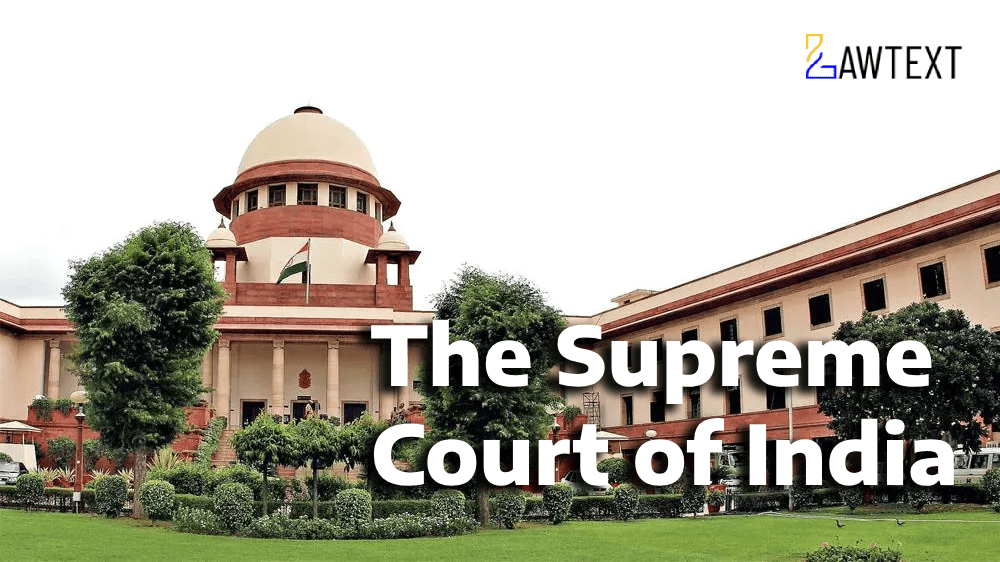
Supreme Court Allows Chandigarh Administration to Seek UNESCO Approval for High Court Verandah Construction — Heritage Status Concerns Override Immediate Mandamus. The Court directed the Administration to conduct a Heritage Impact Assessment and obtain UNESCO concurrence before constructing a verandah in front of Court Room No.1 of the Punjab and Haryana High Court, a UNESCO World Heritage Site.

  • 6
Judgement Image
Font size:
Print

Case Note & Summary

The Supreme Court of India heard appeals by the Chandigarh Administration against orders of the Punjab and Haryana High Court in a public interest litigation. The High Court had issued writs of mandamus directing the Administration to construct a verandah in front of Court Room No.1 of the High Court building and to lay green pavers in a kutcha parking area to address acute parking shortage. The Administration challenged these orders on the ground that the High Court building is part of the Chandigarh Capitol Complex, a UNESCO World Heritage Site designated in 2016, and any structural changes require prior approval from the World Heritage Committee, UNESCO, failing which the site risks losing its heritage status. The Supreme Court noted that the Administration had already approached the Foundation Le Corbusier and UNESCO for original drawings and had requested IIT Roorkee to conduct a Heritage Impact Assessment. The Court held that while the need for infrastructure improvements was not disputed, the High Court should have balanced this with heritage conservation. The Supreme Court set aside the mandamus for the verandah and directed the Administration to seek UNESCO approval before proceeding. Regarding the green pavers, the Court upheld the High Court's direction as eco-friendly but subject to heritage clearance. The contempt proceedings against the Chief Engineer were also set aside. The Court emphasized that the Administration must act expeditiously to resolve the parking and shelter issues while preserving the World Heritage status.

Headnote

A) Constitutional Law - Writ of Mandamus - Heritage Conservation - The High Court issued a writ of mandamus directing the UT Administration to construct a verandah in front of Court Room No.1 and lay green pavers in a kutcha parking area within the Chandigarh Capitol Complex, a UNESCO World Heritage Site - The Supreme Court held that the High Court ought to have balanced the need for infrastructure with heritage conservation, and directed the Administration to seek UNESCO approval before proceeding - Held that the mandamus was premature as it did not account for the risk of losing World Heritage status (Paras 3-12).

B) Heritage Law - UNESCO World Heritage Site - Conservation - The Chandigarh Capitol Complex, including the High Court building, is a UNESCO World Heritage Site designated in 2016 - Any proposed changes require prior communication and concurrence of the World Heritage Committee, UNESCO - The Supreme Court directed the Administration to conduct a Heritage Impact Assessment through IIT Roorkee and forward the design to UNESCO for approval - Held that heritage status must be preserved while addressing infrastructure needs (Paras 4-11).

C) Environmental Law - Sustainable Development - Green Pavers - The High Court directed laying of green pavers in a kutcha parking area to address acute parking shortage while preserving green cover - The Supreme Court upheld this direction as eco-friendly and reasonable, but subject to heritage clearance - Held that green pavers allow water percolation and are beneficial for sustainable development (Paras 3, 5).

Subscribe to unlock Headnote Subscribe Now

Issue of Consideration

Whether the High Court was justified in issuing a writ of mandamus directing construction of a verandah and laying of green pavers in a UNESCO World Heritage Site without awaiting requisite permissions from the World Heritage Committee, UNESCO.

Subscribe to unlock Issue of Consideration Subscribe Now

Final Decision

The Supreme Court allowed the appeals in part. It set aside the writ of mandamus dated 29th November 2024 directing construction of the verandah, and directed the Chandigarh Administration to expeditiously conduct a Heritage Impact Assessment through IIT Roorkee and forward the design to the World Heritage Committee, UNESCO for approval. The direction regarding green pavers was upheld but subject to heritage clearance. The contempt notices against the Chief Engineer were set aside. The Court directed the Administration to complete the process within a reasonable time and report back to the High Court.

Law Points

  • Writ of Mandamus
  • Heritage Conservation
  • World Heritage Site
  • Public Interest Litigation
  • Contempt of Court
  • Sustainable Development
  • Green Pavers
  • Parking Space
Subscribe to unlock Law Points Subscribe Now

Case Details

2025 INSC 786

Civil Appeal No(s). of 2025 (Arising out of SLP (Civil) No(s). 162-163 of 2025) with Civil Appeal No(s). of 2025 (Arising out of SLP (Civil) No(s). 9042-9043 of 2025)

2025-01-01

Mehta, J.

2025 INSC 786

Chandigarh Administration

Registrar General, High Court of Punjab and Haryana, Chandigarh and Others

Subscribe to unlock Case Details (Citation, Judge, Date & more) Subscribe Now

Nature of Litigation

Civil appeals against orders of the High Court of Punjab and Haryana in a public interest litigation directing construction of a verandah and laying of green pavers in a UNESCO World Heritage Site.

Remedy Sought

The Chandigarh Administration sought setting aside of the High Court's writs of mandamus and contempt notices, and sought time to obtain UNESCO approval before undertaking construction.

Filing Reason

The High Court issued writs of mandamus directing the Administration to construct a verandah in front of Court Room No.1 and lay green pavers in a kutcha parking area, and initiated contempt proceedings against the Chief Engineer for non-compliance.

Previous Decisions

The High Court passed orders dated 29th November 2024, 13th December 2024, 7th February 2025, and 21st February 2025 in Civil Writ Petition (PIL) No. 9 of 2023.

Issues

Whether the High Court was justified in issuing a writ of mandamus for construction of a verandah in a UNESCO World Heritage Site without awaiting UNESCO approval. Whether the direction to lay green pavers in a kutcha parking area was reasonable and sustainable. Whether contempt proceedings against the Chief Engineer were warranted.

Submissions/Arguments

The Solicitor General for the appellant argued that the High Court building is part of a UNESCO World Heritage Site and any construction requires prior approval from the World Heritage Committee, UNESCO, failing which the site may lose its heritage status. He submitted that the Administration had already approached UNESCO and IIT Roorkee for a Heritage Impact Assessment. The respondent (High Court) argued that the verandah and parking were dire necessities for litigants and lawyers, and the High Court's directions were aimed at addressing acute shortages while preserving the green cover through eco-friendly green pavers.

Ratio Decidendi

The High Court's exercise of writ jurisdiction must balance the need for infrastructure improvements with the preservation of UNESCO World Heritage status. Any structural changes in a World Heritage Site require prior approval from the World Heritage Committee, UNESCO, and a Heritage Impact Assessment is necessary before issuing a mandamus for construction.

Judgment Excerpts

The Chandigarh Capitol Complex which includes the High Court building, was designated as a UNESCO World Heritage Site in the year 2016... Any proposed changes in the World Heritage Site are to be communicated to the World Heritage Committee, UNESCO in advance and their concurrence is to be sought, failing which, there is a risk of the site losing its World Heritage status. The High Court ought to have balanced the need for infrastructure with heritage conservation.

Procedural History

The High Court of Punjab and Haryana entertained a public interest litigation (CWP-PIL No. 9 of 2023) and passed orders on 29th November 2024, 13th December 2024, 7th February 2025, and 21st February 2025 directing the Chandigarh Administration to construct a verandah and lay green pavers, and initiating contempt proceedings. The Administration filed special leave petitions in the Supreme Court, which were converted into civil appeals and heard together.

Acts & Sections

  • Constitution of India: Article 226
Subscribe to unlock full Legal Analysis Subscribe Now
Related Judgement
Supreme Court Supreme Court Allows Chandigarh Administration to Seek UNESCO Approval for High Court Verandah Construction — Heritage Status Concerns Override Immediate Mandamus. The Court directed the Administration to conduct a Heritage Impact Assessment and ob...
Related Judgement
Supreme Court Supreme Court Dismisses Direct Recruits' Appeal in Seniority Dispute — Date of Appointment Prevails Over Year of Vacancy. Promotees appointed on 01.03.2007 are senior to direct recruits appointed on 14.08.2007 and 24.11.2007 under the Manipur Polic...