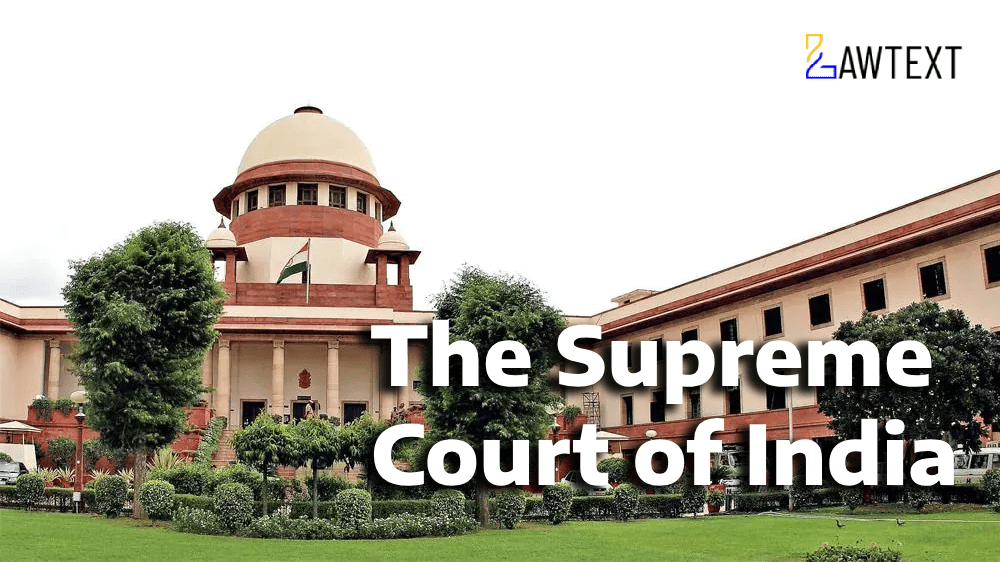
Supreme Court Defines Aravali Hills and Ranges for Conservation in T.N. Godavarman Case. Court adopts scientific definition based on geological and ecological criteria to prevent desertification and protect biodiversity across Delhi, Haryana, Gujarat, and Rajasthan.

  • 133
Judgement Image
Font size:
Print

Case Note & Summary

The Supreme Court of India, in its inherent jurisdiction under Article 32 of the Constitution, addressed the critical issue of defining 'Aravali Hills and Ranges' for the purpose of conservation and protection. The matter arose in the ongoing T.N. Godavarman Thirumulpad v. Union of India writ petition, which has been monitoring forest conservation across India. The Court noted that the Aravali Range, spanning Delhi, Haryana, Gujarat, and Rajasthan, is one of the oldest geological features on Earth, rich in wildlife, flora, and fauna, and acts as a 'green barrier' preventing the eastward spread of the Thar Desert. The Court observed that India is a signatory to the United Nations Convention to Combat Desertification (UNCCD), which requires adopting integrated approaches to address desertification and land degradation. The Central Empowered Committee (CEC) submitted a report (CEC Report No. 03 of 2024) recommending a scientific definition of Aravali Hills and Ranges based on geological and ecological criteria. The Court accepted this definition and directed the four States to implement the CEC recommendations, including prohibition of mining, construction, and other harmful activities in the defined areas. The Court also directed the States to prepare action plans for reforestation, biodiversity protection, and sustainable development. The judgment emphasizes the precautionary principle and the public trust doctrine, holding that the Aravali ecosystem must be preserved for future generations. The Court further directed the CEC to monitor compliance and submit periodic reports.

Headnote

A) Environmental Law - Definition of Aravali Hills and Ranges - Conservation - The Court considered the need for a uniform scientific definition of Aravali Hills and Ranges to ensure effective conservation across Delhi, Haryana, Gujarat, and Rajasthan. The Court adopted the definition based on geological and ecological criteria as recommended by the Central Empowered Committee (CEC) to prevent desertification and protect the ecosystem. (Paras 1-10)

B) Environmental Law - Prevention of Desertification - UNCCD - India's obligations under the United Nations Convention to Combat Desertification (UNCCD) require strengthening laws and adopting integrated approaches to address desertification. The Court emphasized the role of the Aravali Range as a 'green barrier' against the eastward spread of the Thar Desert. (Paras 4-6)

C) Environmental Law - Forest Conservation - Sustainable Development - The Court directed the States of Delhi, Haryana, Gujarat, and Rajasthan to implement the CEC recommendations for conservation of Aravali Hills, including prohibition of mining, construction, and other harmful activities, and to prepare action plans for reforestation and biodiversity protection. (Paras 11-15)

Subscribe to unlock Headnote Subscribe Now

Issue of Consideration

What is the proper definition of 'Aravali Hills and Ranges' for the purpose of conservation and protection under environmental laws, and what measures are required to prevent desertification and land degradation in the Aravali region?

Subscribe to unlock Issue of Consideration Subscribe Now

Final Decision

The Supreme Court accepted the CEC's definition of Aravali Hills and Ranges and directed the States of Delhi, Haryana, Gujarat, and Rajasthan to implement the CEC recommendations, including prohibition of mining, construction, and other harmful activities, and to prepare action plans for reforestation and biodiversity protection. The CEC was directed to monitor compliance and submit periodic reports.

Law Points

  • Environmental Law
  • Forest Conservation
  • Definition of Aravali Hills
  • Prevention of Desertification
  • Sustainable Development
  • Precautionary Principle
  • Public Trust Doctrine
Subscribe to unlock Law Points Subscribe Now

Case Details

2025 LawText (SC) (11) 419

I.A. No.105701 of 2024 (CEC Report No. 03 of 2024) in Writ Petition (C) No. 202 of 1995

2025-11-20

B.R. GAVAI CJI. , K. VINOD CHANDRAN J. , N.V. ANJARIA J.

2025 INSC 1338, 2026 (2) SCC 299, 2025 SCC OnLine SC 2512, 2026 (16) FLT 1, 2025 AIR OnLine SC 1120

IN RE: T.N. Godavarman Thirumulpad

Union of India and Others

Subscribe to unlock Case Details (Citation, Judge, Date & more) Subscribe Now

Nature of Litigation

Environmental public interest litigation concerning the definition and conservation of Aravali Hills and Ranges.

Remedy Sought

Definition of Aravali Hills and Ranges and directions for their conservation to prevent desertification and protect biodiversity.

Filing Reason

Need for a uniform scientific definition of Aravali Hills and Ranges to ensure effective conservation and compliance with India's obligations under the UNCCD.

Previous Decisions

The matter is part of the ongoing T.N. Godavarman Thirumulpad v. Union of India writ petition (W.P. (C) No. 202 of 1995) which has been monitoring forest conservation across India.

Issues

What is the proper definition of 'Aravali Hills and Ranges' for conservation purposes? What measures are required to prevent desertification and land degradation in the Aravali region?

Submissions/Arguments

The Central Empowered Committee (CEC) submitted a report recommending a scientific definition of Aravali Hills and Ranges based on geological and ecological criteria. The States of Delhi, Haryana, Gujarat, and Rajasthan were directed to implement the CEC recommendations.

Ratio Decidendi

The Aravali Range is a critical ecological barrier against desertification, and its conservation is essential for sustainable development. The precautionary principle and public trust doctrine require the State to protect the Aravali ecosystem for future generations. A uniform scientific definition is necessary for effective enforcement of environmental laws.

Judgment Excerpts

The Aravali Range spanning across the afore said four States is one of the oldest geological features on planet Earth. The scientific assessments of the Aravali Range establish the fact that the Aravali ecosystem acts as a 'green barrier' and forms an effective 'shield' against desertification by preventing the eastward spread of the Thar Desert towards the Indo-Gangetic plains, Haryana and western Uttar Pradesh.

Procedural History

The matter arises from I.A. No.105701 of 2024 (CEC Report No. 03 of 2024) in Writ Petition (C) No. 202 of 1995 (T.N. Godavarman Thirumulpad v. Union of India), which is a long-standing public interest litigation concerning forest conservation in India. The Central Empowered Committee (CEC) submitted a report on the definition of Aravali Hills and Ranges, which was considered by the Supreme Court in this judgment.

Acts & Sections

  • Wetlands (Conservation and Management) Rules: Rule 3(b)
  • Environment (Protection) Rules: Rule 5(1)
  • Environment (Protection) Act: Section 3(2)(v)
Subscribe to unlock full Legal Analysis Subscribe Now
Related Judgement
Supreme Court Supreme Court Defines Aravali Hills and Ranges for Conservation in T.N. Godavarman Case. Court adopts scientific definition based on geological and ecological criteria to prevent desertification and protect biodiversity across Delhi, Haryana, Gujarat...
Related Judgement
High Court High Court Acquits Appellant in Murder Case Due to Insufficient Circumstantial Evidence and Unproven Extra Judicial Confession. Conviction Under Sections 302 and 201 IPC Set Aside