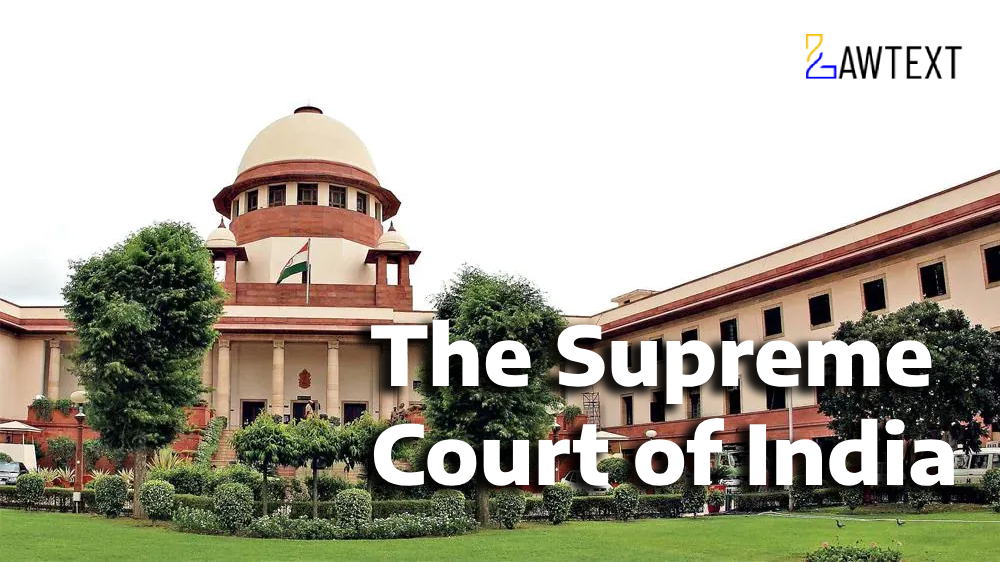
Case Note & Summary
The appellant, Oil and Natural Gas Corporation Limited (ONGC), operates oil wells and process platforms in Mumbai Offshore. The extracted gas-oil mix is transported to process platforms where it undergoes stabilisation in multiple stages to separate lighter hydrocarbons, resulting in stabilised crude oil. The Commissioner of Central Excise issued a show cause notice alleging that the process of stabilisation amounts to 'manufacture' under Section 2(f) of the Central Excise Act, 1944, and that stabilised crude oil is excisable. The adjudicating authority confirmed the demand, and the CESTAT upheld it. ONGC appealed to the Bombay High Court. The court examined the technical process and held that stabilisation is a natural separation of hydrocarbons due to pressure reduction, not a manufacturing process. It does not bring into existence a new commodity distinct from crude oil. Since crude oil is not listed as excisable under the Central Excise Tariff Act, 1985, stabilised crude oil is not subject to excise duty. The court allowed the appeal, setting aside the demand and penalty.
Headnote
A) Central Excise - Manufacture - Section 2(f) Central Excise Act, 1944 - Stabilisation of Crude Oil - The issue was whether the process of stabilising crude oil on process platforms constitutes 'manufacture'. The court held that stabilisation is a natural process of separation of lighter hydrocarbons from the gas-oil mix and does not bring into existence a new and distinct commodity. The stabilised crude oil is merely the crude oil in a stable state, not a manufactured product. (Paras 2-5)
B) Central Excise - Excisable Goods - Section 3 Central Excise Act, 1944 - Stabilised Crude Oil - The court considered whether stabilised crude oil is 'goods' for the purpose of excise duty. It held that crude oil is not excisable under the Central Excise Tariff Act, 1985, and stabilisation does not create a new excisable commodity. The process is incidental to extraction and does not attract excise duty. (Paras 6-10)
Issue of Consideration
Whether the process of stabilisation of crude oil on process platforms amounts to 'manufacture' under Section 2(f) of the Central Excise Act, 1944, and whether stabilised crude oil is excisable as 'goods' under the Act.
Final Decision
The appeal is allowed. The order of the CESTAT dated 29 November 2012 is set aside. The demand for excise duty and penalty is quashed.
Law Points
- Stabilised crude oil is not a distinct excisable commodity
- Process of stabilisation does not amount to manufacture
- Crude oil is not excisable goods under Central Excise Act
- 1944
Case Details
2013 LawText (BOM) (03) 59
Central Excise Appeal (L) No.13 of 2013
Dr. D.Y. Chandrachud, A.A. Sayed
Mr. V. Sridharan, Senior Advocate, with Mr. Prakash Shah, Mr. Jas Sanghavi, Mr. A. Dash and Mr. Ashish Philip i/b. PDS Legal for the Appellant. Mr. Pradeep S. Jetly for the Respondent.
M/s. Oil & Natural Gas Corporation Ltd.
The Commissioner of Central Excise, Service Tax & Customs, Raigad.
Subscribe to unlock Case Details (Citation, Judge, Date & more)
Subscribe Now
Nature of Litigation
Central Excise Appeal against order of CESTAT confirming demand of excise duty on stabilised crude oil.
Remedy Sought
ONGC sought setting aside of the demand for excise duty and penalty on the ground that stabilisation does not amount to manufacture.
Filing Reason
The Commissioner of Central Excise issued a show cause notice alleging that the process of stabilisation of crude oil on process platforms amounts to manufacture and that stabilised crude oil is excisable.
Previous Decisions
The adjudicating authority confirmed the demand, and the CESTAT upheld the order.
Issues
Whether the process of stabilisation of crude oil on process platforms amounts to 'manufacture' under Section 2(f) of the Central Excise Act, 1944.
Whether stabilised crude oil is excisable as 'goods' under the Central Excise Act, 1944.
Submissions/Arguments
Appellant argued that stabilisation is a natural process of separation of lighter hydrocarbons due to pressure reduction, not a manufacturing process, and does not bring into existence a new commodity.
Respondent argued that the process of stabilisation results in a distinct product, stabilised crude oil, which is marketable and hence excisable.
Ratio Decidendi
The process of stabilisation of crude oil on process platforms does not amount to 'manufacture' under Section 2(f) of the Central Excise Act, 1944, as it is a natural separation of lighter hydrocarbons due to pressure reduction and does not bring into existence a new and distinct commodity. Stabilised crude oil is not excisable goods under the Act.
Judgment Excerpts
The process of stabilisation is a natural process of separation of lighter hydrocarbons from the gas-oil mix due to reduction in pressure and does not amount to manufacture.
Stabilised crude oil is not a distinct excisable commodity; it is merely crude oil in a stable state.
Procedural History
The Commissioner of Central Excise issued a show cause notice to ONGC alleging that stabilisation of crude oil amounts to manufacture. The adjudicating authority confirmed the demand. ONGC appealed to CESTAT, which upheld the order. ONGC then filed the present appeal before the Bombay High Court.
Acts & Sections
- Central Excise Act, 1944: Section 2(f), Section 3