
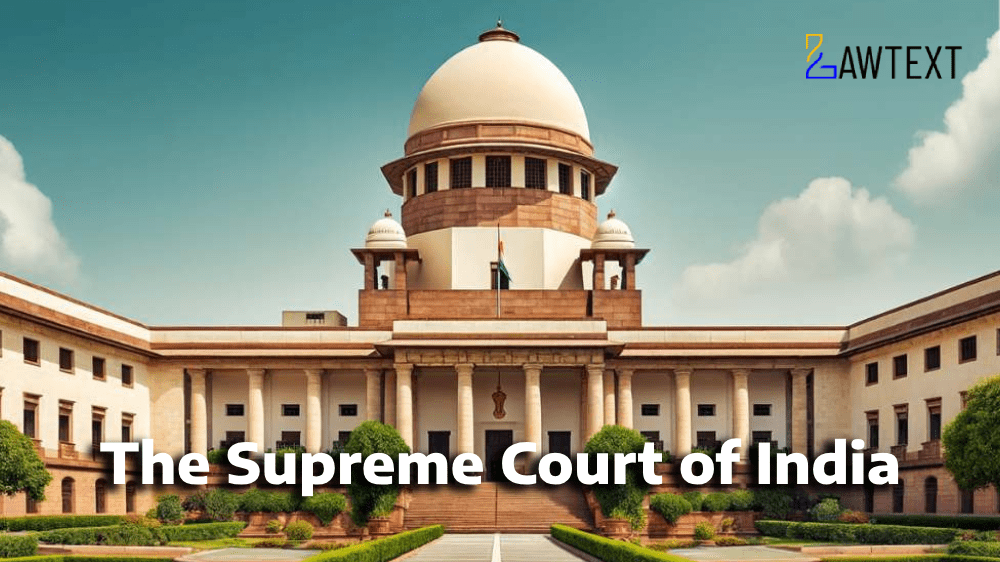
Case Note & Summary
The Supreme Court allowed the appeal filed by Vaibhav Jain, the proprietor of M/s Vaibhav Motors, a dealer of Hindustan Motors Pvt. Ltd. The case arose from a fatal accident involving a vehicle taken for a test drive from the dealer's premises. The deceased, Pranay Kumar Goswami, was a Territory Manager of Hindustan Motors, and the driver was a Service Engineer of Hindustan Motors. The claimants, legal heirs of the deceased, filed a claim petition under Section 166 of the Motor Vehicles Act, 1988, against the driver, Hindustan Motors (manufacturer), and the dealer (appellant). The Motor Accidents Claims Tribunal held that Hindustan Motors was the owner of the vehicle but also held the dealer jointly and severally liable for compensation. The High Court dismissed the dealer's appeal and enhanced the compensation. The Supreme Court framed three issues: whether the dealer could be considered an owner under the MV Act; whether clauses 3(b) and 4 of the dealership agreement absolved Hindustan Motors of liability; and whether Hindustan Motors could question its liability without filing an appeal. The Court held that under Section 2(30) of the MV Act, 1988, 'owner' means a person in whose name the vehicle is registered, or a person in possession under a hire-purchase, lease, or hypothecation agreement. The dealership agreement was not such an agreement, and the dealer was merely in possession for sale and test drive purposes. The Court distinguished the earlier decision in Rajasthan State Road Transport Corporation v. Kailash Nath Kothari, which was based on the broader definition under the 1939 Act. The Court also held that clauses 3(b) and 4 of the dealership agreement, which sought to shift liability to the dealer, were contractual and could not override the statutory liability of the registered owner. Hindustan Motors, being the registered owner and employer of the driver and deceased, remained primarily liable. Regarding Order 41 Rule 33 CPC, the Court held that it could not be invoked to absolve Hindustan Motors when it had not appealed and the issue was not raised in the dealer's appeal. The Court set aside the liability of the dealer and directed that the compensation be paid by Hindustan Motors alone.
Headnote
A) Motor Vehicles Act - Owner - Definition - Section 2(30) - The definition of 'owner' under the Motor Vehicles Act, 1988, requires registration in the name of the person or possession under a hire-purchase, lease, or hypothecation agreement. A dealer in possession of a vehicle for test drive, without such an agreement, is not an owner. The concept of 'possessory owner' under the 1939 Act is not applicable. (Paras 13-18) B) Motor Vehicles Act - Liability - Dealership Agreement - Clauses 3(b) and 4 - Clauses in a dealership agreement that purport to shift liability for defects or accidents to the dealer cannot override the statutory liability of the registered owner under the Motor Vehicles Act. Such clauses are contractual and do not affect third-party claims for compensation. (Paras 19-22) C) Civil Procedure Code - Order 41 Rule 33 - Power of Appellate Court - Order 41 Rule 33 CPC cannot be invoked to absolve a party from liability when that party has not appealed against the award and the issue of its liability was not raised in the appeal. The rule applies only to parties who have appealed or are affected by the appeal. (Paras 23-25)
Issue of Consideration
Whether a dealer of a motor vehicle can be considered its owner and held jointly and severally liable for compensation under the Motor Vehicles Act, 1988, and whether clauses in a dealership agreement can absolve the manufacturer from liability.
Final Decision
Appeal allowed. The liability of the appellant (dealer) for payment of compensation is set aside. The compensation awarded by the High Court shall be paid by M/s Hindustan Motors Pvt. Ltd. alone.
Law Points
- Definition of owner under Section 2(30) MV Act 1988
- Possessory owner concept under old Act not applicable
- Dealership agreement cannot override statutory liability
- Order 41 Rule 33 CPC cannot be invoked to shift liability without appeal





