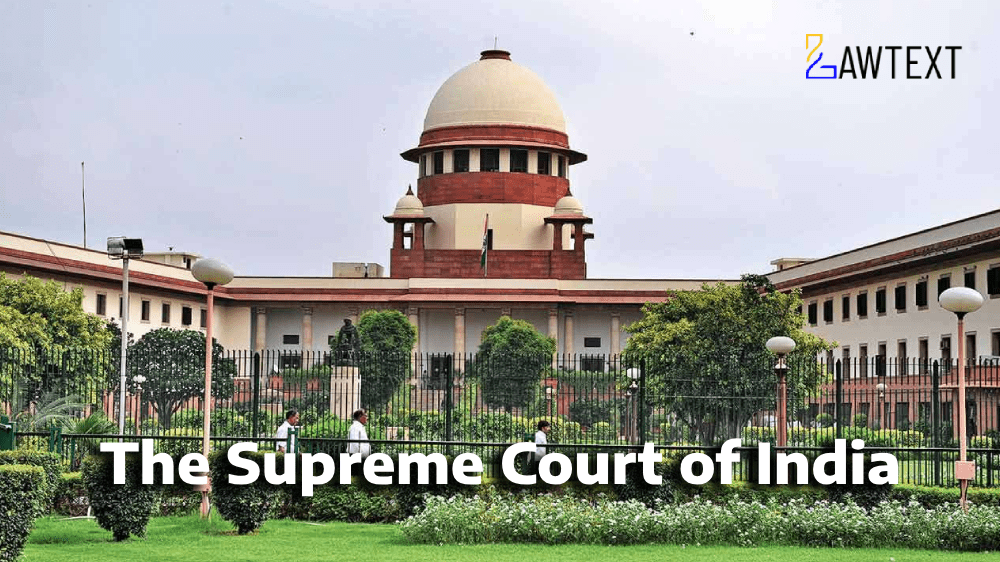
Supreme Court Allows Appeal Against Conviction in Murder Case — Restores Acquittal. The High Court's reappraisal of evidence was found to be in violation of established legal principles regarding interference with acquittals.

In Favour of Accused
  • 2
Judgement Image
Font size:
Print

Case Note & Summary

The case involved an appeal by four appellants who were acquitted by the Sessions Court of charges under Section 302 and Section 323 of the Indian Penal Code (IPC). The acquittal was based on the Sessions Judge's findings that there was no proper explanation for the delay in reporting the crime, lack of adequate proof of motive, and the unreliability of eyewitness testimony. The State of Punjab appealed the acquittal to the High Court, which set aside the acquittal based on its independent reappraisal of the evidence. The Supreme Court examined the High Court's decision and found that it had acted in disregard of established principles regarding the limited grounds for interfering with an acquittal. The Court emphasized that the mere difference in conclusions between the appellate court and the trial court does not justify overturning an acquittal. The Supreme Court restored the acquittal, concluding that the High Court's interference was unwarranted and that the trial court's findings were plausible and reasonable. The appeal was allowed, and the judgment of the High Court was set aside, reinstating the acquittal of the appellants.

Headnote

A) Criminal Law - Appeal Against Acquittal - Jurisdiction of Appellate Court - Interference with acquittal is not permissible unless the trial court's approach is vitiated by manifest illegality - Criminal Procedure Code, 1973, Sections 378, 386 - The High Court's reappraisal of evidence without finding the trial court's reasons unreasonable constituted a manifest illegality. Held that the acquittal should be restored (Paras 751D-751E).

Subscribe to unlock Headnote Subscribe Now

Issue of Consideration

Whether the High Court erred in setting aside the acquittal of the appellants by the Sessions Judge.

Subscribe to unlock Issue of Consideration Subscribe Now

Final Decision

The Supreme Court allowed the appeal, set aside the judgment of the High Court, and restored the acquittal of the appellants.

Law Points

  • Appeal against acquittal
  • Jurisdiction of appellate court
  • Manifest illegality
  • Reappraisal of evidence
  • Testimony of eyewitnesses
Subscribe to unlock Law Points Subscribe Now

Case Details

1987 LawText (SC) (04) 20

Criminal Appeal No. 225 of 1978

1987-04-01

V. Balakrishna Eradi, A.P. Sen

1987 AIR 1083, 1987 SCR (2) 747, 1987 SCC (2) 529

A.N. Mulla, Mrs. Pravawati, Mrs. Urmila Kapur, Ms. S. Janani, R.S. Sodhi

Tota Singh, Dauli Singh, Mithu Singh, Mukhtiar Singh

State of Punjab

Subscribe to unlock Case Details (Citation, Judge, Date & more) Subscribe Now

Nature of Litigation

Appeal against the order of acquittal by the Sessions Court.

Remedy Sought

Restoration of acquittal by the appellants.

Filing Reason

The State of Punjab appealed the acquittal of the appellants.

Previous Decisions

The Sessions Judge acquitted the appellants based on the evidence presented.

Issues

Whether the High Court erred in setting aside the acquittal Whether the trial court's findings were reasonable

Submissions/Arguments

The appellants argued that the High Court's interference was unjustified and violated legal principles. The State contended that the evidence warranted a conviction.

Ratio Decidendi

The appellate court cannot interfere with an acquittal unless the trial court's approach is vitiated by manifest illegality or the conclusion is perverse.

Judgment Excerpts

The approach made by the High Court to a consideration of the appeal was wholly vitiated by a manifest illegality. The mere fact that the Appellate Court is inclined on a reappreciation of the evidence to reach a conclusion which is at variance with the one recorded in the order of acquittal passed by the Court below will not constitute a valid and sufficient ground for setting aside the acquittal.

Procedural History

The appellants were tried and acquitted by the Sessions Court on May 30, 1974. The State of Punjab appealed to the High Court, which allowed the appeal on April 9, 1978, convicting the appellants. The Supreme Court heard the appeal and delivered its judgment on April 1, 1987.

Acts & Sections

  • Criminal Procedure Code, 1973: 378, 386
  • Indian Penal Code, 1860: 302, 323
Subscribe to unlock full Legal Analysis Subscribe Now
Related Judgement
Supreme Court Supreme Court Modifies Interest Rate in Arbitration Award Case — Upholds Trial Court's Decision. The court ruled that the arbitrator had the authority to grant pre-reference interest and reinstated the trial court's interest rate of 15.5%.
Related Judgement
Supreme Court Supreme Court Dismisses Partition Suit for Lack of Proof of Marriage and Paternity. High Court's Reversal of Concurrent Findings Upheld as Findings Were Perverse and Based on Inadequate Evidence.