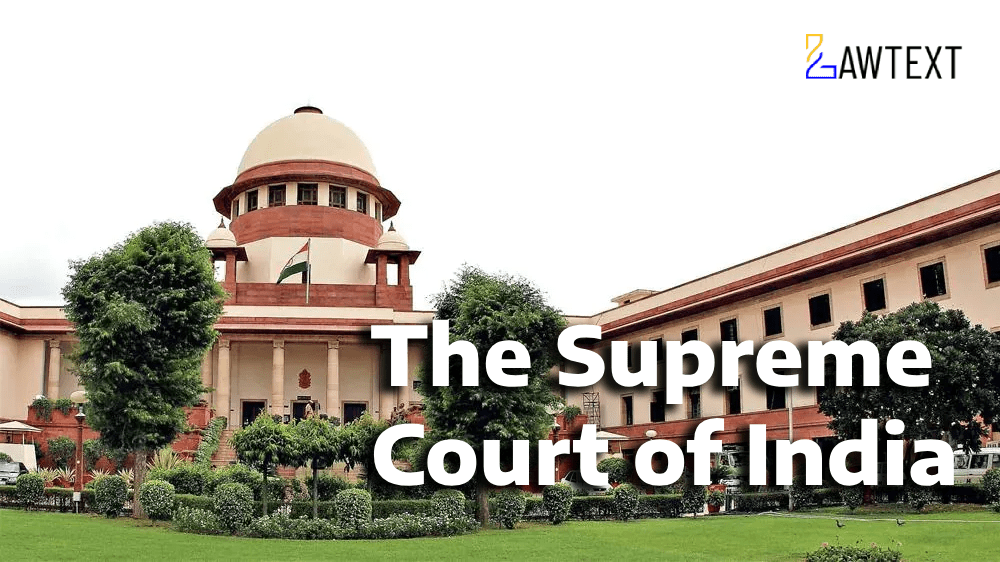
Supreme Court Upholds Conviction in Murder Case but Commutes Death Sentence to Life Imprisonment. The court affirmed the validity of the judicial confession and suicide note, ruling they were admissible evidence under Section 302 IPC.

  • 1
Judgement Image
Font size:
Print

Case Note & Summary

The case involved the conviction of Sonia and Sanjiv for the murder of multiple family members, with the trial court sentencing them to death. The High Court commuted the death sentence to life imprisonment, prompting appeals for enhancement from the prosecution. The prosecution's case relied on a suicide note allegedly written by Sonia, a judicial confession, and circumstantial evidence. The defense argued that the suicide note was fabricated and that the judicial confession was inadmissible due to procedural violations. The Supreme Court upheld the convictions, finding the judicial confession and suicide note admissible, and ruled that the death penalty was not warranted given the circumstances. The court emphasized the need for careful scrutiny of evidence and the importance of adhering to procedural safeguards in recording confessions. Ultimately, the court affirmed the life sentence while addressing the legal standards for admissibility of evidence and the implications of police custody on the rights of the accused.

Headnote

A) Criminal Law - Murder and Conspiracy - Conviction under Section 302 IPC - The trial court convicted the accused under Section 302 IPC read with Section 34 and Section 120-B IPC, sentencing them to death, which was later commuted to life imprisonment by the High Court. The Supreme Court upheld the conviction but considered the appropriateness of the death penalty in light of the circumstances (Paras 1-5).

B) Evidence - Admissibility of Judicial Confession - The court examined the validity of the judicial confession made by A-1, determining it was recorded in compliance with Section 164 Cr.PC, thus admissible. The court found no evidence of coercion or improper influence during its recording (Paras 6-10).

C) Evidence - Suicide Note - The court ruled that the suicide note was admissible as evidence, affirming its authenticity through handwriting analysis, and concluded it was not fabricated (Paras 11-15).

D) Criminal Procedure - Police Custody - The court addressed the issue of whether A-1 was in police custody during her hospitalization, concluding that her movements were restricted due to medical treatment, not police surveillance (Paras 16-20).

Subscribe to unlock Headnote Subscribe Now

Issue of Consideration

Whether the judicial confession and suicide note were admissible and whether the sentence should be enhanced from life imprisonment to death.

Subscribe to unlock Issue of Consideration Subscribe Now

Final Decision

The Supreme Court upheld the convictions of Sonia and Sanjiv under Section 302 IPC and other provisions, affirming the High Court's decision to commute the death sentence to life imprisonment.

Law Points

  • Murder
  • Conspiracy
  • Judicial Confession
  • Suicide Note
  • Admissibility of Evidence
  • Police Custody
  • Section 302 IPC
  • Section 34 IPC
  • Section 120-B IPC
  • Section 164 Cr.PC
  • Section 463 Cr.PC
Subscribe to unlock Law Points Subscribe Now

Case Details

2007 LawText (SC) (02) 340

Appeal (crl.) 895 of 2005

2007-02-15

B.N. AGRAWAL, P.P. NAOLEKAR

Sushil Kumar, K.T.S. Tulsi, U.U. Lalit

Ram Singh, State of Haryana

Sonia, Sanjiv

Subscribe to unlock Case Details (Citation, Judge, Date & more) Subscribe Now

Nature of Litigation

Criminal appeal regarding conviction and sentencing for murder.

Remedy Sought

Enhancement of sentence from life imprisonment to death.

Filing Reason

Appeals against the commutation of death sentence to life imprisonment.

Previous Decisions

Trial court convicted and sentenced the accused to death; High Court commuted the sentence.

Issues

Admissibility of the judicial confession Validity of the suicide note as evidence Whether the death sentence should be enhanced

Submissions/Arguments

The prosecution argued that the suicide note and judicial confession were valid and admissible. The defense contended that the confession was coerced and the suicide note fabricated.

Ratio Decidendi

The court established that judicial confessions and suicide notes can be admissible if recorded in compliance with procedural requirements, and the presence of the accused in police custody does not automatically invalidate confessions if no coercion is proven.

Judgment Excerpts

The trial court convicted the accused under Section 302 IPC read with Section 34 and Section 120-B IPC. The court examined the validity of the judicial confession made by A-1, determining it was recorded in compliance with Section 164 Cr.PC. The court ruled that the suicide note was admissible as evidence, affirming its authenticity through handwriting analysis.

Procedural History

The trial court convicted the accused and sentenced them to death. The High Court commuted the death sentence to life imprisonment, leading to appeals by the prosecution for enhancement and by the accused against their convictions.

Acts & Sections

  • Indian Penal Code: 302, 34, 120-B
  • Code of Criminal Procedure: 164, 463
Subscribe to unlock full Legal Analysis Subscribe Now
Related Judgement
Supreme Court Supreme Court Dismisses Appeal Against High Court's Order on Import Goods Ownership. The court upheld that the title to the imported goods remained with the first respondent as the second respondent abandoned them without payment.
Related Judgement
Supreme Court Supreme Court Allows Appeal and Discharges Appellant in Abetment of Suicide Case — No Active Instigation or Intent to Aid Suicide Found. Loan Recovery Harassment Without Proximate Link to Suicide Does Not Attract Section 306 IPC.