
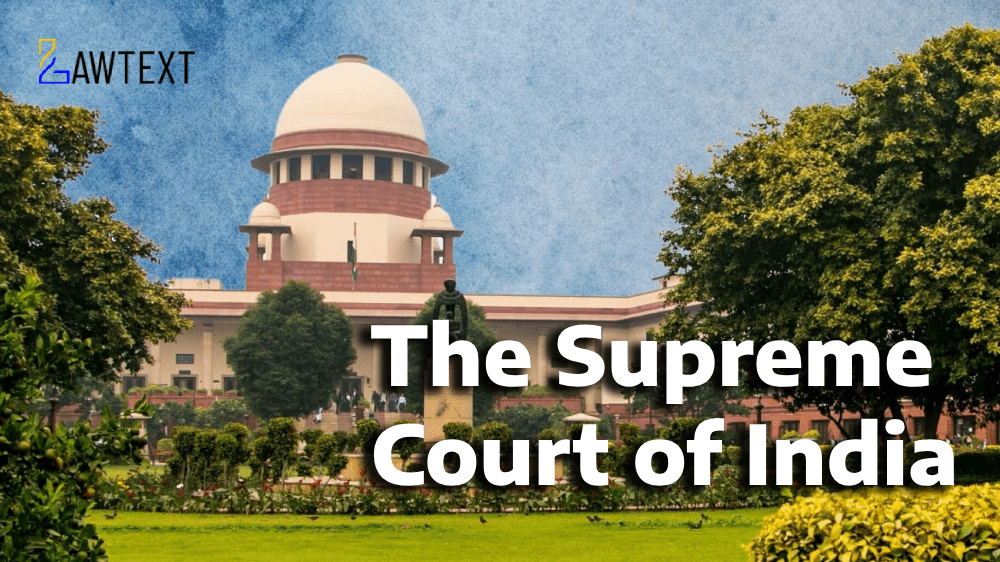
Supreme Court Dismisses Petition Challenging Multiple Candidature Provision in Election Law. Constitutional validity of Section 33(7) of Representation of the People Act, 1951 upheld as matter of legislative policy, not violating Articles 14 or 19.

  • 2
Judgement Image
Font size:
Print

Case Note & Summary

The petitioner invoked the Supreme Court's jurisdiction under Article 32 of the Constitution to challenge the constitutional validity of Section 33(7) of the Representation of the People Act, 1951. The provision permits a candidate to contest from up to two constituencies simultaneously in the same election. The petitioner sought a direction to the Central Government and the Election Commission of India to restrict candidates from contesting for the same office from more than one constituency. The petition was based on concerns raised by the Chief Election Commissioner in 2004 and the Law Commission's 255th Report, which recommended amending the Act to prohibit multiple candidatures. The petitioner argued that when a candidate wins both seats and vacates one, it imposes a financial burden on the public exchequer for bye-elections and deprives the electorate of representation based on their right to know under Article 19(1)(a). The Union of India and the Election Commission filed counter affidavits. The Court heard arguments from senior counsel for the petitioner and the Attorney General for India. The Court analyzed that Section 33(7) was inserted by Act 21 of 1996, effective from 1 August 1996, limiting candidates to two seats, whereas previously there was no bar. The Court reasoned that the issue falls within the legislative domain, as permitting multiple candidatures is a matter of legislative policy aimed at furthering political democracy. The Court emphasized that statutory provisions can only be challenged on grounds of legislative incompetence or violation of Fundamental Rights. Since legislative competence was not in issue, the Court examined whether the provision violated Articles 14 or 19. The Court held that absent manifest arbitrariness implicating Article 14 or a violation of Article 19, the provision cannot be struck down. The Court noted that Parliament had already intervened to restrict candidatures to two seats, reflecting a legislative choice. Consequently, the Court dismissed the petition, upholding the constitutional validity of Section 33(7) and leaving it open for Parliament to amend the law if it so decides in the future.

Headnote

A) Constitutional Law - Fundamental Rights - Article 19(1)(a) - Right to Know - Representation of the People Act, 1951, Section 33(7) - Petitioner argued that when a candidate contests from two seats and vacates one after winning both, the electorate is deprived of representation based on their informed choice under Article 19(1)(a). Court held that permitting multiple candidatures is a matter of legislative policy and does not violate Article 19 absent manifest arbitrariness. (Paras 7, 12)

B) Constitutional Law - Judicial Review - Legislative Policy - Representation of the People Act, 1951, Section 33(7) - Challenge to statutory provision on grounds of financial burden and electoral inconvenience. Court held that the issue pertains to the legislative domain, and absent lack of legislative competence or violation of Fundamental Rights, the Court cannot strike down the provision. Parliament's choice to allow up to two seats is a valid exercise of sovereignty. (Paras 10-12)

C) Constitutional Law - Fundamental Rights - Article 14 - Manifest Arbitrariness - Representation of the People Act, 1951, Section 33(7) - Petitioner contended that the provision causes financial drain on public exchequer due to bye-elections. Court held that unless the provision is manifestly arbitrary so as to implicate Article 14 or violates Article 19, it cannot be invalidated. The provision, as amended, represents a legislative balance. (Paras 10, 12)

Subscribe to unlock Headnote Subscribe Now

Issue of Consideration

Whether Section 33(7) of the Representation of the People Act, 1951, which permits a candidate to contest from up to two constituencies simultaneously, is constitutionally valid.

Subscribe to unlock Issue of Consideration Subscribe Now

Final Decision

The petition is dismissed. No relief granted. The constitutional validity of Section 33(7) is upheld.

Law Points

  • Legislative policy
  • Parliamentary sovereignty
  • Constitutional validity
  • Article 14 and Article 19 challenges
  • Manifest arbitrariness
Subscribe to unlock Law Points Subscribe Now

Case Details

2023 LawText (SC) (2) 80

Writ Petition (Civil) No. 967/2017

2023-02-02

Dr Dhananjaya Y Chandrachud, CJI, Pamidighantam Sri Narasimha, J.B. Pardiwala

Mr. Gopal Sankaranarayanan, Sr. Adv., Mr. Ashwani Kumar Dubey, AOR, Mr. R. Venkataramani, AG, Mr. Tushar Mehta, SG, Ms. Saudamini Sharma, Adv., Mrs. Rukhmini Bobde, Adv., Mr. Ankur Talwar, Adv., Mr. Chinmayee Chandra, Adv., Mr. Kanu Agrawal, Adv., Mr. Digvijay Dam, Adv., Mr. Vinayak Mehrotra, Adv., Mrs. Mansi Sood, Adv., Mr. Chitvan Singhal, Adv., Ms. Sonali Jain, Adv., Mr. Abhishek Kumar Pandey, Adv., Mr. Raman Yadav, Adv., Mr. Anand Venkatramani, Adv., Ms. Vijay Lakshami Venkataramani, Adv., Mr. Arvind Kumar Sharma, AOR, Mr. Amit Sharma, AOR, Mr. Dipesh Sinha, Adv., Mr. Pallavi Barua, Adv., Ms. Sakshi Upadhayya, Adv., Ms. Aparna Singh, Adv., Mr. Balaji Srinivasan, AOR

Ashwini Kumar Upadhyay

Union of India & Anr.

Subscribe to unlock Case Details (Citation, Judge, Date & more) Subscribe Now

Nature of Litigation

Constitutional challenge under Article 32 to the validity of Section 33(7) of the Representation of the People Act, 1951.

Remedy Sought

Petitioner seeks to challenge the constitutional validity of Section 33(7) and a direction to restrict candidates from contesting from more than one constituency for the same office.

Filing Reason

Based on concerns raised by the Chief Election Commissioner in 2004 and the Law Commission's 255th Report recommending amendment to prohibit multiple candidatures.

Previous Decisions

Prayer (c) seeking to discourage independent candidates was rejected by the Court on 11 December 2017.

Issues

Whether Section 33(7) of the Representation of the People Act, 1951 is constitutionally valid.

Submissions/Arguments

Petitioner argued that multiple candidatures impose financial burden on public exchequer and deprive electorate of representation under Article 19(1)(a). Respondents defended the provision as a matter of legislative policy.

Ratio Decidendi

Permitting a candidate to contest from more than one seat is a matter of legislative policy. Absent manifest arbitrariness violating Article 14 or a violation of Article 19, the Court cannot strike down the provision. Parliament has the sovereignty to make such legislative choices.

Judgment Excerpts

"The petitioner has invoked the jurisdiction of this Court under Article 32 of the Constitution to challenge the constitutional validity of Section 33(7) of the Representation of the People Act 1951." "Permitting a candidate to contest from more than one seat in a Parliamentary election or at an election to the State Legislative Assembly is a matter of legislative policy." "Absent any manifest arbitrariness of the provision so as to implicate the provisions of Article 14 or a violation of Article 19, it would not be possible for this Court to strike down the provision as unconstitutional."

Procedural History

Petition filed under Article 32. Hearing held with arguments from both sides. Counter affidavits filed by Union of India and Election Commission. Petition dismissed on 02-02-2023.

Acts & Sections

  • Representation of the People Act, 1951: 33(7), 147, 149, 150, 151
  • Constitution of India: Article 32, Article 19, Article 14
Subscribe to unlock full Legal Analysis Subscribe Now
Related Judgement
Supreme Court Supreme Court Allows Appeal in Design Infringement Case, Modifying Consent Decree Due to Typographical Error. The Court held that the High Court erred in dismissing the application under Sections 152 and 153 read with Section 151 of the Code of Civil...
Related Judgement
Supreme Court Supreme Court Quashes Summoning Order in Criminal Complaint Due to Non-Compliance with Section 202 CrPC. The Court held that when accused reside beyond the magistrate's jurisdiction, mandatory inquiry or investigation under Section 202(1) of the Code...







