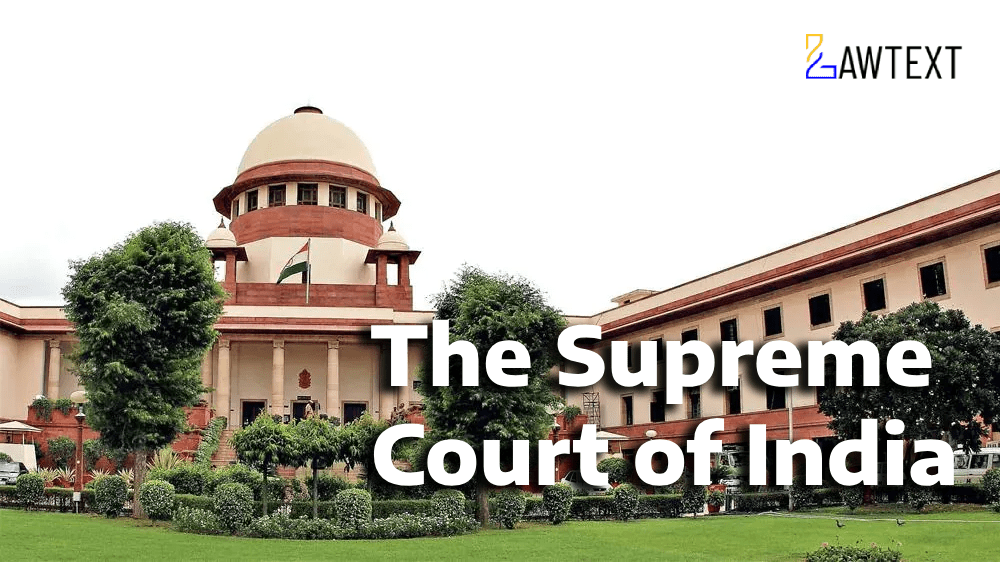
Supreme Court Dismisses Appeal for Compassionate Appointment Due to Delay. The appellant's claim for compassionate appointment was denied as the application was not made within the stipulated time frame following the deemed death of the father.

  • 0
Judgement Image
Font size:
Print

Case Note & Summary

The case involved an appeal against the dismissal of a writ petition seeking compassionate appointment for the appellant, whose father had been untraceable since 1981. The appellant's mother had received service benefits after the court recognized the father's deemed death, which led the appellant to claim a right to compassionate appointment based on the rules applicable. The respondents contested the claim, stating that the father had been dismissed for unauthorized absence, and the rules did not permit such an appointment in this context. The learned Single Judge dismissed the writ petition, leading to a Special Appeal that was also dismissed by the Division Bench of the Allahabad High Court. The Supreme Court, upon reviewing the case, noted that the relevant rule required applications for compassionate appointments to be made within five years of the government servant's death. The court emphasized that the purpose of compassionate appointments is to alleviate immediate financial hardship following the death of a breadwinner. Given that the father had been untraceable for nearly 18 years, the court found that the family had managed to survive without the father's income, thus negating the claim for compassionate appointment. The appeal was ultimately dismissed as lacking merit.

Headnote

A) Employment Law - Compassionate Appointment - Time Limit for Application - U.P. Recruitment of Dependents of Government Servants Dying in Harness Rules, 1974, Rule 5 - The court held that the application for compassionate appointment must be made within five years of the government servant's death. In this case, the father of the appellant was untraceable since 1981, and the application was not made within the stipulated time, thus the appellant was not entitled to the appointment (Paras 5-7).

Subscribe to unlock Headnote Subscribe Now

Issue of Consideration

Whether the appellant is entitled to compassionate appointment despite the delay in application following the deemed death of his father.

Subscribe to unlock Issue of Consideration Subscribe Now

Final Decision

The Supreme Court dismissed the appeal, holding that the application for compassionate appointment was not made within the required five-year period following the father's deemed death, and the family had managed financially for many years without the father's income.

Law Points

  • Compassionate appointment
  • Deemed death
  • Time limit for application
  • Financial hardship
  • Recruitment rules
Subscribe to unlock Law Points Subscribe Now

Case Details

2009 LawText (SC) (05) 222

Civil Appeal No. 1955 of 2003

2009-05-18

Dr. Mukundakam Sharma, Dr. B.S. Chauhan

Santosh Kumar Dubey

State of U.P. & Ors.

Subscribe to unlock Case Details (Citation, Judge, Date & more) Subscribe Now

Nature of Litigation

Appeal against dismissal of writ petition for compassionate appointment.

Remedy Sought

Appellant sought compassionate appointment based on father's deemed death.

Filing Reason

Father was untraceable since 1981, and mother received service benefits.

Previous Decisions

Writ petition dismissed by Single Judge and Special Appeal dismissed by Division Bench.

Issues

Entitlement to compassionate appointment despite delay Applicability of recruitment rules

Submissions/Arguments

Appellant argued for compassionate appointment based on mother's benefits Respondents contended that father was dismissed and rules do not permit appointment.

Ratio Decidendi

The court emphasized that compassionate appointments are intended to address immediate financial hardships following the death of a breadwinner and must be applied for within a reasonable time frame as stipulated by the rules.

Judgment Excerpts

The very concept of giving a compassionate appointment is to tide over the financial difficulties that is faced by the family of the deceased due to the death of the earning member of the family. The request for appointment on compassionate grounds should be reasonable and proximate to the time of the death of the bread earner of the family.

Procedural History

The appellant filed a writ petition which was dismissed by the Single Judge on 8th July, 2002. A Special Appeal was filed against this dismissal, which was also dismissed by the Division Bench on 28th August, 2002, leading to the present appeal.

Acts & Sections

  • U.P. Recruitment of Dependents of Government Servants Dying in Harness Rules: Rule 5
Subscribe to unlock full Legal Analysis Subscribe Now
Related Judgement
Supreme Court Supreme Court Restores Liberty to Claim Higher Interest in Winding Up Proceedings. The Division Bench's withdrawal of liberty to approach civil court for higher interest was erroneous under Section 4 of the Delayed Payments to Small Scale and Ancilla...
Related Judgement
Supreme Court Supreme Court Dismisses Special Leave Petition Challenging Termination of Services — Procedural Irregularities Found. The university failed to follow the necessary disciplinary procedures as outlined in the Kerala Civil Services (Classification, Co...