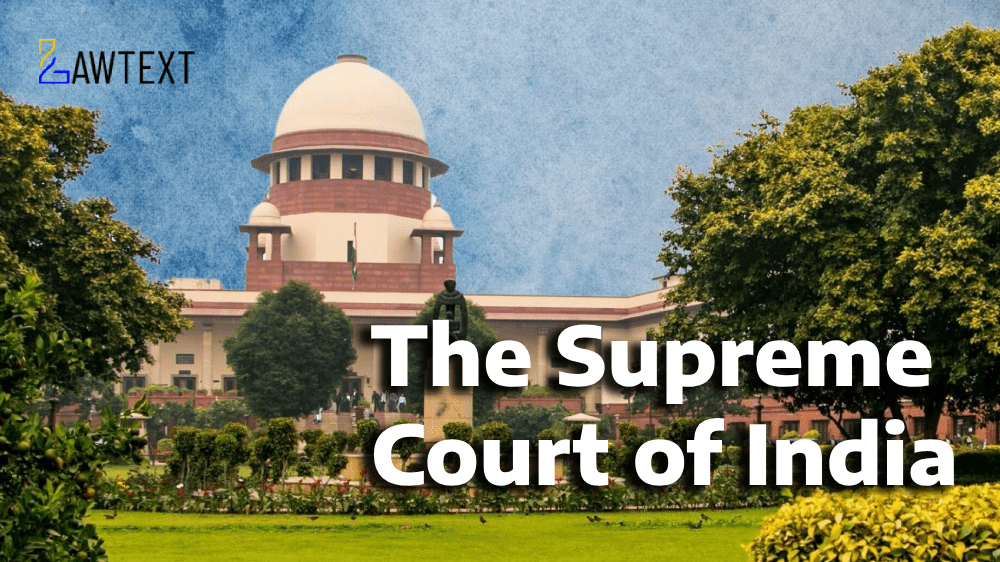
Supreme Court Dismisses Appeals Regarding Public Servant Status Under Co-operative Societies Act. The court affirmed that officers under the Maharashtra Co-operative Societies Act cannot be prosecuted under the Indian Penal Code without an amendment to Section 21.

  • 1
Judgement Image
Font size:
Print

Case Note & Summary

The case involved appeals by the State of Maharashtra concerning the prosecution of the Chairman and members of the Managing Committee of a Co-operative Society under various sections of the Indian Penal Code and the Prevention of Corruption Act. The Special Judge had initially ruled that the accused were not public servants under Section 21 of the Indian Penal Code, leading to the dismissal of the prosecution for lack of prior sanction. The State challenged this decision in the High Court, which referred the matter to a larger bench due to differing opinions among judges. The larger bench concluded that the definition of public servant under the Maharashtra Co-operative Societies Act did not extend to the provisions of the Indian Penal Code, thus affirming the Special Judge's ruling. The State argued that the officers were deemed public servants under the Co-operative Societies Act and could be prosecuted under the IPC. However, the respondents contended that the two statutes operated in different legal domains, and without an amendment to Section 21 of the IPC, the prosecution was not maintainable. The court analyzed the legislative intent and the nature of legal fictions, ultimately ruling that the provisions of the Co-operative Societies Act did not allow for prosecution under the IPC. The Supreme Court dismissed the appeals, agreeing with the High Court's findings and emphasizing the distinct nature of the two statutes.

Headnote

A) Criminal Law - Definition of Public Servant - Applicability of Section 21 IPC to Co-operative Society Officers - Indian Penal Code, 1860, Section 21; Prevention of Corruption Act, 1947, Sections 5(1)(c), 5(1)(d) - The court held that officers under the Maharashtra Co-operative Societies Act, deemed public servants under Section 161, cannot be prosecuted under IPC unless Section 21 is amended, as the statutes operate in distinct fields (Paras 1-5).

Subscribe to unlock Headnote Subscribe Now

Issue of Consideration

Whether the Chairman of a Co-operative Society can be considered a public servant under Section 21 of the Indian Penal Code for the purpose of prosecution under the Prevention of Corruption Act.

Subscribe to unlock Issue of Consideration Subscribe Now

Final Decision

The Supreme Court dismissed the appeals, affirming the High Court's judgment that the accused could not be prosecuted under the Indian Penal Code without an amendment to Section 21.

Law Points

  • Public servant definition
  • Maharashtra Co-operative Societies Act
  • Prevention of Corruption Act
  • Indian Penal Code
  • legal fiction interpretation
Subscribe to unlock Law Points Subscribe Now

Case Details

2000 LawText (SC) (02) 167

2000-02-28

N.S.Hegde, G.B.Pattanaik

STATE OF MAHARASHTRA

LALJIT RAJSHI SHAH & ORS.

Subscribe to unlock Case Details (Citation, Judge, Date & more) Subscribe Now

Nature of Litigation

Criminal prosecution regarding public servant status and related offences.

Remedy Sought

State of Maharashtra sought to prosecute the accused under various sections of IPC and Prevention of Corruption Act.

Filing Reason

The Special Judge ruled that the accused were not public servants under IPC, leading to the State's appeal.

Previous Decisions

The Special Judge's ruling was upheld by the High Court, which found no basis for prosecution under IPC.

Issues

Whether the Chairman of a Co-operative Society is a public servant under IPC Whether prior sanction is required for prosecution under the Prevention of Corruption Act

Submissions/Arguments

The State argued that the Co-operative Societies Act deemed its officers as public servants under IPC. The respondents contended that the two statutes operate in distinct legal fields and cannot be conflated.

Ratio Decidendi

The court held that the provisions of the Maharashtra Co-operative Societies Act do not extend the definition of public servant under the Indian Penal Code, and thus, prosecution under IPC is not maintainable without an amendment.

Judgment Excerpts

The accused persons cannot be held to be public servants as defined under Section 21 of the Indian Penal Code. The Indian Penal Code and the Maharashtra Co-operative Societies Act are not Statutes in pari materia.

Procedural History

The Special Judge took cognizance of the offences, ruled against prosecution under IPC, and the State appealed to the High Court, which referred the matter to a larger bench.

Acts & Sections

  • Maharashtra Co-operative Societies Act: Section 161
  • Indian Penal Code: Section 21
  • Prevention of Corruption Act: Sections 5(1)(c), 5(1)(d)
Subscribe to unlock full Legal Analysis Subscribe Now
Related Judgement
High Court Bombay High Court Quashes Disciplinary Proceedings Against Retired Judicial Officer Initiated After Acceptance of Voluntary Retirement. Disciplinary proceedings initiated after acceptance of voluntary retirement are without jurisdiction as the employ...
Related Judgement
Supreme Court Supreme Court Allows Appeal in Arbitration Execution Matter — Post-Award Interest Calculation Must Follow Hyder Consulting Principle. Court holds that post-award interest under Section 31(7)(b) of the Arbitration and Conciliation Act, 1996 is payab...