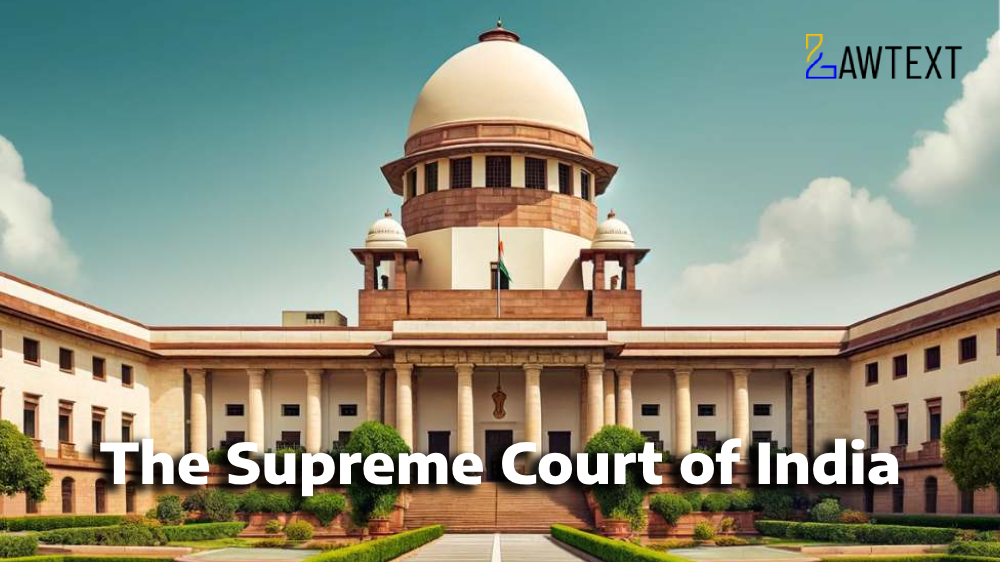
Supreme Court Invalidates Restrictions on Freedom of Speech Under Public Order Act Due to Unconstitutionality. Law Restricting Freedom of Speech Must Specifically Address Security of the State Under Article 19(2) of the Constitution.

  • 0
Judgement Image
Font size:
Print

Case Note & Summary

The case involved a petition filed by the printer, publisher, and editor of a weekly journal, 'Cross Roads', challenging an order by the Government of Madras that prohibited its circulation under Section 9(1-A) of the Madras Maintenance of Public Order Act, 1949. The petitioner argued that this order violated his fundamental right to freedom of speech and expression under Article 19(1)(a) of the Constitution. The Advocate-General of Madras raised a preliminary objection regarding the jurisdiction of the Supreme Court, suggesting that the petitioner should have approached the High Court first. The Supreme Court, however, asserted its role as the protector of fundamental rights and dismissed the preliminary objection. The Court analyzed the scope of freedom of speech, emphasizing that it includes the freedom to propagate ideas and circulate publications. It concluded that restrictions on this freedom must be narrowly defined to only those that threaten the security of the State. The Court found that Section 9(1-A) was too broad and not severable, rendering it unconstitutional. Consequently, the Court quashed the order prohibiting the journal's circulation. The dissenting opinion argued that the law could be valid if it addressed public safety concerns. Ultimately, the Court's decision reinforced the importance of protecting freedom of speech against overly broad legislative restrictions.

Headnote

A) Constitutional Law - Freedom of Speech - Validity of Restrictions - Constitution of India, 1950, Article 19(1)(a) and (2) - The Supreme Court held that a law restricting freedom of speech must be directed solely against undermining the security of the State; otherwise, it is unconstitutional. Section 9(1-A) of the Madras Maintenance of Public Order Act, which allows broader restrictions, was deemed void as it does not meet constitutional standards (Paras 1-2).

Subscribe to unlock Headnote Subscribe Now

Issue of Consideration

Whether the restrictions imposed by Section 9(1-A) of the Madras Maintenance of Public Order Act, 1949, on freedom of speech and expression are valid under Article 19 of the Constitution.

Subscribe to unlock Issue of Consideration Subscribe Now

Final Decision

The Supreme Court quashed the order prohibiting the entry and circulation of the petitioner's journal in the State of Madras, declaring Section 9(1-A) of the Madras Maintenance of Public Order Act unconstitutional and void.

Law Points

  • freedom of speech
  • public order
  • constitutional validity
  • severability
  • fundamental rights
Subscribe to unlock Law Points Subscribe Now

Case Details

Petition No. XVI of 1950

1950-05-26

Harilal Kania, Fazl Ali, Patanjali Sastri, Mehr Chand Mahajan, Mukherjea, Das

C. R. Pattabhi Ramanan, K. Rajah Ayyar, Ganapathi Ayyar

Subscribe to unlock Case Details (Citation, Judge, Date & more) Subscribe Now

Nature of Litigation

Constitutional challenge to a government order restricting publication.

Remedy Sought

Quashing of the order prohibiting circulation of the journal.

Filing Reason

Claim of violation of fundamental rights under Article 19(1)(a).

Issues

Validity of restrictions on freedom of speech under Article 19 Severability of legislative provisions

Submissions/Arguments

Petitioner argued that the order violated fundamental rights. Respondent contended that the petitioner should have approached the High Court first.

Ratio Decidendi

A law restricting freedom of speech must specifically target threats to the security of the State; broader restrictions are unconstitutional.

Judgment Excerpts

Held that the Supreme Court is constituted the protector and guarantor of fundamental rights. Section 9(1-A) is therefore wholly unconstitutional and void.

Procedural History

The petitioner filed an application under Article 32 of the Constitution directly in the Supreme Court challenging the validity of the order issued by the Government of Madras.

Acts & Sections

  • Madras Maintenance of Public Order Act: Section 9(1-A)
  • Constitution of India: Article 19(1)(a), Article 19(2), Article 13(1)
Subscribe to unlock full Legal Analysis Subscribe Now
Related Judgement
Supreme Court Supreme Court Allows Appellant in Tender Rejection Case Due to E-Payment Compliance. Rigid Document Requirements Cannot Override Substantive Compliance Achieved Through E-Payment.
Related Judgement
Supreme Court Supreme Court Upholds Appellant's Absolute Ownership in Hindu Succession Dispute Over Limited Estate Under Will. The Court held that a limited life interest conferred by a Will falls under Section 14(2) of Hindu Succession Act, 1956, preventing expan...