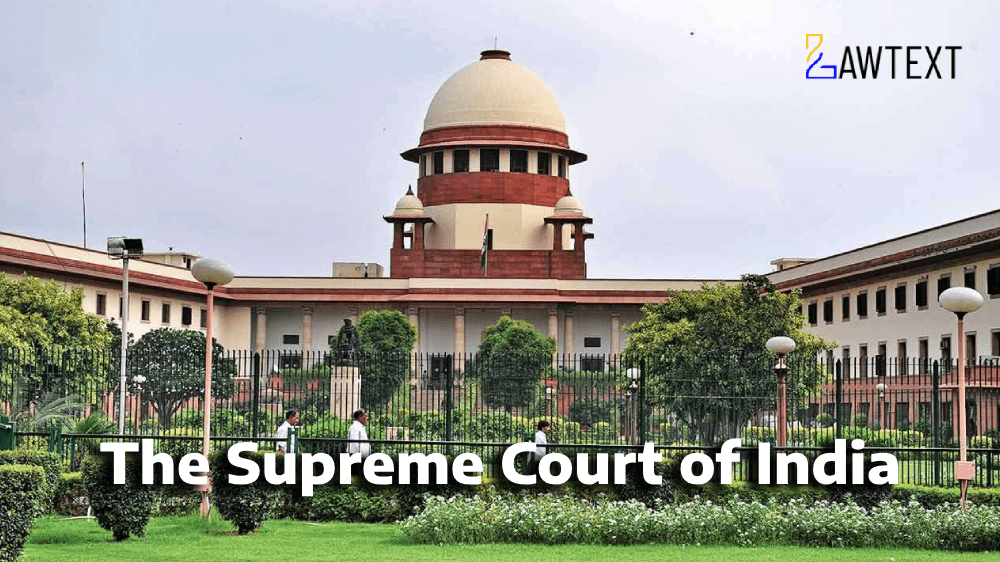
Supreme Court Upholds Appellant's Rights Under RPwD Act for NEET Examination Accommodations — Ensures Reasonable Adjustments for Persons with Disabilities.

In Favour of Accused
  • 0
Judgement Image
Font size:
Print

Case Note & Summary

The appeal arose from a judgment of the Bombay High Court that dismissed the appellant's petition under Article 226 of the Constitution. The appellant, diagnosed with Dysgraphia and classified as a person with benchmark disability under the Rights of Persons with Disabilities Act, 2016, sought reasonable accommodations during the NEET examination. She claimed an additional hour of compensatory time, which was not granted by the examination centre, leading her to file a writ petition. The High Court noted that the appellant had not produced a disability certificate in the prescribed format, which was a requirement for granting such accommodations. The Supreme Court analyzed the obligations under the NEET Bulletin 2021 and the guidelines issued by the Ministry of Social Justice and Empowerment, emphasizing the need for reasonable adjustments for candidates with disabilities. The court directed the first respondent to consider the appellant's application for re-appearing in the NEET examination while ensuring compliance with the principles of reasonable accommodation. The court also highlighted the importance of clear guidelines for future examinations to prevent similar issues. The final decision favored the appellant by ensuring her rights under the RPwD Act were upheld, while also mandating that the first respondent take appropriate action regarding her request for accommodations.

Headnote

A) Disability Law - Reasonable Accommodation - Entitlement to Compensatory Time - Rights of Persons with Disabilities Act, 2016, Section 17(i) - The appellant, diagnosed with Dysgraphia, claimed compensatory time during NEET but was denied by the examination centre. The court held that reasonable accommodations must be provided to enable candidates with disabilities to effectively participate in examinations (Paras 20-21).

Subscribe to unlock Headnote Subscribe Now

Issue of Consideration

Whether the appellant was entitled to an hour’s worth of compensatory time due to her PwD status under the NEET Bulletin 2021 and the Guidelines for Written Examination.

Subscribe to unlock Issue of Consideration Subscribe Now

Final Decision

The Supreme Court directed the first respondent to consider the appellant's application for re-appearing in the NEET examination while ensuring compliance with the principles of reasonable accommodation as mandated by the RPwD Act.

Law Points

  • Rights of Persons with Disabilities Act
  • 2016
  • reasonable accommodation
  • NEET Bulletin 2021
  • guidelines for written examination
  • compensatory time for PwD candidates

Subscribe to unlock Law Points Subscribe Now

Case Details

2021 LawText (SC) (11) 221

Civil Appeal No. 7000 of 2021

2021-10-29

Dr Dhananjaya Y Chandrachud

Rushabh Vidyarthi, Rupesh Kumar

Avni Prakash

National Testing Agency (NTA) & Ors.

Subscribe to unlock Case Details (Citation, Judge, Date & more) Subscribe Now

Nature of Litigation

Writ petition challenging the denial of reasonable accommodations during NEET examination.

Remedy Sought

The appellant sought a direction for a fresh NEET examination with accommodations.

Filing Reason

Denial of additional time during the NEET examination due to her disability.

Previous Decisions

The High Court dismissed the appellant's petition citing lack of a prescribed disability certificate.

Issues

Entitlement to compensatory time under NEET Bulletin Compliance with RPwD Act provisions

Submissions/Arguments

The appellant argued for reasonable accommodations based on her disability status. The respondent contended that the appellant did not meet the certificate requirements.

Ratio Decidendi

The court emphasized the necessity of reasonable accommodations for candidates with disabilities to ensure equal opportunity in examinations, as mandated by the RPwD Act and relevant guidelines.

Judgment Excerpts

The appellant suffers from Dysgraphia, which is a specified disability listed in Entry 2(a) of the Schedule to the Rights of Persons with Disability Act 2016. The grievance of the appellant is that the second respondent had initially assured her that facilities for PwD, if prescribed in the rules, would be provided to her.

Procedural History

The appellant filed a writ petition in the High Court after being denied accommodations during the NEET examination, which was dismissed. The Supreme Court then heard the appeal and issued directions regarding the appellant's rights under the RPwD Act.

Acts & Sections

  • Rights of Persons with Disabilities Act, 2016: Section 2(r), Section 17(i)
Subscribe to unlock full Legal Analysis Subscribe Now
Related Judgement
High Court Bombay High Court Dismisses Writ Petitions Challenging Arbitral Award in Property Dispute — Upholds Award of Specific Performance and Damages. Court holds that findings of fact by arbitrator on execution of agreement and readiness to perform are no...
Related Judgement
Supreme Court Supreme Court Modifies National Green Tribunal Order on Pollution Control at Inland Container Depot to Balance Environmental and Logistical Concerns. The Court Directed a Phased Approach to Cleaner Fuels and Optimal Utilization of Alternative Depots,...