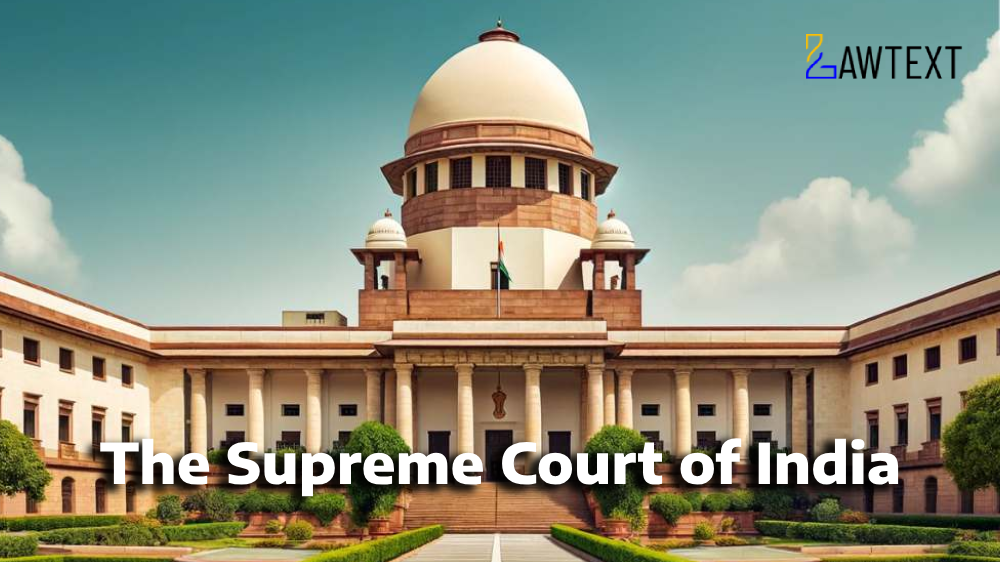
Supreme Court Quashes High Court Order on Compassionate Appointment — Upholds Eligibility Criteria. The Division Bench misinterpreted Rule 5 of the Dying in Harness Rules, 1974, allowing appointments based on educational qualifications rather than the post held by the deceased.

In Favour of Accused
  • 0
Judgement Image
Font size:
Print

Case Note & Summary

The case involved an appeal by the State of Uttar Pradesh against a judgment by the Allahabad High Court that allowed a widow's claim for compassionate appointment following her husband's death while in service. The deceased was a Messenger in the Police Radio Department, and the widow applied for various posts on compassionate grounds after his death on 07.11.2014. Her initial application for the post of Assistant Operator was rejected due to lack of eligibility. She later applied for the post of Workshop Hand but failed the physical fitness test. Subsequently, she was offered the post of Messenger, which she refused, insisting on a higher post based on her educational qualifications. The Single Judge of the High Court dismissed her writ petition, but the Division Bench reversed this decision, interpreting Rule 5 of the Dying in Harness Rules, 1974 to mean that 'suitable post' could be any post matching the candidate's qualifications. The State appealed, arguing that the Division Bench misinterpreted the rule, which should link the appointment to the post held by the deceased. The Supreme Court analyzed the principles governing compassionate appointments, emphasizing that such appointments are exceptions to general recruitment rules and should not equate to regular appointments. The court concluded that the Division Bench's interpretation undermined the humanitarian purpose of compassionate appointments, which is to provide relief to families in distress. Ultimately, the Supreme Court quashed the High Court's order and restored the Single Judge's dismissal of the writ petition, affirming that the respondent was rightly offered the post of Messenger, which was equivalent to the deceased's position.

Headnote

A) Administrative Law - Compassionate Appointment - Interpretation of Rule 5 - Dying in Harness Rules, 1974, Rule 5 - The Division Bench misinterpreted 'suitable post' under Rule 5, allowing appointments based on educational qualifications rather than the post held by the deceased. The court held that appointments on compassionate grounds must consider the post held by the deceased employee to fulfill the humanitarian purpose of such appointments (Paras 10-12).

Subscribe to unlock Headnote Subscribe Now

Issue of Consideration

Whether the Division Bench of the High Court misinterpreted Rule 5 of the Dying in Harness Rules, 1974 regarding compassionate appointments.

Subscribe to unlock Issue of Consideration Subscribe Now

Final Decision

The Supreme Court quashed the High Court's order and restored the Single Judge's dismissal of the writ petition, affirming that the respondent was rightly offered the post of Messenger, which was equivalent to the deceased's position.

Law Points

  • compassionate appointment
  • eligibility criteria
  • Dying in Harness Rules
  • interpretation of rules
  • humanitarian consideration
Subscribe to unlock Law Points Subscribe Now

Case Details

2021 LawText (SC) (10) 203

Civil Appeal No.6003 of 2021

2021-10-05

M. R. Shah, A. S. Bopanna

Ruchira Goel, Shashank Singh

State of Uttar Pradesh & Ors.

Premlata

Subscribe to unlock Case Details (Citation, Judge, Date & more) Subscribe Now

Nature of Litigation

Appeal against the High Court's order regarding compassionate appointment.

Remedy Sought

The State of Uttar Pradesh sought to quash the High Court's order allowing the respondent's appointment.

Filing Reason

The respondent claimed entitlement to a higher post based on educational qualifications after her husband's death.

Previous Decisions

The Single Judge dismissed the writ petition, which was later reversed by the Division Bench.

Issues

Whether the Division Bench misinterpreted Rule 5 of the Dying in Harness Rules, 1974. Whether the appointment on compassionate grounds can be equated with regular recruitment.

Submissions/Arguments

The appellants argued that 'suitable post' should relate to the post held by the deceased and not merely the educational qualifications of the applicant. The respondent contended that the Division Bench correctly interpreted 'suitable post' to include any post matching the candidate's qualifications.

Ratio Decidendi

Compassionate appointments are exceptions to general recruitment rules and must consider the post held by the deceased employee, not merely the educational qualifications of the applicant.

Judgment Excerpts

The Division Bench misinterpreted 'suitable post' under Rule 5, allowing appointments based on educational qualifications rather than the post held by the deceased. Compassionate appointments are exceptions to general recruitment rules and must consider the post held by the deceased employee.

Procedural History

The respondent's writ petition was dismissed by the Single Judge, leading to an appeal to the Division Bench, which was subsequently quashed by the Supreme Court.

Acts & Sections

  • Dying in Harness Rules: Rule 5
Subscribe to unlock full Legal Analysis Subscribe Now
Related Judgement
Supreme Court Supreme Court Dismisses Challenge to Constitutionality of All-India Services Act, 1951 and Upholds Disciplinary Enquiry Against Police Officer. Presidential Adaptation Under Article 392 Deleting Condition Precedent from Article 312 Was Valid and Stat...
Related Judgement
Supreme Court Supreme Court Dismisses Review Petition in Civil Appeal Due to Absence of Error Apparent on Record. Review Jurisdiction Limited to Correcting Patent Errors Under Order 47 of Code of Civil Procedure, 1908, Not Satisfied by Grounds Presented.