
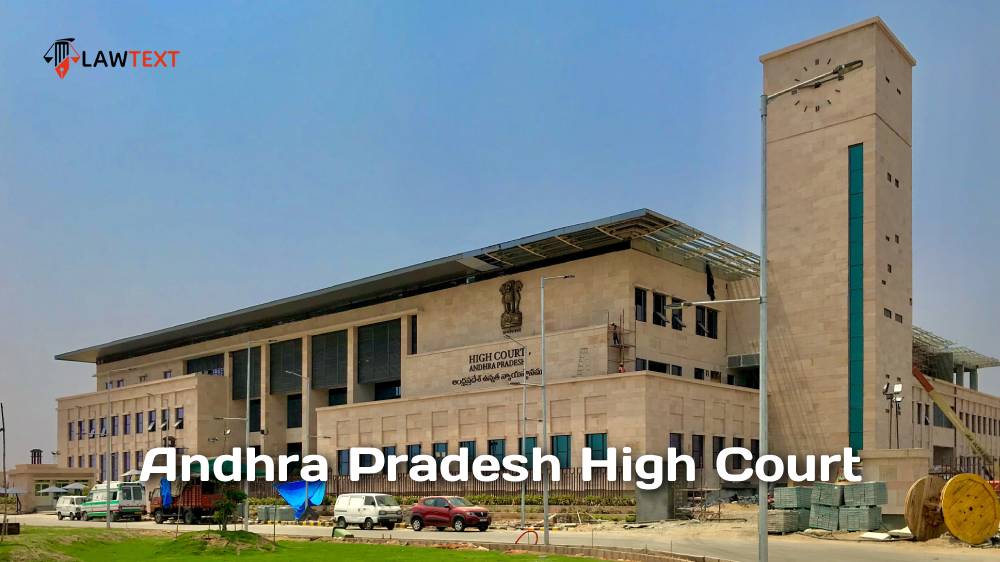
Case Note & Summary
The litigation arose from a writ petition filed in the High Court of Andhra Pradesh at Amaravati under Article 226 of the Constitution of India by the petitioner, Mandapati Ramesh, against the Union of India and others, challenging a letter dated 18 December 2025 issued by the second respondent and seeking renewal of his passport without insisting on a no-objection certificate from criminal courts in respect of two pending criminal cases. The petitioner was issued passport No.N7843353 on 31 March 2016 with ten-year validity. As the passport was due to expire on 30 March 2026, he applied for renewal on 25 November 2025 and attended an enquiry. Police verification revealed that he was an accused in Crime No.246 of 2018 of Dachepalli Police Station, Guntur District, registered under Sections 188, 341, 143 read with 34 IPC, taken on file as CC No.548 of 2019, and in Crime No.176 of 2018 of Gurazala Urban Police Station registered under Sections 143, 341, 188 read with 149 IPC, taken on file as CC No.793 of 2018, both before the I Additional Junior Civil Judge, Gurazala. The third respondent sent a show-cause letter dated 18 December 2025 requiring explanation within 30 days. The petitioner stated he received it on 23 December 2025 but could not respond in time due to his sister-in-law's death and rituals, and his son's engagement was fixed for 15 March 2026 in the United States, with tickets booked for travel on 5 February 2026. The core legal questions were whether the passport authority could deny renewal merely because of pending criminal cases; whether the requirement of no objection from court under Section 6(2)(f) of the Passports Act, 1967 and G.S.R. 570(E) dated 25 August 1993 applied; and whether the petitioner's fundamental right to travel abroad under Article 21 was violated. The petitioner's counsel argued that both criminal cases were for offences punishable below seven years, that denial of renewal referring to these cases was illegal and contrary to the Passports Act, and that the issue was settled by decisions of the High Court and Supreme Court including Maneka Gandhi v. Union of India and Dr. Venkata Rao Vara v. Union of India. He submitted that the petitioner had a fundamental right to hold a passport and travel abroad. The Central Government Counsel argued that the petitioner intentionally did not disclose the pendency of criminal proceedings within his knowledge, making the writ petition liable to be dismissed. The court referred to a learned single judge's decision in W.P No.30373 of 2022, which reiterated that mere pendency of an FIR cannot be the legal basis for denial of passport issuance or renewal, and that only after cognizance is taken can criminal proceedings be said to have commenced; the central government's G.S.R. 570(E) stipulates that no objection is required from a court only if the case falls within the ambit of Section 6(2)(f). The court also quoted Narige Ravindranath v. Union of India, which cited Sumit Mehta v. State of NCT of Delhi for the presumption of innocence and Satish Chandra Verma v. Union of India for the right to travel abroad as an important basic human right affecting private life, marriage, family and friendship. Applying these principles to the facts, the court held that the petitioner could not be denied renewal solely due to pending criminal cases and exempted him from Section 6(2)(f) in terms of G.S.R. 570(E), directing renewal for ten years. The writ petition was disposed of; the court directed the passport authority to renew the petitioner's passport without reference to the two criminal cases for a period of ten years under Section 10 of the Passports Act, 1967 and Rule 12 of the Passport Rules, 1980. It further directed that if the petitioner intends to travel abroad, he must obtain prior permission from the concerned court and appear before the trial court whenever required. No order as to costs was made, and miscellaneous applications were closed.
Headnote
A) Constitutional Law - Right to Travel Abroad - Passport Renewal and Fundamental Rights - Constitution of India, Article 21 - The court reiterated that an accused is presumed innocent until proven guilty and entitled to all fundamental rights including the right to liberty; right to travel abroad is an important basic human right nourishing independent and self-determining creative character of individual and extending freedoms, private life, marriage, family and friendship. Applying these principles, the court considered the petitioner's need to travel for son's engagement and held refusal to renew passport would infringe Article 21 rights (Paras 11-12). B) Passport Law - Renewal with Pending Criminal Proceedings - Mere Pendency of FIR or Criminal Case Not a Bar - Passports Act, 1967, Section 6(2)(f); G.S.R. 570(E) dated 25.08.1993 - The court followed Andhra Pradesh High Court and Madras High Court rulings that mere pendency of FIR cannot be legal basis for denial of passport issuance or renewal; no objection from court under Section 6(2)(f) arises only after cognizance and only if within its ambit. Since the cases against petitioner, though charge-sheeted, involved offences punishable below seven years, the court held the authority could not withhold renewal solely on that ground (Paras 10-11). C) Passport Law - Exemption from Section 6(2)(f) Requirement - G.S.R. 570(E) Exemption and Operative Direction - Passports Act, 1967, Section 6(2)(f), Section 10; Passport Rules, 1980, Rule 12 - The court, in light of settled legal position and the purpose pleaded for visiting abroad, exempted the petitioner from the operation of clause (f) of sub-section (2) of Section 6 in terms of G.S.R.No.570(E) dated 25.08.1993 and directed the authority to renew the passport without reference to the pending criminal cases for a period of ten years under Section 10 of the Passports Act and Rule 12 of the Passport Rules (Para 12). D) Criminal Procedure - Conditions on Accused's Travel Abroad - Prior Court Permission and Mandatory Appearance - No specific statutory provision cited; direction under inherent writ jurisdiction - The court directed that if the petitioner intends to travel abroad, he shall obtain prior permission from the court concerned for such travel and shall appear before the trial court whenever his presence is required. This condition balances the petitioner's fundamental right to travel with the need to ensure presence in pending criminal proceedings (Para 13).
Issue of Consideration
Whether the passport authority's action in withholding renewal of passport based on pending criminal cases is illegal and arbitrary; whether renewal can be denied for pendency of criminal proceedings; whether petitioner is entitled to renewal without NOC from courts
Final Decision
Writ petition disposed of; Court exempted petitioner from operation of clause (f) of sub-section (2) of Section 6 of Passports Act, 1967 in terms of G.S.R.No.570(E) dated 25.08.1993; directed authority concerned to renew passport without reference to criminal cases for period of ten years under Section 10 of Passports Act and Rule 12 of Passport Rules, 1980; if petitioner intends to travel abroad, shall obtain prior permission from concerned court and appear before trial court when required; no order as to costs; miscellaneous applications closed
Law Points
- Passport renewal cannot be denied merely due to pendency of criminal proceedings
- Section 6(2)(f) Passports Act 1967 and G.S.R. 570(E) require no objection from court only after cognizance and within its ambit
- right to travel abroad is fundamental under Article 21 of the Constitution of India
- accused presumed innocent until proven guilty
- court may exempt from Section 6(2)(f) under G.S.R. 570(E) and direct renewal
- renewal subject to prior court permission for travel and appearance when required






