
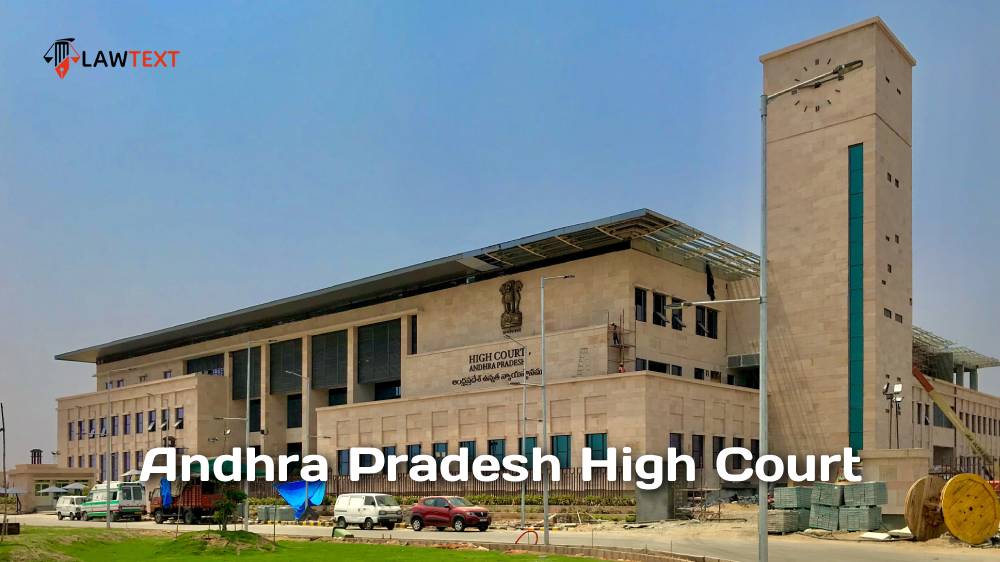
Case Note & Summary
Background: The writ petition was filed under Article 226 of the Constitution of India before the High Court of Andhra Pradesh at Amaravati. The petitioner, an Indian citizen residing in Melbourne, Australia, challenged a Look-Out Circular issued by the Bureau of Immigration and the refusal of the Regional Passport Officer to renew his passport. The petitioner was arrayed as accused No.1 in a Sessions Case under the Scheduled Castes and the Scheduled Tribes (Prevention of Atrocities) Act, 1989 and the Bharatiya Nyaya Sanhita, 2023. Facts: The petitioner went to Australia in 2018 for a Master's degree and obtained employment there. He left India on 03.07.2024. On 19.01.2025, based on a report by the de facto complainant, Crime No.71 of 2025 was registered against him at Nallapadu Police Station, Guntur, for offences under Section 79 BNS and Sections 3(1)(r), 3(1)(s), and 3(2)(vA) of the SC/ST Act. After a charge sheet was filed, the Special Court took cognizance as Sessions Case No.165 of 2025, and a non-bailable warrant was pending against the petitioner. On 17.04.2025, respondent No.2 issued Look-Out Circular No.2025/10031/002706 against the petitioner. The petitioner's passport No.N5750211 was valid until 10.01.2026. He applied for renewal on 03.09.2025, but on 24.10.2025 the Consulate General of India, Melbourne informed him that his passport was marked 'Adverse' due to the pending Sessions Case. He filed Criminal Miscellaneous Petition CFR No.3792 on 28.11.2025 under Section 6(2)(f) of the Passports Act, 1967 before the Special Court for permission to renew, but it was returned citing the pending non-bailable warrant. Legal Issues: The core questions were whether the Look-Out Circular was illegal and violative of fundamental rights and the MHA Office Memorandum dated 27.10.2010, and whether non-renewal of the passport was illegal under the Passports Act, 1967. Arguments: The petitioner contended that he was falsely implicated while abroad, that his wife's pregnancy required his presence in India, and that he was willing to appear before the trial court. He argued that the right to travel is part of Article 21 and restrictions must be narrowly tailored, relying on Mahesh Kumar Agarwal v. Union of India and other precedents. The respondents argued that the petitioner was evading trial and that removing the Look-Out Circular would allow him to flee. Court's Analysis: The court noted the contentions and earlier, by interim order dated 30.12.2025, directed the respondent authorities to renew the petitioner's passport in accordance with the Passports Act, 1967, and suspended the Look-Out Circular until further orders. The court recognized that freedom of movement and travel is an essential guarantee under Article 21 and that any restraint must be proportional and lawful. Decision: The provided judgment text records an interim order directing passport renewal and suspending the Look-Out Circular; the final disposition is not included in the available text.
Headnote
A) Constitutional Law - Right to Travel - Look-Out Circular Reasonable Restrictions - Articles 14, 19(1)(a), 19(1)(g), 21 Constitution of India - The petitioner challenged the Look-Out Circular as violative of fundamental rights; the court observed that freedom to move, travel, and pursue livelihood is an essential part of Article 21 and any State restriction must be narrowly confined, proportionate, and anchored in law. The Look-Out Circular required scrutiny against these principles. (Paras 2, 5-6) B) Passports Act, 1967 - Renewal of Passport - Section 6(2)(f) Passports Act, 1967 - The petitioner's passport renewal was refused due to a pending criminal case and non-bailable warrant; the petitioner had filed a Criminal Miscellaneous Petition under Section 6(2)(f) which was returned. The court directed renewal of the passport in accordance with the Passports Act, 1967. (Paras 2-4) C) Administrative Law - Look-Out Circular Guidelines - Validity of Look-Out Circular - Office Memorandum dated 27.10.2010 - The petitioner argued that the Look-Out Circular was contrary to the Office Memorandum and principles of natural justice; the court considered whether the Look-Out Circular complied with the guidelines and granted interim suspension. (Paras 2, 4, 6) D) Criminal Procedure - Non-Bailable Warrant and Look-Out Circular - Bharatiya Nyaya Sanhita, 2023 Section 79, Scheduled Castes and the Scheduled Tribes (Prevention of Atrocities) Act, 1989 Sections 3(1)(r), 3(1)(s), 3(2)(vA) - A pending Sessions Case and non-bailable warrant did not automatically justify a Look-Out Circular; the petitioner claimed false implication and readiness to appear. The court considered the necessity of travel and interim relief. (Paras 3, 5, 7)
Issue of Consideration
Whether the Look-Out Circular dated 17.04.2025 issued by respondent No.2 was illegal, arbitrary, violative of principles of natural justice, and contrary to Articles 14, 19(1)(a), 19(1)(g), and 21 of the Constitution of India and the Office Memorandum dated 27.10.2010; and whether respondent No.4's failure to renew the passport was illegal, arbitrary, and in violation of the Passports Act, 1967.
Final Decision
The available judgment text records an interim order dated 30.12.2025 directing respondent authorities to renew the petitioner's passport in accordance with the Passports Act, 1967, and suspending the Look-Out Circular dated 17.04.2025 until further orders. The final disposition of the writ petition is not included in the provided text.
Law Points
- Right to travel is an essential part of Article 21
- restrictions on travel must be narrowly confined and proportionate
- Look-Out Circular must comply with Office Memorandum dated 27.10.2010
- passport renewal cannot be denied mechanically due to pending criminal case
- natural justice requires opportunity before adverse passport action
- courts can direct passport renewal under Passports Act
- 1967






