
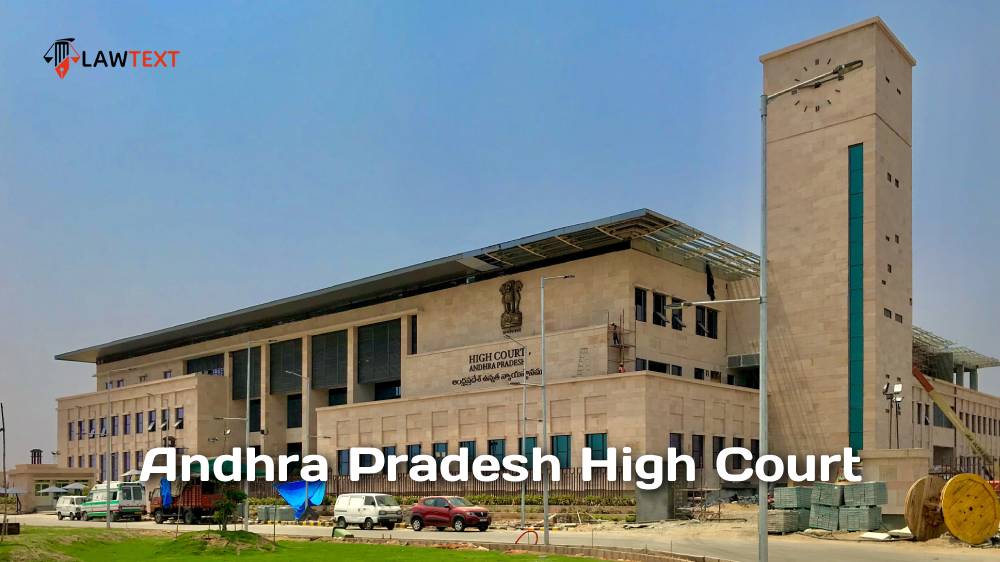
Case Note & Summary
The High Court of Andhra Pradesh at Amaravati considered a writ petition filed by a judgment debtor challenging eviction decrees passed against her in five suits preferred by Vijayawada Municipal Corporation. The petitioner, an occupant of several shops, was defendant in suits for eviction. The Principal Civil Judge (Junior Division) cum Judicial Magistrate of First Class, Vijayawada, decreed the suits in favour of the Corporation on 20.11.2025. Aggrieved, the petitioner filed three appeal suits before the II Additional District Judge, Vijayawada, and also filed three interlocutory applications seeking stay/suspension of the judgment and decree. Notices were issued to the Corporation. The appeal proceedings were adjourned to 09.03.2026 and posted before the appellate court on 04.05.2026, but no interim stay had been granted by the appellate court. The petitioner then approached the High Court under writ jurisdiction. The core legal issue was whether the High Court should entertain a writ petition when a statutory appeal and stay applications were already pending before the appellate court. The High Court, after hearing counsel for both sides, observed that the appellate court is the court of facts and the only competent court to consider the merits of the case and grant interim orders. It reiterated that while applications are pending before the appellate court, it is trite law that writ courts ought not to interfere. Additionally, the court held that a judgment debtor who had been unsuccessful in securing interim order from the appellate court could not be permitted to resort to forum shopping, because what could not be achieved directly cannot be permitted to be achieved indirectly. The court's analysis emphasized judicial discipline and the hierarchy of remedies. It reasoned that permitting a writ petition in such circumstances would undermine the appellate court's authority and encourage litigants to bypass the normal appellate process. The court noted that the petitioner had already approached the appellate court and that the stay applications were still pending; therefore, the High Court should not exercise its extraordinary writ jurisdiction. The court dismissed the writ petition as devoid of merit, clarifying that it had not expressed anything on the merits of the eviction suits or the stay applications. It directed the appellate court to consider the interlocutory applications (I.A.Nos.1094, 1095, 1096 of 2025) filed by the petitioner on their own merits, without being influenced by any observations made in the dismissal order. The appellate court was further directed to decide these applications as expeditiously as possible, preferably on the next scheduled date, without granting unnecessary adjournments. No costs were awarded, and all pending interlocutory applications in the writ petition were closed. This decision reinforces the principle that writ jurisdiction is discretionary and should not be invoked to circumvent pending appellate remedies, particularly when interim relief has not been granted by the appellate forum. The High Court's reasoning underscores the importance of respecting the statutory hierarchy and preventing forum shopping in civil litigation.
Headnote
A) Writ Jurisdiction - Interference with Pending Appeals - Writ courts ought not to interfere when statutory appeal and stay applications are pending before appellate court; appellate court is court of facts and only competent court to consider merits and interim relief - Constitution of India, 1950, Article 226 - The petitioner suffered eviction decrees in five suits and approached the High Court after his stay applications remained undecided before the appellate court; the court held that while applications are pending before the appellate court, writ courts ought not to interfere (Paras 4-5). B) Abuse of Process - Forum Shopping - A judgment debtor unsuccessful in securing interim order from appellate court cannot resort to forum shopping; what could not be achieved directly cannot be permitted to be achieved indirectly - Constitution of India, 1950, Article 226 - The court dismissed the writ petition as devoid of merit, observing that the petitioner had filed appeals and stay applications but had not secured interim relief, and thus could not use writ jurisdiction to bypass the appellate court (Paras 4-5). C) Judicial Discipline - Directions to Appellate Court - The appellate court must consider pending interlocutory applications for stay on their own merits, without being influenced by observations in the dismissal order, expeditiously preferably on next scheduled date without unnecessary adjournments - Code of Civil Procedure, 1908, Order 41 Rule 5 - The High Court clarified it expressed no opinion on merits and directed the appellate court to decide I.A.Nos.1094, 1095, 1096 of 2025 independently and expeditiously (Paras 5-6).
Issue of Consideration
Whether the High Court should entertain a writ petition seeking stay of eviction decree when an appeal and interlocutory applications for stay are pending before the appellate court; and whether the petitioner can be permitted to resort to forum shopping after failing to secure interim relief from the appellate court.
Final Decision
The High Court dismissed the writ petition as devoid of merit. It held that while stay applications are pending before appellate court, writ courts ought not to interfere; and that the petitioner cannot be permitted to resort to forum shopping. The court clarified it expressed no opinion on merits and directed the appellate court to consider I.A.Nos.1094,1095,1096 of 2025 on their own merits, without being influenced by any observations in the present order, and to decide them expeditiously preferably on next scheduled date without granting unnecessary adjournments. No order as to costs.
Law Points
- Writ courts ought not to interfere when statutory appeal and stay applications are pending before appellate court
- appellate court is court of facts and only competent court to consider merits and interim relief
- judgment debtor unsuccessful in securing interim order cannot resort to forum shopping
- what cannot be achieved directly cannot be achieved indirectly






