
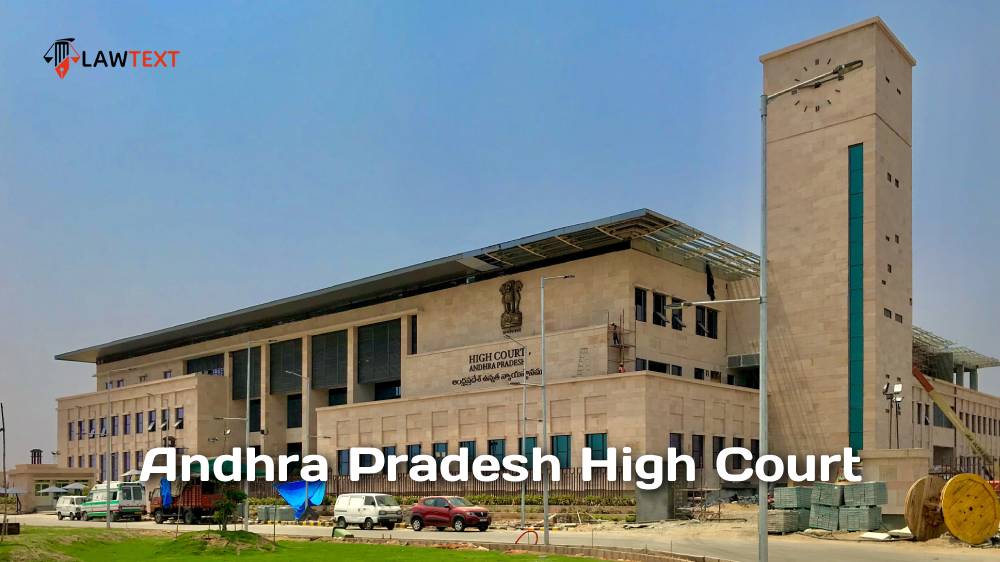
Case Note & Summary
The writ petition was filed before the High Court of Andhra Pradesh at Amaravati under Article 226 of the Constitution of India seeking a writ of Mandamus invoking parens patriae jurisdiction to appoint petitioner No.3 as legal guardian of Singavaram Subhan Singh, who was in a vegetative/comatose state, for the limited purpose of operating and withdrawing amounts from his Axis Bank Account No. 913010036494989 to meet medical expenses. The petitioners were the wife and children of Subhan Singh. The patient, aged about 65 years, had been diagnosed with CVA-left CG Hematoma and underwent Status Post Left FTP Decompressive Craniectomy at Care Hospital HI-Tech City. After surgery, his condition did not improve, and he remained in a vegetative state, requiring a tracheostomy tube for breathing and a Ryle tube for feeding. His bank account held a credit/deposit amount of Rs.14,38,015/- with respondent No.2, and he possessed movable and immovable properties. The petitioners contended that without accessing these funds, meeting medical and day-to-day expenses had become difficult, and no known procedure existed under civil law or any special enactment for appointment of a guardian for a person in such a state. Medical certificates dated 21.01.2026 issued by the Medical Superintendent of Care Convoy Rehabilitation and certificates dated 31.12.2025 and 27.01.2026 issued by New Life Rehab Hospital confirmed that Subhan Singh was in a vegetative/comatose state with current GCS of E2VTM1 and stable hemodynamics, undergoing 17 medical procedures. A notarized affidavit filed by the petitioners confirmed they were the only legal heirs. The respondent Government Pleader opposed the petition, arguing that the claim was purely civil in nature and the petitioners should approach the civil court, rendering the writ petition not maintainable. The petitioners relied on the Delhi High Court decision in Professor Alka Acharya v. Government of NCT of Delhi and the Kerala High Court decision in Shobha Gopalakrishnan v. State of Kerala. The court noted that no remedy exists under any statute for securing guardianship of an individual in a vegetative/comatose state and that the High Court can exercise parens patriae jurisdiction under Article 226. It referred to the Delhi High Court's observations that 'best interest' must be considered in light of 'wills and preferences' under the UNCRPD, and that the High Court has power to entertain such petitions under Article 226 and the proviso to Section 14(1) of the RPWD Act, 2016 and the Mental Healthcare Act, 2017. The court also relied on the Kerala High Court guidelines, which require disclosure of properties, examination by a duly constituted Medical Board with a qualified Neurologist, a report from Revenue authorities not below the rank of Tahsildar, appointment of a close relative as guardian, periodic reports every six months before the Registrar General, maintenance of a separate register, and revocation of guardianship in case of misuse of power. The High Court's reasoning indicated that the writ petition was maintainable and that the guidelines should be followed for appointment of a guardian. The court implicitly rejected the objection that the claim was purely civil. The final operative order is not fully extracted in the available text, but the analysis strongly favors the petitioners.
Headnote
A) Constitutional Law - Writ Jurisdiction - Parens Patriae Jurisdiction - Constitution of India, 1950, Article 226 - The High Court can entertain a writ petition for appointment of guardian for a person in vegetative/comatose state when no statutory remedy exists; the claim is not purely civil because fundamental rights and parens patriae jurisdiction are involved. Held that Article 226 empowers the High Court to grant such relief (Paras 6-7). B) Disability Law - Guardianship of Comatose Persons - Rights of Persons with Disabilities Act, 2016, Section 14(1) proviso; Mental Healthcare Act, 2017 - The court while exercising parens patriae jurisdiction must consider the individual's 'wills and preferences' rather than solely 'best interest' under UNCRPD; the High Court has power under both Article 226 and the proviso to Section 14(1) of RPWD Act and MHA-2017 to appoint guardian (Paras 6, 219-220). C) Guardianship Procedure - Guidelines for Appointment of Guardian - No specific statute - In absence of statutory procedure, court adopts guidelines from Kerala High Court including medical board examination, revenue report, property disclosure, close relative appointment, six-month periodic reports, and revocation for misuse; court can appoint temporarily or permanently and monitor through Registrar General (Paras 7, 35).
Issue of Consideration
Whether a writ petition under Article 226 of the Constitution of India is maintainable for appointment of a legal guardian for a person in vegetative/comatose state in the absence of any statutory procedure, and if so, what guidelines should govern such appointment.
Final Decision
The High Court held that the writ petition was maintainable under Article 226 of the Constitution of India by invoking parens patriae jurisdiction, as no statutory remedy exists for appointment of guardian for a person in vegetative/comatose state. It adopted the guidelines laid down by the Kerala High Court in Shobha Gopalakrishnan, including medical examination by a Medical Board with a neurologist, report by Revenue authority, disclosure of property, appointment from close relatives, periodic reports every six months, and revocation on misuse. The court implicitly rejected the Government Pleader's objection that the claim was purely civil and should be before the civil court. The final operative order is not fully extracted in the available text but the reasoning indicates the petition was allowed.
Law Points
- Parens patriae jurisdiction can be invoked under Article 226 when no statutory remedy exists for guardianship of a comatose person
- 'best interest' must be read with 'wills and preferences' under UNCRPD
- High Court has power under RPWD Act Section 14(1) proviso and Mental Healthcare Act
- 2017
- guidelines for guardian appointment require medical board
- revenue report
- property disclosure
- periodic reporting
- guardian must act in best interest of patient
- writ not barred merely because claim has civil aspects
- no statutory procedure for vegetative state guardianship





