
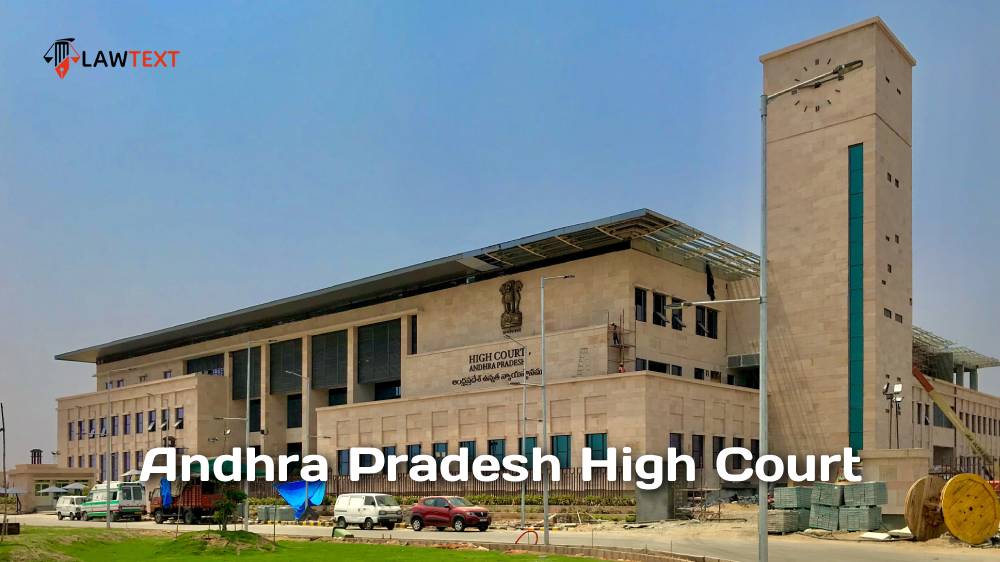
Case Note & Summary
The appeal arose out of a motor accident claim filed under Section 163-A of the Motor Vehicles Act, 1988 before the Motor Accidents Claims Tribunal, Tirupati. The claimant/appellant was the father-in-law of the deceased daughter-in-law. He sought compensation for the death of his son and daughter-in-law in a road accident on 18.04.2009. The respondent was the Andhra Pradesh State Road Transport Corporation, owner of the offending bus. The Tribunal allowed the claim for the son's death awarding Rs.3,97,000, but dismissed the claim for the daughter-in-law's death on the ground of absence of dependency. The appellant challenged that dismissal. On 18.04.2009, the son and daughter-in-law were travelling on a motorcycle bearing No.AP 03 AH 2710 near Jammallapalle Village when an APSRTC bus bearing No.AP 11 Z 2750 came from the opposite direction and dashed the motorcycle, causing death of both. The appellant, as father-in-law, claimed as legal heir and dependent. He stated he was aged 58, living jointly with the deceased, and dependent on her income of Rs.4,000 per month from tailoring and milk supply. P.W.2 corroborated joint family residence and dependency. During cross-examination of P.W.1 and P.W.2, no suggestion was given that the claimant had independent income or was not dependent on the deceased. The dependency and joint living were not disputed. The legal issues centered on whether a father-in-law could be considered a dependent on the deceased daughter-in-law for compensation under the Motor Vehicles Act, and if so, the amount of compensation. The appellant argued that merely because the claim for the son was allowed, dismissal of the claim for the daughter-in-law was not correct, and that as a joint family member he was dependent. The respondent argued that a father-in-law cannot be considered a dependent or legal heir of the daughter-in-law and the dismissal was proper. The High Court referred to the decision in Gujarat State Road Transport Corporation v. Ramanbhai Prabhatbhai, which held that every legal representative who suffers due to a motor vehicle accident should have a remedy under Sections 110-A to 110-F of the Motor Vehicles Act. The Tribunal must determine just compensation and specify persons to whom compensation shall be paid, not limited by the Fatal Accidents Act. The court observed that the mere receipt of compensation for the son's death did not automatically bar compensation for the daughter-in-law's death; the question of dependency had to be considered independently. The court noted that evidence of joint living and dependency of the appellant on the deceased daughter-in-law was clear and undisputed. The judgment excerpt ends before the final operative order, so the final decision is not available in the provided text. However, the reasoning indicates that the court was inclined to hold that a father-in-law living jointly with and dependent on the deceased daughter-in-law could claim compensation as a legal representative.
Headnote
A) Motor Accident Compensation - Dependency - Father-in-law as dependent - Motor Vehicles Act, 1988, Section 163-A - The Motor Accidents Claims Tribunal dismissed claim for death of daughter-in-law on ground of absence of dependency; appellant claimed joint family residence and dependency on deceased's income; evidence of joint living and dependency was not disputed in cross-examination; Court referred to Supreme Court precedent that every legal representative who suffers has remedy; Held that father-in-law living jointly with deceased daughter-in-law can be considered dependent if factual dependency is established (Paras 10-13). B) Interpretation - Legal Representative - Locus Standi - Motor Vehicles Act, 1939, Sections 110-A, 110-B, 110-F and Fatal Accidents Act, 1855, Sections 1-A, 2 - The High Court relied on Gujarat State Road Transport Corporation v. Ramanbhai Prabhatbhai which held that claim for compensation under Motor Vehicles Act is not confined to relatives named in Fatal Accidents Act; every legal representative who suffers due to death in motor accident has remedy; Tribunal must determine just compensation and specify persons to whom compensation shall be paid; Held that father-in-law's claim maintainable if dependency proved (Paras 13).
Issue of Consideration
Whether a father-in-law can be considered dependent on deceased daughter-in-law for compensation under Motor Vehicles Act; whether appellant entitled to compensation and amount; result of appeal
Law Points
- Every legal representative who suffers on account of death due to motor vehicle accident has a remedy under Motor Vehicles Act
- father-in-law can be considered dependent if joint family and economic dependency established
- compensation under Motor Vehicles Act not restricted to heirs named in Fatal Accidents Act
- Tribunal has power to determine just compensation and apportionment





