
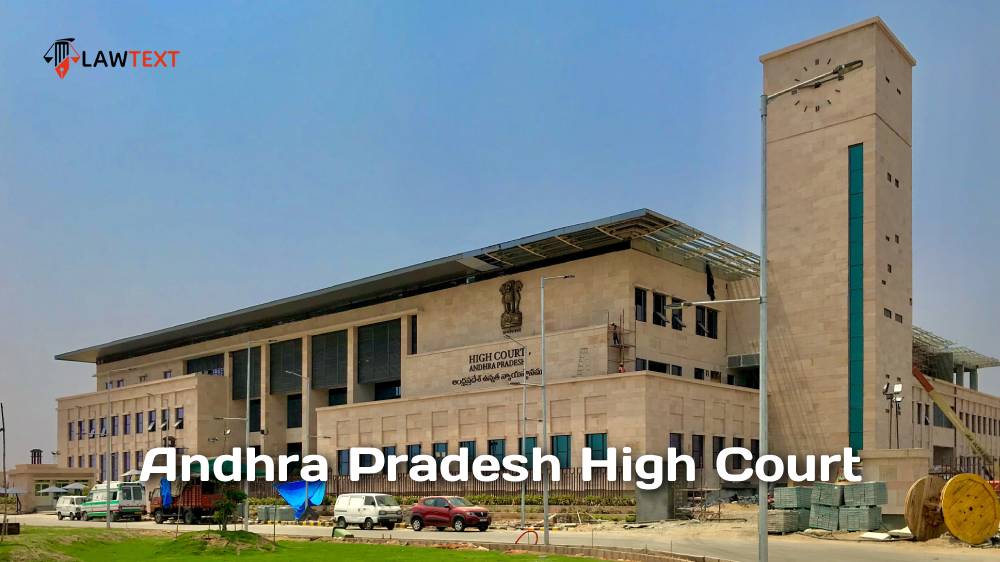
Case Note & Summary
This contempt case arose from the alleged willful disobedience of a judgment and order dated 22.07.2022 passed by a Coordinate Bench of the High Court of Andhra Pradesh in W.P.No.21758 of 2022. The writ petition had directed the respondents to implement an order dated 25.09.2018 passed by the Tribunal in O.A.No.2044 of 2018, preferably within three months from receipt of a copy. The petitioner, S. Janardhana, filed the contempt case alleging non-compliance, but the petition was filed beyond the one-year limitation period prescribed under Section 20 of the Contempt of Courts Act, 1971. During hearing, petitioner's counsel admitted that the three-month compliance period expired long back and did not dispute that the contempt petition was not within the one-year limitation. The counsel argued that the cause of action was continuous, hence the limitation period would not apply. The court examined the statutory provision and binding precedents. It noted that Section 20 bars initiation of contempt proceedings after expiry of one year from the date of alleged contempt. Relying on S.Tirupathi Rao v. M.Lingamaiah, (2024) 20 SCC 188, the court held that contempt proceedings are original in nature akin to a suit, so Section 5 of the Limitation Act, 1963 for condonation of delay does not apply. The court further discussed that although the Contempt of Courts Act does not exclude applicability of Sections 4 to 24 of the Limitation Act, exemption from limitation may be claimed only on specific grounds pleaded in the petition, in line with Order 7 Rule 6 CPC, and not on equitable considerations or hardship. Regarding the plea of continuing wrong, the court referred to Para 81 of S.Tirupathi Rao and Secretary, Government of Tamilnadu v. S.Raja, 2026 SCC OnLine SC 659, holding that a party seeking exemption on this ground must plead specific facts showing continuing wrong; mere assertion of continuous cause of action is insufficient. The court found no such pleading by the petitioner. Consequently, the High Court dismissed the contempt petition as barred by limitation under Section 20 of the Contempt of Courts Act, 1971, holding that no valid ground for exemption or continuing wrong was pleaded.
Headnote
A) Contempt of Court - Limitation for Initiation - Section 20 of Contempt of Courts Act, 1971 - No court shall initiate any proceedings of contempt after expiry of one year from the date on which the contempt is alleged to have been committed - The petitioner filed contempt petition alleging willful disobedience of order dated 22.07.2022 in W.P.No.21758 of 2022 directing implementation of Tribunal order; petitioner's counsel admitted the petition was not within one-year limitation; court held action must be brought within one year irrespective of when court initiates proceedings - Held contempt petition barred by limitation (Paras 4-5). B) Contempt of Court - Condonation of Delay - Contempt of Courts Act, 1971 Section 20; Limitation Act, 1963 Section 5 - Since contempt proceedings are original in nature akin to a suit, Section 5 of Limitation Act, 1963 does not apply for condonation of delay - Court relied on S.Tirupathi Rao v. M.Lingamaiah holding prayer for condonation of delay not maintainable; express negative phraseology in Section 20 places fetter on court's power - Held delay cannot be condoned under Section 5 (Paras 5-6). C) Contempt of Court - Exemption from Limitation - Limitation Act, 1963 Sections 4 to 24; Code of Civil Procedure, 1908 Order 7 Rule 6 - Special law does not expressly or by necessary implication exclude applicability of Sections 4 to 24 of Limitation Act; exemption may be claimed on grounds like Sections 12, 14, 17, 22 but not on equitable considerations or hardship - Party must plead ground of exemption in petition in line with Order 7 Rule 6 CPC - Court found no specific ground of exemption pleaded by petitioner - Held exemption not available (Paras 5-6). D) Contempt of Court - Continuing Wrong/Breach/Offence - Contempt of Courts Act, 1971 Section 20; Limitation Act, 1963 - Allegation of continuing wrong can exempt from limitation only if prima facie satisfies court and is specifically pleaded; mere assertion of continuous cause of action without pleadings insufficient - Court applied S.Tirupathi Rao para 81 and Secretary, Government of Tamilnadu v. S.Raja, holding stale claims camouflaged as continuing wrong ought not to be entertained; party must show from pleadings the ground for exemption - Held petitioner failed to satisfy requirement, petition liable to outright rejection (Paras 8-10).
Issue of Consideration
Whether the contempt petition was filed within the period of limitation prescribed under Section 20 of the Contempt of Courts Act, 1971; whether the plea of continuous cause of action/continuing wrong exempts the petitioner from limitation without specific pleading; whether delay in filing contempt petition can be condoned under Section 5 of the Limitation Act, 1963
Final Decision
The High Court dismissed the contempt petition as barred by limitation under Section 20 of the Contempt of Courts Act, 1971, holding that no valid ground for exemption from limitation or continuing wrong was pleaded.
Law Points
- No court shall initiate contempt proceedings after expiry of one year from date of alleged contempt
- contempt proceedings are original in nature akin to suit so Section 5 of Limitation Act does not apply for condonation
- exemption from limitation under Sections 4 to 24 of Limitation Act may be claimed on specific pleaded grounds
- mere allegation of continuing wrong without prima facie satisfaction and pleading is insufficient to overcome limitation
- stale claims camouflaged as continuing wrong ought not to be entertained






