
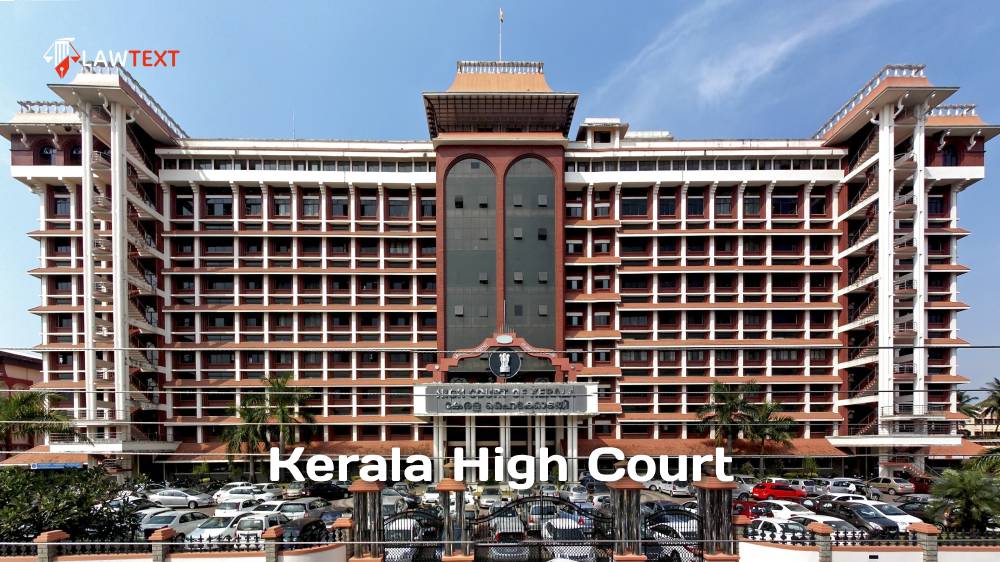
Case Note & Summary
In this writ petition, the petitioner, a widow, challenged Ext.P4 award of the Permanent Lok Adalat, Ernakulam, which dismissed her original petition O.P. No.26/2015 seeking insurance claim settlement. The dispute arose from a group life insurance policy taken through a housing loan arrangement. The petitioner and her deceased husband had availed a housing loan of Rs.12,60,252 from the second respondent bank in 2013. As required under a master policy, the husband obtained a life insurance policy (Ext.P1) for Rs.6,30,126 from the first respondent insurer. The husband died on 30.06.2014, and the petitioner, as nominee, claimed the sum assured to settle the outstanding loan. The insurer repudiated the claim alleging that the insured had suppressed his pre-existing diabetes mellitus at the time of proposal. Before the Permanent Lok Adalat, evidence included testimony of the petitioner as PW1 and the insurer's officer as RW1, along with Exts.P1 to P8, R1 to R16, and summoned medical records Exts.X1 and X2. The Permanent Lok Adalat found that the insured committed suicide; however, it held that repudiation on the ground of suicide was not sustainable because the policy's Clause 14 restricted suicide exclusion to cases within one year. Nevertheless, the Lok Adalat dismissed the claim on the ground of suppression of diabetes, relying on Satwant Kaur Sandhu v. New India Assurance Co. Ltd., (2009) 8 SCC 316, which states that any fact influencing an insurer's decision is material and must be disclosed. The petitioner then filed the present writ petition. The second respondent bank later informed the court that it had initiated recovery proceedings and that the petitioner settled the loan by paying Rs.10,37,832 in February 2017, thus having no further interest. The High Court heard extensive arguments. Petitioner's counsel argued that the suppression of diabetes was not material, had no nexus to the cause of death, the proposal form was ambiguous, and relied on Sulbha Prakash Motegaonkar v. LIC, (2021) 13 SCC 561, holding that repudiation is not justified when the undisclosed ailment is not life-threatening and has no connection with death. Several High Court decisions were also cited. Respondent insurer's counsel argued that the law changed after the 2015 amendment to Section 45 of the Insurance Act, 1938; under the old Section 45, any inaccurate information entitled repudiation, citing Reliance Life Insurance v. Rekhaben Nareshbhai Rathod, (2019) 6 SCC 175, Bajaj Allianz v. Dalbir Kaur, (2021) 13 SCC 553, Manmohan Nanda v. United India Assurance, (2022) 4 SCC 582, Mahakali Sujatha v. Future Generali, (2024) 8 SCC 712, Mahaveer Sharma v. Exide Life, 2025 SCC OnLine SC 435, and a Division Bench of this Court in LIC v. Chandrika C.P., 2026 SCC OnLine Ker 1360. The court, after considering rival contentions and statutory provisions, noted from Ext.R1(a) that the proposer answered in the negative to a question about various diseases including diabetes, and from Ext.X2 that the insured had diabetes since 2009, while the policy was taken in 2013. The court also noted that the insured died not on account of any disease aggravated by diabetes. The provided excerpt ends before the final decision, so the operative outcome is not available in the text.
Headnote
A) Insurance Law - Life Insurance Claim Repudiation - Material Non-Disclosure and Nexus with Death - Insurance Act, 1938, Section 45 - The petitioner challenged repudiation of her deceased husband's life insurance claim on the ground of suppression of diabetes; the Permanent Lok Adalat held suppression material relying on Satwant Kaur Sandhu; the High Court considered whether non-disclosure of diabetes, which had no connection with death by suicide, could justify repudiation under old or new Section 45; the court noted conflicting precedents and the requirement to examine materiality and nexus (Paras 1-9). B) Insurance Law - Suicide Clause - Scope of Repudiation - Clause 14 of Policy - The Permanent Lok Adalat found that repudiation based on suicide was not acceptable because Clause 14 allowed repudiation only if suicide occurred within one year; the insured's death by suicide occurred beyond one year, so this ground failed (Paras 2, 6). C) Contract of Insurance - Ambiguity in Proposal Form - Interpretation Contra Proferentem - Insurance Act, 1938, Section 45 - The petitioner argued that the proposal form's single negative answer to multiple diseases was ambiguous, and any ambiguity should be interpreted in favour of the policyholder; the court noted this argument but final decision not available in the provided excerpt (Para 6). D) Civil Procedure - Writ Petition Maintainability - Settlement of Loan and Cessation of Interest - The second respondent submitted that the loan was settled by payment of Rs.10,37,832 in February 2017, and hence it had no subsisting interest in the writ petition; the court recorded this submission (Para 5).
Issue of Consideration
Whether the Permanent Lok Adalat was justified in upholding repudiation of a life insurance claim on the ground of suppression of diabetes when the insured died by suicide and the undisclosed diabetes had no nexus with the cause of death; and whether the applicable law was old Section 45 or amended Section 45 of the Insurance Act, 1938.
Final Decision
Not mentioned in the provided excerpt.
Law Points
- Material fact in insurance contract
- suppression of diabetes
- nexus with cause of death
- old Section 45 Insurance Act vs amended Section 45
- ambiguity in proposal form
- contra proferentem
- suicide clause one-year limitation
- repudiation of life insurance claim





