
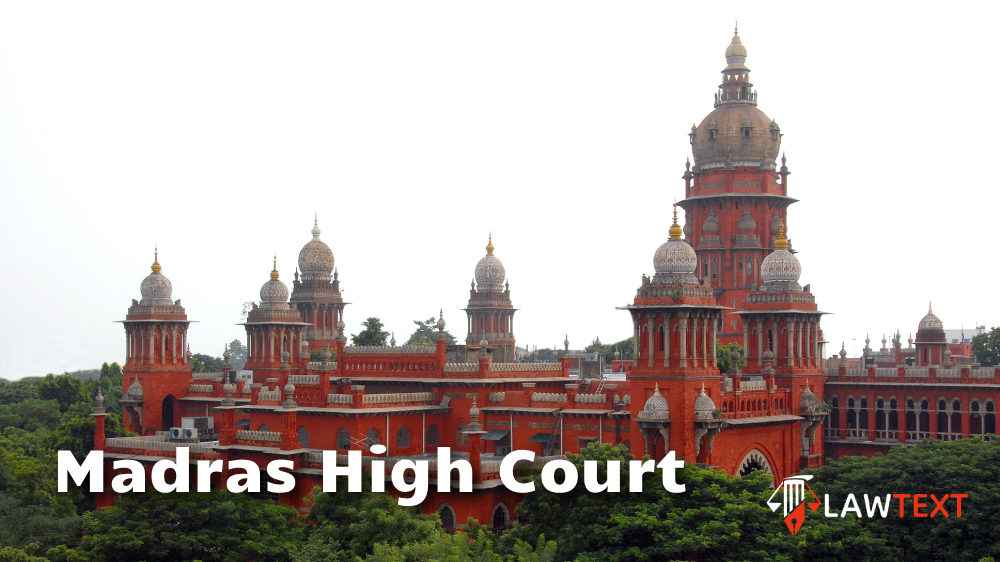
Case Note & Summary
The writ petitions, filed as Public Interest Litigations under Article 226 of the Constitution, sought to restrain the State Government from granting public employment to the family members of the 41 deceased victims of the Karur stampede incident. The petitioners contended that such compassionate appointments, made through a Government Order dated 06.07.2026, were in violation of Articles 14 and 16 of the Constitution, which guarantee equality in public employment and prohibit discrimination. They also highlighted that the Supreme Court was seized of the matter regarding the stampede, the investigation had been transferred to the CBI and was being monitored by a former Supreme Court Judge, and that the ex gratia assistance had already been provided to the victims' families. On 10.07.2026, when the petitions came up for admission, it was informed that a function was scheduled later that day to distribute appointment orders to 32 named individuals. The petitioners urged the Court to halt the function. The Court, after noting that the Supreme Court had permitted withdrawal of an intervening application with liberty, allowed the function to proceed but imposed a strict condition that the appointments would be on a temporary basis and subject to judicial review. The Court further directed that the matters be heard and decided before the appointees received their first salary, acknowledging the urgency and the public interest involved. At the final hearing, the Advocate General raised two preliminary objections: (i) a PIL in service matters is not maintainable; and (ii) a writ of mandamus cannot be issued when a government order already exists and certiorari was not prayed for. The Court examined the scope of its writ jurisdiction and relied on Supreme Court precedent, particularly Union of India v. Bali Ram, which held that the rule requiring strict adherence to pleadings is not inflexible in writ jurisdiction and that justice can override procedural technicalities. The Court held that while the appointments were permitted to be made to avoid immediate hardship, they are only temporary and subject to judicial review, emphasizing that the principle of merit-based selection under Articles 14 and 16 cannot be bypassed. The writ petitions were accordingly disposed of with the clarification that no permanent rights accrue to the appointees and the appointments remain subject to further orders of the Court.
Headnote
A) Constitutional Law – Public Interest Litigation – Maintainability – Constitution of India, Articles 14, 16, 226 – The Advocate General raised preliminary objections that a PIL is not maintainable in service or employment matters – The Court did not foreclose the challenge on this ground but proceeded to examine the scope of its writ jurisdiction to ensure substantive justice (Paras 6-7). B) Constitutional Law – Writ Jurisdiction – Scope of Mandamus – Constitution of India, Article 226 – It was argued that once a Government Order has been passed, a writ of mandamus is impermissible without a prayer for certiorari – The Court held that the rule requiring parties to be strictly confined to pleadings is not inflexible in writ jurisdiction and equitable considerations may permit moulding of relief (Paras 8-10). C) Constitutional Law – Writ Jurisdiction – Equity and Procedural Technicalities – Constitution of India, Article 226 – Reliance was placed on Union of India v. Bali Ram (2026 SCC OnLine SC 1319) to reiterate that justice transcends procedural barriers and technicalities of law must bend before justice – The Court underscored that the entire concept of writ jurisdiction is founded on equity and fairness (Paras 9-10). D) Constitutional Law – Public Employment – Compassionate Appointments – Constitution of India, Articles 14, 16 – The Court directed that the appointments made to the next of kin of the deceased victims of the Karur stampede incident shall be on a temporary basis and subject to judicial review, thereby ensuring compliance with constitutional principles of equality and merit-based selection pending final adjudication (Paras 4-5).
Issue of Consideration
Whether the grant of public appointments to the families of victims of the Karur stampede incident violates Articles 14 and 16 of the Constitution of India; Whether a Public Interest Litigation is maintainable in service matters; Whether a writ of mandamus can be issued when a Government Order has already been passed and certiorari was not specifically sought
Final Decision
The writ petitions were taken up for final disposal. The Court held that the appointments made to the families of the stampede victims are on a temporary basis and subject to judicial review. The function for distribution of appointment orders was permitted to proceed, but no permanent rights would accrue to the appointees. The Court, relying on Supreme Court precedent, underscored that in writ jurisdiction, procedural technicalities can be relaxed to advance substantive justice, and that the principles of equality and merit-based selection under Articles 14 and 16 must be upheld. The petitions were disposed of with the above observations and directions.
Law Points
- compassionate appointments must comply with Articles 14 and 16
- writ jurisdiction is flexible and not bound by strict pleadings
- mandamus can be issued even if certiorari not prayed for in appropriate cases
- Public Interest Litigation in service matters may be examined on merits despite maintainability objections
- temporary appointments subject to judicial review do not confer permanent rights






