
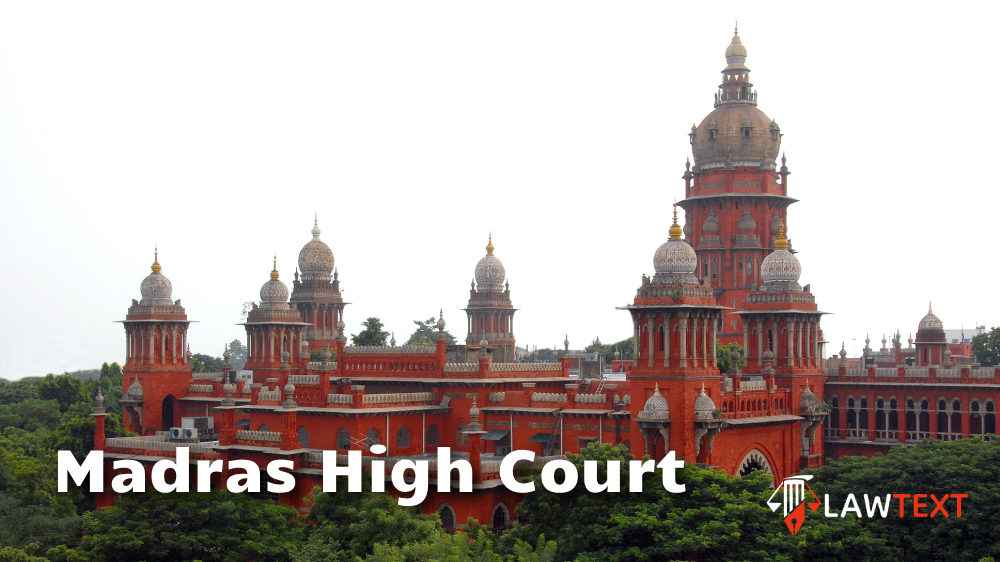
Case Note & Summary
The writ appeal was filed before the High Court of Judicature at Madras challenging the order of a learned single judge dated 29.07.2024 in W.P.No.9502 of 2024. The appellant, M.Raja, was the elected President of a Panchayat in Dharmapuri district, and was facing allegations of misappropriation of funds and illegal award of contracts. The writ petition appears to have dealt with issues concerning his continuation in office, and an interim order had allowed him to continue as President despite the allegations and a resolution by the Panchayat to remove him. The appellant did not appear when the matter was listed on 24.02.2024, and again on 06.03.2025. The government pleader for respondents 2 to 4 informed the court that the appellant's tenure as President had expired on 05.01.2025, rendering the appeal infructuous. The counsel for the first respondent highlighted that the appellant had committed serious misconduct, including misappropriation of funds, and had continued in the post only by virtue of the interim order, thereby escaping accountability. The court noted that an interim order obtained in writ proceedings cannot provide immunity from inquiry into allegations of misappropriation or illegal contracts. Even after the expiry of the tenure, such grave allegations must be investigated, and if prima facie material exists, criminal prosecution and recovery of financial loss must be initiated. Consequently, the division bench comprising Justices S.M. Subramaniam and K. Rajasekar dismissed the writ appeal as infructuous, without costs. However, it directed the District Collector, Dharmapuri (second respondent) to proceed with all further actions based on the complaint already received and complete the enquiry expeditiously following due procedures, and to pass final orders under the relevant provisions of the Act. The court made it clear that the interim order did not confer any right or protection against inquiry and that the authorities were duty-bound to act against misconduct irrespective of the expiry of tenure. This decision reinforces the principle that interim protective orders in writ jurisdiction do not shield an accused person from the substantive legal consequences of alleged wrongdoings, and that the writ court may still issue directions to ensure that the statutory machinery completes the investigative process.
Headnote
A) Constitutional Law - Writ Jurisdiction - Expiry of Tenure of Elected Office - Interim Order - The writ appeal filed against an interim order was dismissed as infructuous because the appellant's tenure as Panchayat President expired during pendency; no further adjudication on merits was required (Paras 2,5). B) Administrative Law - Panchayat Administration - Misconduct and Misappropriation - Interim Order not a shield - Tamil Nadu Panchayats Act, 1994, Not mentioned - The High Court held that an interim order obtained in writ proceedings does not provide immunity from inquiry into allegations of misappropriation and illegal contracts; authorities must continue and complete the inquiry under the relevant provisions of the Act (Paras 4,5).
Issue of Consideration
Whether the writ appeal should be allowed when the appellant's tenure as Panchayat President has expired and the appeal is directed against an interim order; Whether the interim order secures the appellant from further inquiry into allegations of misappropriation
Final Decision
The writ appeal is dismissed as infructuous. The second respondent, District Collector, Dharmapuri, is directed to proceed with all further actions based on the complaint already received, complete the enquiry expeditiously following due procedures, and pass final orders under the relevant provisions of the Act. No costs.
Law Points
- Legal points not extracted
- Interim order in writ proceedings does not grant immunity from inquiry into misconduct
- Expiry of tenure renders appeal infructuous but does not preclude continuation of disciplinary/enquiry proceedings
- Authorities are bound to complete inquiry and take action on allegations of misappropriation following due process






