
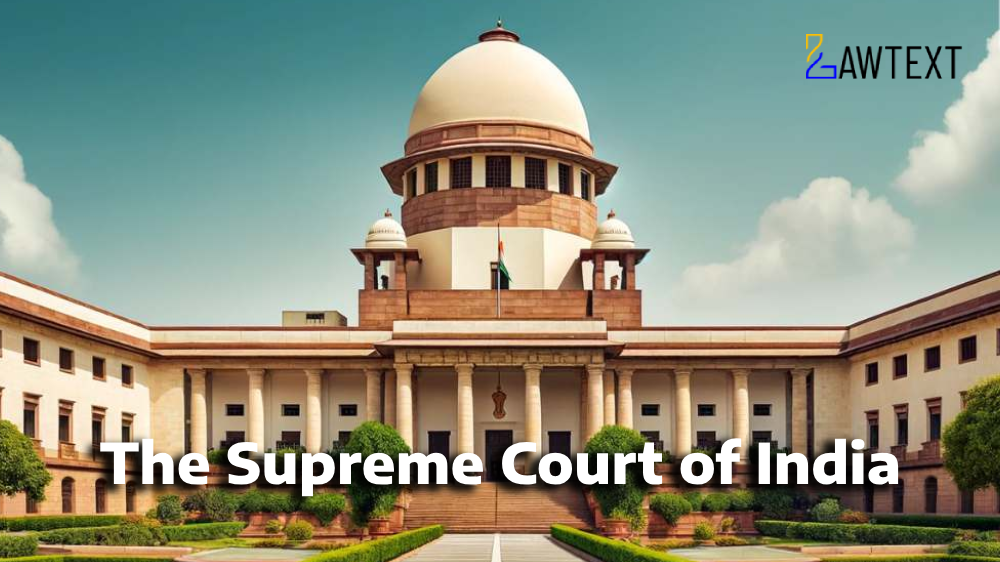
Supreme Court Allows Appeals by Bar Bodies and Advocate, Holding Advocates Not Liable Under Consumer Protection Act. Legal Profession is Sui Generis and Excluded from Definition of 'Service' Under Consumer Protection Act, 1986/2019.

In Favour of Accused
  • 296
Judgement Image
Font size:
Print

Case Note & Summary

The Supreme Court considered a batch of appeals arising from an order of the National Consumer Disputes Redressal Commission (NCDRC) which held that complaints alleging deficiency in service against advocates are maintainable under the Consumer Protection Act, 1986. The factual matrix involved a client, D.K. Gandhi, who hired an advocate, M. Mathias, to file a complaint under Section 138 of the Negotiable Instruments Act. The advocate allegedly received a demand draft and cheque from the accused but did not deliver them to the client, leading to a consumer complaint. The District Forum held the complaint maintainable, but the State Commission reversed, holding that advocates' services are not within the ambit of 'service' under the Act. The NCDRC restored the District Forum's order, prompting appeals by the Bar of Indian Lawyers, Delhi High Court Bar Association, Bar Council of India, and the advocate. The key legal issue was whether legal services fall within the definition of 'service' under the Consumer Protection Act, 1986/2019. The appellants argued that the Advocates Act, 1961 is a special law dealing exclusively with the legal profession, providing a disciplinary mechanism for professional misconduct, and that the legal profession is sui generis, not a trade or business. They contended that applying the Consumer Protection Act would open floodgates of litigation and lead to multiple proceedings. The Court analyzed the nature of the legal profession, emphasizing its unique characteristics, including duties to the court, client, opponent, and colleagues, and the lack of control advocates have over outcomes. The Court held that the legal profession is not a trade or business and is sui generis. It distinguished the medical profession, where the Consumer Protection Act applies, noting that the legal profession has its own regulatory framework under the Advocates Act. The Court concluded that services rendered by advocates are not 'service' under the Consumer Protection Act, and complaints alleging deficiency in service against advocates are not maintainable before consumer forums. The appeals were allowed, and the NCDRC's order was set aside.

Headnote

A) Consumer Law - Deficiency in Service - Advocates - Maintainability - Consumer Protection Act, 1986/2019 - Whether legal services fall within definition of 'service' - Held that legal profession is sui generis and not a trade or business; advocates are not liable under the Consumer Protection Act for deficiency in service; complaints against advocates are not maintainable before consumer forums (Paras 1-2).

B) Advocates Act, 1961 - Professional Misconduct - Disciplinary Mechanism - Special Law - Consumer Protection Act, 1986/2019 - Whether Advocates Act prevails over Consumer Protection Act - Held that the Advocates Act is a special law providing a robust mechanism for professional conduct and misconduct; it prevails over the general law of consumer protection; consumer forums cannot adjudicate on professional services of advocates (Paras 5, 15-20).

C) Legal Profession - Nature - Sui Generis - Duty to Court - Consumer Protection Act, 1986/2019 - Whether legal profession is a service under the Act - Held that the legal profession is unique with duties to court, client, opponent, and colleagues; it is not a commercial activity; thus, it is excluded from the definition of 'service' under the Consumer Protection Act (Paras 5, 10-14).

Subscribe to unlock Headnote Subscribe Now

Issue of Consideration

Whether a complaint alleging 'deficiency in service' against advocates practising legal profession is maintainable under the Consumer Protection Act, 1986/2019?

Subscribe to unlock Issue of Consideration Subscribe Now

Final Decision

The Supreme Court allowed the appeals, set aside the impugned order of the NCDRC, and held that complaints alleging deficiency in service against advocates are not maintainable under the Consumer Protection Act, 1986/2019.

Law Points

  • Legal profession is sui generis
  • not a trade or business
  • Advocates Act
  • 1961 is a special law
  • Consumer Protection Act does not apply to advocates
  • deficiency in service complaint against advocate not maintainable
  • professional misconduct under Advocates Act is separate from consumer dispute.

Subscribe to unlock Law Points Subscribe Now

Case Details

2024 LawText (SC) (5) 143

Civil Appeal No. 2649/2009 and connected matters

2024-05-14

Bela M. Trivedi, J.

Bar of Indian Lawyers, Delhi High Court Bar Association, Bar Council of India, M. Mathias

D.K. Gandhi, National Consumer Disputes Redressal Commission

Subscribe to unlock Case Details (Citation, Judge, Date & more) Subscribe Now

Nature of Litigation

Consumer complaint alleging deficiency in service against an advocate.

Remedy Sought

Compensation of Rs. 15,000/- in addition to the amount of cheque of Rs.5,000/-, as also Rs.10,000/- for mental agony and harassment along with cost.

Filing Reason

The advocate allegedly did not deliver the demand draft and cheque received from the accused to the client and demanded additional cash.

Previous Decisions

District Consumer Forum held complaint maintainable and decided in favor of complainant; State Commission reversed holding advocates not covered under CP Act; NCDRC restored District Forum's order.

Issues

Whether a complaint alleging 'deficiency in service' against advocates is maintainable under the Consumer Protection Act, 1986/2019? Whether legal services fall within the definition of 'service' under the Consumer Protection Act?

Submissions/Arguments

Advocates Act, 1961 is a special law dealing exclusively with legal profession and provides a robust mechanism for professional misconduct. Legal profession is a noble profession and not a business or trade; it is sui generis. Applying Consumer Protection Act would open floodgates of unnecessary litigations and lead to multiple proceedings. The Advocates Act being special law would prevail over the CP Act. Distinguishing Indian Medical Association vs. V.P. Shantha, legal profession is different from medical profession.

Ratio Decidendi

The legal profession is sui generis and not a trade or business; services rendered by advocates are not 'service' under the Consumer Protection Act, 1986/2019; the Advocates Act, 1961 is a special law that provides a comprehensive mechanism for professional conduct and misconduct, and thus consumer forums cannot adjudicate on complaints against advocates for deficiency in service.

Judgment Excerpts

An important question of law pertaining to the Legal Profession as a whole that has fallen for consideration before this Court is - whether a complaint alleging 'deficiency in service' against Advocates practising Legal Profession, would be maintainable under the Consumer Protection Act, 1986 as re-enacted in 2019? The legal profession is a noble profession and not a business or trade. It is an extension of system of justice, and the success of judicial process depends on the independence of the Bar.

Procedural History

The respondent filed a complaint before the District Consumer Disputes Redressal Forum, Delhi. The District Forum rejected the preliminary objection of the advocate and decided the complaint in favor of the respondent. The advocate appealed to the State Commission, which allowed the appeal holding that advocates' services are not within the ambit of 'service' under the CP Act. The respondent filed a revision before the NCDRC, which set aside the State Commission's order and restored the District Forum's order. The advocate and bar bodies appealed to the Supreme Court.

Acts & Sections

  • Consumer Protection Act, 1986: Section 2(1)(o)
  • Consumer Protection Act, 2019:
  • Advocates Act, 1961:
  • Negotiable Instruments Act, 1881: Section 138
Subscribe to unlock full Legal Analysis Subscribe Now
Related Judgement
High Court Bombay High Court Dismisses Writ Petition Against Cancellation of Lease Deed by Maharashtra Tourism Development Corporation Ltd. Due to Disputed Arrears Figures. High Court Holds That Complex Disputed Questions of Fact Requiring Oral Evidence Cannot ...
Related Judgement
Supreme Court Supreme Court Directs High-Level Committee to Oversee Restoration of Polluted Rivers in Rajasthan, Recognizing Constitutional Right to Healthy Environment. Severe Contamination of Jojari, Bandi and Luni Rivers from Industrial and Sewage Discharges Fo...




